
Europe has only a limited margin of resilience in the event of a serious disruption in petroleum product supplies, while current policy does not always set the right priorities in the area of military energy security. In such conditions, European countries should avoid prematurely using crisis reserves, build up additional stocks, diversify supply channels, and maximize the concentration of their own extraction resources within Europe.
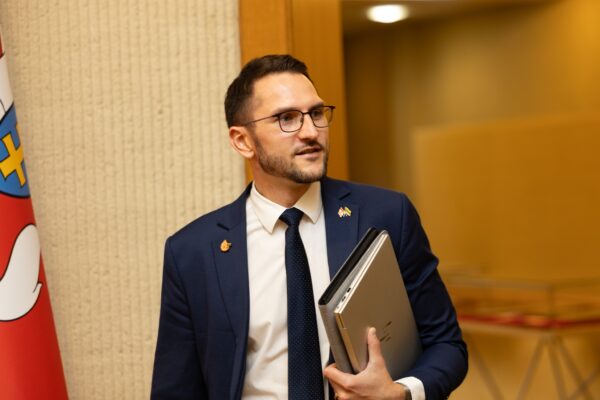
This was stated in a comment to Guildhall by Lithuanian Seimas member Karolis Neimantas.
In the event of a major military escalation involving Russia, how prepared is Europe to ensure sufficient fuel supplies for its armed forces, including tanks, aircraft, and military logistics?
According to publicly available data, the European Union is currently capable of maintaining fuel supplies for both civilian and military infrastructure for approximately 90 days. NATO also has additional capabilities in Europe. However, given the situation around the Strait of Hormuz and the risk of a serious disruption or even complete suspension of petroleum product supplies, this should rather be seen as only a short-term margin of resilience, not readiness for a prolonged military escalation. In theoretical terms, Europe does not currently appear sufficiently prepared for a long-term scenario of this kind.
Does current EU energy policy adequately take military energy security into account, or should this aspect become a clearer priority?
At present, there is no critical situation in European states. However, the very fact that some countries, including Lithuania, are considering the use of their fuel reserves or have already done so points to a political-level problem. This means that Europe does not fully understand what should truly be considered a crisis situation and what should receive primary attention. Therefore, the issue of military energy security should be more clearly defined as one of the priorities.
What steps should European countries take today to reduce the risks caused by external disruptions in oil and gas supplies in a potential wartime scenario?
First of all, reserves intended specifically for crisis scenarios should not be used in a situation that has not yet reached a critical threshold. At the same time, additional stocks beyond those already planned should be created, and forward contracts for purchases should be concluded until the situation in the Strait of Hormuz is resolved. It is also necessary to ensure not only the formal preservation of national reserves, but also the full refueling and technical readiness of equipment after every exercise so that, if necessary, it can be used immediately. In addition, supply diversification should be strengthened by assessing currently unused procurement opportunities and alternative logistics channels.
How do you assess the role of domestic oil and gas production in strengthening Europe’s defense resilience and energy security?
Europe has never been a major oil-producing region on a global scale. At the same time, there are a number of countries that produce certain volumes of oil, cover their own needs, or even export part of the resource. That is why all internal, that is, European, oil production resources should be concentrated within Europe to the greatest extent possible. Alongside this, production volumes, refining capacities, and domestic market demand must be clearly forecast and calculated. This requires a clear planning system that is well understood by decision-makers.
Exclusive for Guildhall.
#energy security #EU #Europe #fuel reserves #Karolis Niemantas #military logistics #oil and gas #Strait of Hormuz #НАТО
Только главные новости в нашем Telegram, Facebook и GoogleNews!
TweetЧитайте также
-
Foreign Affairs Committee Chair McAllister: Kremlin’s Breaches of Neighbours’ Sovereignty Undermine European Security -
MEP Gori: Russia’s Pressure on Georgia and Armenia Is Imperial Expansion -
MEP Verougstraete: Russia Views Its Neighbours as Territories Within Its Sphere of Influence -
MEP Bloss: Europe Must Cut Kremlin Energy Money to Defend Georgia and Armenia -
The European Public Prosecutor’s Office Should Ensure a Unified Approach to Sanctions Cases — Danish MP -
European Parliament Supports Expanding the Powers of the European Public Prosecutor’s Office -
Powers in Cases of Sanctions Violations Should Be Fully Transferred to the European Public Prosecutor’s Office — MEP -
EU Should Expand Powers of Special Prosecutor for Sanctions Cases — Lithuanian MP -
Thijs Reuten: Even legally exportable goods must not end up feeding Russia’s war machine -
Nicolae Tibrigan: Romania’s far-right AUR could gain de facto power without entering government