
The main problem with the EU sanctions regime lies not in the absence of identified violations, but in the inability to turn them into real criminal consequences.
This was stated in a comment to Guildhall by Lithuanian Seimas member Karolis Neimantas.
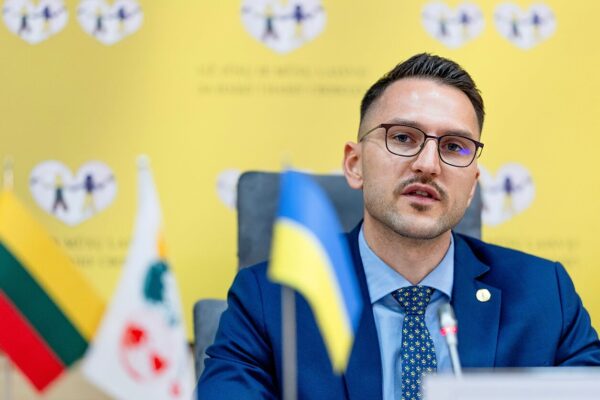
He noted that “the data presented show a clear imbalance between the scale of identified sanctions violations and the actual legal consequences.” In his assessment, “when only a small share of nearly 1,500 investigations leads to convictions or substantial penalties, this points not to the absence of violations, but to an insufficient conversion of cases into effective criminal prosecution.”
The lawmaker stressed that “the key problem probably lies not in the regulatory framework itself, but in its enforcement.” According to him, this concerns “the inconsistent application of sanctions across EU member states,” “the limited capacities of national authorities, especially in the investigation of financial crimes,” “complex chains of proof, especially in cases involving international networks and intermediaries,” as well as “insufficient coordination between jurisdictions.”
As a result, he noted, “many identified violations tend to stall at the investigation stage or are resolved through administrative rather than criminal procedures.” In his assessment, “this undermines the deterrent effect of sanctions and creates conditions for their systematic circumvention.” That is why, the lawmaker stressed, “the main weakness indeed appears to lie in the enforcement chain — from the identification of violations to the imposition of final liability.”
Earlier, members of the European Parliament called for greater involvement of the European Prosecutor in matters related to sanctions violations. Lithuanian MEP Petras Auštrevičius stated that such a step is legitimate and justified, since sanctions fall under EU-level legislation and their enforcement should not remain without legal consequences.
Только главные новости в нашем Telegram, Facebook и GoogleNews!
Tweet