
Hungary’s incoming Tisza government is likely to be much more flexible toward Ukraine than Viktor Orbán’s government, including on European integration and aid. However, the issues of minority rights, agriculture and the economic consequences of Ukraine’s future EU membership will remain serious sticking points, Hungarian security policy expert and former diplomat Dr. Attila Demkó told Guildhall.
According to Demkó, Ukraine and Hungary should look for practical compromises, including on the rights of the Hungarian minority in Zakarpattia, while also developing long-term energy cooperation that could help reduce dependence on Russian oil and gas.
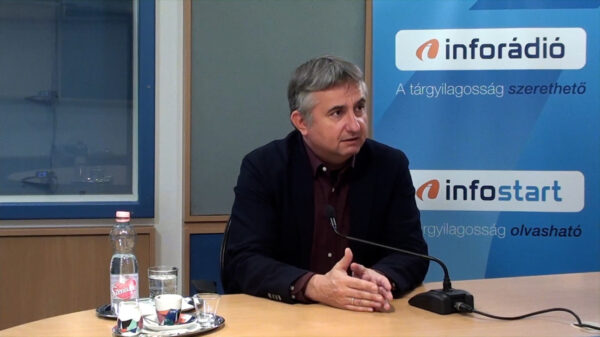
— How do you expect Hungary’s policy toward Ukraine to change under the incoming Tisza government?
— I think change was necessary in either case. Even if Fidesz and Viktor Orbán had won, the time for change had clearly come. But now these changes will be easier, because the incoming government has already said it supports Ukraine more than the previous government did.
Of course, there are issues on which Tisza was not very clear during the election campaign, including Ukraine’s swift accession to the EU. They did not want to be attacked on these issues during the campaign. But I think they will be much more flexible on Ukraine’s integration into the EU, and they will not block many things that the previous government blocked.
They will also be more flexible on aid to Ukraine. I am not sure Hungary will fully join everything, including the €90 billion package, because a large part of the electorate that voted for Tisza is former Fidesz electorate, and this can be a sensitive issue for them. But generally, the approach will be far more flexible.
I also presume that Hungarian officials will travel to Kyiv much more often and will understand the situation better. But there is one sticking point: the minority rights issue. I do not think the incoming government can be much more flexible on that than the previous one.
— Let us go deeper into these weak points in Ukrainian-Hungarian relations. You mentioned the minority issue. What exactly is the problem, and are there other similar issues?
— With the incoming government, this is probably the most important point. I am not saying it is dangerous, but there can be a misconception in Ukraine that the new Hungarian government will approach this issue from a completely different direction.
If you look at what Tisza has said about Slovakia, including the rights of Hungarians and property rights, its position has been even harder than the Orbán government’s position. This is also politics: Tisza had a good relationship with Orbán’s electorate, and the incoming government will want to show that it is strong on Hungarian national issues.
It also cannot fully withdraw from the positions of the previous government. So it would be good if Ukraine understood how sensitive this issue is in Hungary. Language is a sacred thing for Hungarians.
— What do you mean by that?
— If the Hungarian language is pushed out of daily life and education, it becomes very hard to compromise. This is not only about Ukraine. There are large Hungarian communities in Romania, Serbia and Slovakia because the borders were not drawn along ethnic lines. They were drawn by great powers without asking the people. That is how these communities ended up outside Hungary, not because they left Hungary.
There are also gestures Ukraine could make. I remember that in 2019 or 2020 President Volodymyr Zelensky greeted national minorities, including Hungarians, with a few words in their own languages. The Hungarian government at the time, including Péter Szijjártó, welcomed that very warmly.
These gestures matter. Ukraine has the trauma of Russian aggression, but Hungarians also have their historical traumas connected to neighbors over the past 100 years. Small gestures can improve the atmosphere a lot.
— So the minority and language issue is one major weak point. What are the others?
— The second major issue is the EU. On the surface, there will be much more pragmatic and positive support from Hungary. The language will be different. But there are difficult issues, especially agriculture.
To be very honest, I do not know how any Hungarian government can simply look the other way on agriculture. There will have to be some kind of agreement. But this is not only a Hungarian issue. It is also an issue for Poland, France and many other countries.
It was never only Hungary that was stopping Ukraine’s fast-track accession. I think Donald Tusk, or someone else, said that now other countries cannot hide behind Orbán or Hungary anymore. Many countries were hiding behind Hungary. Hungary blocked the issues, and others were happy that Hungary was blocking them.
The same is true of NATO. Many people in Ukraine thought Hungary was the only country blocking Ukraine. No. There were several countries behind Hungary, including the United States. That is what I have always tried to explain to Ukrainians.
For Orbán, it was useful domestically to be seen as the one blocking Ukraine. But that did not fully translate into electoral success, because many people who supported his Ukraine policy still voted for Tisza. They supported him on Ukraine but not on the EU and not on the broader issue of losing EU money.
This is the main issue in Hungary. Many people were simply fed up with losing money. But the money issue is also connected to Ukraine. If Ukraine joins the EU, Hungary will most probably become a net payer. Hungary may have to pay for Ukraine, and agriculture will also be affected.
This is not only a Hungarian concern. In the Czech Republic, public opinion is also changing because people understand that this affects their own pockets and daily life. Farmers can be politically very strong. Even if agriculture is only 1 or 2 percent of the Hungarian economy on paper, farmers can close roads, organize tractor demonstrations and become very influential.
So the first sticking point is symbolic: minority rights, language, history, memorials and graves. The second is systemic and economic: the EU, agriculture and money. These issues have nothing to do only with one government.
— When you say the EU issue, you mainly mean agriculture and the financial consequences of Ukraine’s membership, correct?
— Yes, that is the main issue: how to support Ukraine’s EU membership without damaging Hungary and Hungarian agriculture.
In recent years, Hungary has not really been a net receiver in the same way as before. Because of the sanctions and suspended EU funds, Hungary was giving almost as much as it was receiving. The economy was already stagnating. Now imagine Ukraine becomes a member and Hungary has to pay more. This would affect economic growth not only in Hungary, but also in Estonia, Slovakia and other countries.
So there are two main dimensions. One is symbols, language and history. The other is money. Both are difficult to solve. But the language of the incoming Hungarian government will definitely change a lot.
— You mentioned that there are positions from which Hungary will find it difficult to withdraw. Do you mean these issues?
— I am not saying Hungary cannot withdraw from them. I am saying that compromise will be very hard.
— Generally speaking, what should Ukraine do to improve bilateral relations with Hungary?
— First, there should be an agreement on the minority issue. I understand that Ukraine is under terrible Russian aggression every day, and average Hungarians do not always understand this. But the minority issue is very important for Hungary because of historical reasons.
When Péter Magyar comes to power, a statement from President Zelensky saying that Ukraine understands the importance of this issue for Hungary and wants to settle it would be very helpful. As I said, Zelensky’s gesture in 2019 was really appreciated by the Orbán government. Just a few words mattered.
This is a very sensitive issue in Hungary. What Ukraine was planning to do with language policy was taken very badly by a large part of Hungarian society. Of course, I understand that this is also difficult for Ukraine because of nationalist forces and the war. But it is important.
The new Hungarian government will need to show some result on this issue. Otherwise, I do not think anything else is as important. It is obvious that Ukraine wants to join the EU and NATO, especially the EU. The incoming Hungarian government will say it supports the process, but it will also say that certain issues must be agreed upon.
A symbolic step could also help: a visit by President Zelensky to Zakarpattia, including a visit to something connected with the Hungarian community. This would not cost much, although it might have some internal political cost in Ukraine.
— And what should Hungary do to strengthen bilateral relations?
— Hungary should support Ukraine more than it has so far. I think this is what Péter Magyar will do. Hungary should drop its objections and stop slowing down EU processes connected to Ukraine.
There will be many things that can move much faster for Ukraine, because Hungary was the strongest voice questioning the reality of Ukrainian membership. I think Hungary will allow the negotiation process with Ukraine to start properly. That would be an important step.
If I were in the incoming government, I would say: we support Ukraine’s EU membership, Ukraine has the right to become a member of the EU, and it has to go through the process. Hungary should support making this process as fast as possible.
At the same time, the change will also depend on how the bilateral dialogue is handled. The incoming Hungarian leadership will likely be more pragmatic, but it will still expect its concerns to be treated seriously, especially on minority rights and energy.
In general, much of what was bad from the Ukrainian point of view will change. The major exception is energy, especially oil and gas.
— Why is the energy issue so important?
— The pipeline issue is important for Hungary not only because Russian energy is cheaper, but also because of security of supply. The Croatian pipeline system is theoretically enough for Hungary and Slovakia, but in reality technical problems, accidents and malfunctions happen. So it is not a fully stable solution.
If I were the Hungarian government, I would try to turn this issue into something beneficial for Ukraine in the long term. Before the full-scale invasion, Hungary decided to buy gas through TurkStream rather than through Ukraine via the Brotherhood pipeline. That meant a lot of transit money was lost for Ukraine.
This does not have to remain the case forever. There could be a mutually beneficial arrangement in which Hungary buys energy through Ukraine. That would also bring money to Ukraine.
— From that perspective, energy cooperation could become one of the strategic pillars of future Ukrainian-Hungarian relations. Ukraine has a practical proposal: using the Pivdennyi terminal, the Odesa-Brody pipeline and the southern branch of the Druzhba oil pipeline. Could this be a viable option?
— I know this idea. It can be an opportunity after the end of the war, but it is not a full-scale solution. It can be an additional or partial solution.
There are also long-term contracts with Russia, especially on gas. Breaking these contracts is not simple. If an alternative is not much more expensive and not much more difficult, then it can be considered. But there are many technical and political issues.
— Hungary and Slovakia received exemptions from the EU sanctions regime on Russian oil for a number of reasons. If Ukraine launches and proposes this pipeline project, could it be useful for the EU sanctions regime against Russia?
— If we are talking about oil, it is not only a question for Hungary. Because of the Iran crisis, many other countries are also thinking again about Russian oil and gas, and this is not good for Ukraine.
I am skeptical that this project can lead to a full change. Even Péter Magyar has said he wants to keep Russian oil and gas. His room for maneuver is limited because Hungary has a utility-price cap system, and energy prices are very sensitive domestically.
— But there are alternative sources, including oil from the Caspian states. This is not a full solution, but it can be a partial solution.
— That is possible. Even the Orbán government tried this. Hungary has had projects connected to the Caspian region, Kazakhstan and Azerbaijan. Orbán’s “Eastern opening” was not only an opening to Russia. It was also an opening to Türkiye, Azerbaijan, Kazakhstan and Uzbekistan. There is already a system of relations with the Turkic states.
The problem is logistics. Caspian oil and gas would have to move through the Caspian Sea to Azerbaijan, then toward the Black Sea or Turkish pipeline systems. This is not a one-year or two-year project. It requires time and investment.
Azeri officials told me two years ago that the European Union was not supporting projects to expand the Middle Corridor or increase Azeri oil and gas production because Brussels was focused on the green transition. In my view, Europe is now paying the price for this approach.
Even under Orbán, there was an effort to connect more with the United States, including buying liquefied natural gas, oil and nuclear technology. So diversification did not begin with Péter Magyar. But Magyar can continue it and be more open to different solutions.
The problem is contracts and existing investments. Hungarian companies have major investments in Russia, including MOL and OTP. If Hungary breaks agreements with Russia, what will Russia do with those investments? This is also part of the political calculation.
— Could Romania, Bulgaria or Slovakia be interested in such a project as well?
— Slovakia absolutely could be interested, because Slovakia has almost nothing of its own. Hungary has around 20 percent of its oil and gas from domestic fields, or a bit less, depending on consumption. Slovakia has nothing. So Slovakia is the most vulnerable country in this respect — vulnerable to Russia and also to Ukraine.
Romania is less dependent because it has its own coastline, ports and quite a lot of domestic gas. In gas, Romania is almost self-reliant, although not in oil. So for Romania this is less important than for Slovakia.
But Romania’s political situation also matters. The government is unstable, and the Alliance for the Union of Romanians could become more influential. That would be a serious problem for Ukraine, because George Simion represents a strongly revisionist and anti-Ukrainian line.
— Is the EU politically interested in supporting such a project?
— The EU is interested in anything that is not Russian. But the question is whether it will support the necessary investments.
I am not a technical expert, but people who know Ukraine’s pipeline system have told me that some parts of it are not in good condition. That means investment is needed — into the pipelines and into the port infrastructure.
The problem is that Brussels has been too dogmatic on oil and gas. Hungary proposed to the EU and Romania years ago that the Neptun Deep field in the Black Sea should be developed quickly and connected by pipeline through Hungary toward Central Europe. If Romania had agreed at that time, there would already be a strong pipeline system from Romania through Hungary. It would not be Russian gas. It would be Romanian, Azeri or other gas.
But there was no real pressure from Brussels. In my view, the EU made serious mistakes on this issue. The green transition is important in the long term, but today Europe still needs realistic energy security. Electricity and renewables are part of the future, but not a full solution for the present.
That is why Ukraine and Hungary should look at practical energy projects together. If there is a route that can reduce dependence on Russia, bring money to Ukraine and strengthen regional security, Kyiv and Budapest should jointly lobby the EU to support it.
Exclusively for Guildhall.
Только главные новости в нашем Telegram, Facebook и GoogleNews!
Tweet