
Romania’s current political crisis may not bring AUR directly into government, but it could give the far-right party de facto power over the political agenda through parliamentary pressure, no-confidence threats and influence over mainstream parties.
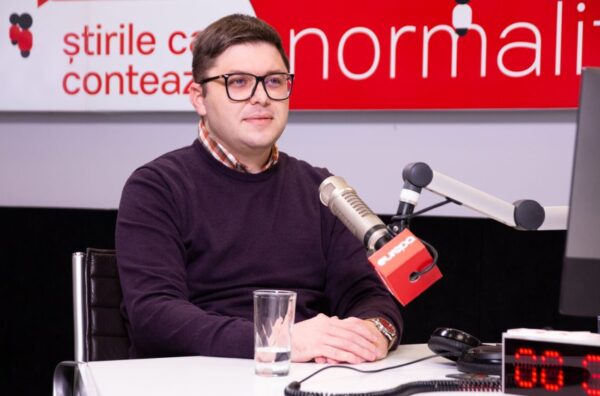
This was stated in an interview with Guildhall by Nicolae Tibrigan, PhD, researcher at the Romanian Academy.
According to Tibrigan, Romania’s strategic orientation remains pro-European and pro-NATO, but domestic political resilience is under pressure. He warned that instability in Bucharest could weaken decision-making, reduce predictability for Ukraine and create more space for anti-Western and anti-Ukrainian narratives.
— Which of the four scenarios do you consider most likely after the vote of no confidence against Ilie Bolojan’s government: Bolojan remaining in office at the head of a weak minority government; the replacement of the prime minister within a new pro-European configuration; the formation of a government controlled by PSD with direct or indirect support from AUR; or a prolonged political crisis with a caretaker government and a growing role for AUR? Which of these scenarios is the most realistic, and why?
— In my view, the most realistic scenario is either Bolojan remaining temporarily in office as the head of a weakened minority government, or, if the no-confidence motion passes, the formation of a new pro-European cabinet with a different prime minister. A durable PSD-AUR governing arrangement is less likely in formal terms, but AUR’s influence can grow substantially even without entering government. The key reason is arithmetic and legitimacy. PSD and AUR together are close to, but not comfortably above, the threshold needed to control Parliament, while the no-confidence motion reportedly gathered 254 signatures, above the 233 votes required in the 464-seat Parliament. At the same time, PSD has publicly signaled that it does not want a formal government with AUR, which suggests that its immediate objective is not ideological realignment, but control over the executive balance of power.
Sociologically, this is a crisis of governability under fiscal pressure. Romania is facing a difficult combination: a large deficit, reform fatigue, social frustration, and rising anti-system voting. The European Commission projected Romania’s deficit at 9.3% of GDP in 2024, declining to 6.2% in 2026 only under fiscal adjustment measures. That creates political costs for any government implementing reforms.
— What is the real nature of the relationship between PSD and AUR today: is it merely a tactical alliance against Bolojan, situational parliamentary cooperation, or the beginning of a deeper political rapprochement? Is there a risk that AUR, even without formally entering the government, could occupy a dominant position in the new parliamentary configuration and effectively establish political control over the government through votes, political blackmail, or by imposing its agenda?
— I would describe the PSD-AUR relationship today as situational parliamentary cooperation with strategic consequences. It is not yet a stable ideological alliance, but it is more than a simple coincidence of votes. PSD is using AUR to weaken Bolojan, while AUR is using PSD to normalize itself as a decisive parliamentary actor. The danger is not necessarily that AUR receives ministries tomorrow. The greater risk is that AUR becomes the agenda-setter: forcing mainstream parties to react to its themes, language, and pressure tactics. This is how radical parties often gain power before entering government formally. They shift the center of gravity of the political system.
From a sociological perspective, however, a formal PSD-AUR governing arrangement would be inherently unstable and electorally costly for both parties. Their political identities have been constructed in opposition to each other: PSD as a mainstream, system-integrated party anchored – at least formally – in the European social-democratic family, and AUR as an anti-system, anti-establishment, and often anti-mainstream actor. A coalition between them would therefore produce what we call cognitive dissonance among voters, undermining the credibility of both. For PSD, such a move would be difficult to justify not only domestically, but also within its European political family, where alignment with a radical, sovereigntist party could trigger reputational costs and political isolation. For AUR, the costs are even more structural: its core electorate is mobilized precisely by opposition to the “system,” with PSD often framed as a central component of that system. Entering or sustaining a government with PSD would risk demobilizing its protest base and diluting its anti-establishment identity. In this sense, a PSD-AUR government would not simply be a political arrangement – it would be a disruptive realignment of symbolic boundaries in the Romanian party system. And such realignments tend to be punished electorally, at least in the short to medium term, unless they are accompanied by a strong narrative capable of re-legitimizing the alliance. At this stage, neither party appears to have such a narrative.
— How realistic is AUR’s formal participation in a future Romanian government? If assessed politically rather than declaratively, what is the likelihood of such a scenario in the coming months?
— AUR’s formal participation in government remains politically difficult in the short term, especially because it would create reputational costs for PSD and institutional anxiety in Brussels, NATO circles, and financial markets. However, politically, the likelihood is no longer marginal. The reason is electoral: AUR is leading in most recent polls. INSCOP’s April 2026 poll placed AUR at around 37%, ahead of PSD at 20.1%, PNL at 15.5%, and USR at 12.7%. Even if AUR is slightly declining from previous peaks, it remains the strongest party in voting intention. So, I would say: formal participation in the coming months is possible but not the baseline scenario. De facto influence is much more likely than formal coalition entry.
— If AUR does not formally enter the government, is there a possible scenario in which the new cabinet becomes dependent on AUR’s votes in parliament? Could this be regarded as AUR’s de facto entry into power without receiving ministerial portfolios?
— Yes, this is a very plausible scenario. A cabinet may be formally pro-European, but if it survives only through AUR’s votes, then AUR becomes a veto player. In political sociology, power is not only about holding ministries. Power is also the capacity to block, condition, delegitimize, or impose topics. AUR could therefore enter power indirectly: no portfolios, but influence over legislation, budget debates, no-confidence threats, and public narratives. This would be a form of parliamentary blackmail power, especially if mainstream parties are fragmented.
— What was the real reason behind the collapse of the ruling coalition: disagreement over budgetary policy and austerity measures, PSD’s struggle to regain control over the government, preparations for future elections, or an attempt to weaken the pro-European centre?
— The collapse has several causes, but the central one is the conflict between fiscal reform and political survival. Bolojan represents a reformist, austerity-oriented executive logic. PSD represents a party with a large clientelist and electoral base, more exposed to the social costs of cuts, tax increases, and administrative reform. But this is not only about the budget. PSD also wants to regain control over the political agenda and avoid paying the full electoral cost of unpopular measures. Reuters reported that Romania risks losing more than €10 billion in EU recovery funds if reforms are not implemented in time, while the government is also under pressure to reduce the deficit and preserve its investment-grade rating. So, the collapse reflects three overlapping dynamics: fiscal disagreement, PSD’s struggle for executive control, and the strategic weakening of the pro-European center.
— What consequences could the current political crisis have for Ukraine, NATO, and security in the Black Sea region? Could domestic instability in Bucharest weaken Romania’s role in supporting Ukraine, securing the Danube direction, and deterring Russia?
— The crisis matters beyond domestic politics. Romania is not just another EU member state; it is a frontline NATO country, a logistical hub for Ukraine, and a key actor on the Danube and Black Sea axis. The immediate risk is not that Romania suddenly changes its strategic orientation. Institutional continuity is still strong. Parliament has just approved €8.33 billion in EU-funded defense contracts, part of a larger €16.6 billion allocation under the EU SAFE initiative. These include air defense, radars, anti-drone systems, military production, and cross-border transport links with Ukraine and Moldova. The real risk is slower decision-making, weaker coordination, and more political noise around Ukraine. This comes at a time when Russian drone fragments have repeatedly fallen on Romanian territory, including incidents in Galați, Tulcea and Black Sea after attacks on Ukrainian infrastructure across the Danube. For Ukraine, the danger is not immediate abandonment, but reduced predictability. For NATO, the danger is that domestic instability weakens Romania’s capacity to act as a coherent eastern-flank state.
— Is there a risk of a “Romanian Orbán scenario”, in which formally pro-European parties, through their struggle for power, open the way for forces that could weaken the consensus on the EU, NATO, and support for Ukraine?
— Ok. There is a risk, but it should be described carefully. Romania is not Hungary. Its institutional structure, media ecosystem, party system, civil society, and security alignment are different. However, there is a possible Orbánization through fragmentation, not through one dominant leader. The danger is that formally pro-European parties, by fighting each other, create political opportunities for actors that question EU solidarity, weaken support for Ukraine, and mainstream anti-Western narratives. This does not require an official anti-NATO government. It can happen gradually through agenda capture, parliamentary dependency, and normalization of chauvinist discourse. My main conclusion is this: Romania’s strategic orientation is still pro-European and pro-NATO, but its domestic political resilience is under pressure. AUR’s rise is not only an electoral phenomenon; it is a symptom of declining trust, reform fatigue, and the inability of mainstream parties to offer credible governance under crisis conditions.
Exclusively for Guildhall.
Только главные новости в нашем Telegram, Facebook и GoogleNews!
Tweet