
Sanctions against Russia will remain strategically weak unless the European Union closes the gap between identifying violations and actually punishing them, Swedish MEP Jonas Sjöstedt argues in this interview with Guildhall. He says sanctions evasion must no longer be seen as a technical compliance failure, but as active participation in sustaining Russia’s war of aggression against Ukraine. Sjöstedt calls for tougher criminal consequences, liability across the full chain of enablers, and a stronger role for the European Public Prosecutor’s Office in cross-border enforcement. Sjöstedt is a Swedish MEP from The Left group in the European Parliament and serves as a Member of its Bureau.
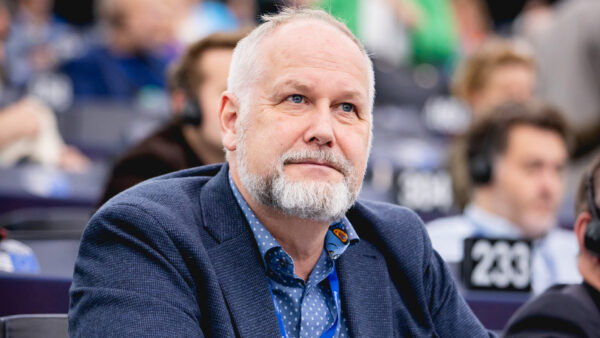
— Do you agree with this assessment of the main weakness in the EU’s sanctions enforcement?
— At a time when Ukraine is fighting for Europe’s freedom against a brutal imperialist oppressor, the EU must ensure that its legal and financial systems are not undermining that struggle. Sanctions are meant to raise the cost of aggression for the Kremlin, but if violators know that the probability of real punishment is low, they will not be an effective instrument. This undermines the EU’s credibility and strategic deterrence. We must make sure the sanctions are adequately enforced. Ukraine is defending not only its own sovereignty, but the security of the entire European continent.
— In your view, what should be changed to ensure that every established case of sanctions violation leads to criminal proceedings and real punishment for those responsible?
— Most importantly, there must be a clear political signal that violating sanctions against Russia is not a minor compliance failure, but active participation in sustaining a war of aggression. This should carry serious criminal consequences, including large financial penalties, confiscation of profits, and prison sentences where appropriate. Enforcement agencies may also need more tools for cross-border coordination. Europe has demonstrated unity in adopting these sanctions; now it is time to demonstrate the same determination and unity in enforcing them.
— Should such liability extend across the full chain of individuals and companies involved, including banks, traders, insurers, logistics operators, intermediaries, and entities from third countries that knew or should have known the nature of the operation?
— Sanctions evasion rarely happens through a single actor. It is usually a chain of enabling factors — financial institutions, logistics firms, intermediaries, and shell companies that facilitate the movement of goods, capital, and technology.
If sanctions are enforced only at the final link in the chain, the system will not work. Liability must cover all actors who knowingly participated or deliberately ignored clear warning signs. This includes banks that accept suspicious transactions, insurers that underwrite questionable shipments, and intermediaries that disguise the final destination of goods.
— Could expanding the powers of the European Public Prosecutor’s Office in investigating sanctions violations form part of the solution?
— Reinforcing the EPPO could play an important role in closing the enforcement gap. Sanctions evasion is inherently cross-border, involving companies, bank accounts, and transport routes that span multiple member states. A stronger mandate for the EPPO to investigate and coordinate sanctions violations across the EU could help overcome fragmentation and ensure that cases do not fall between national legal systems.
Exclusively for Guildhall.
Только главные новости в нашем Telegram, Facebook и GoogleNews!
Tweet