
The blockade of the Strait of Hormuz has shown that Europe’s energy vulnerability is directly linked to its defence capabilities. A prolonged disruption along such a route could affect not only fuel prices and supplies, but also the ability of European countries to sustain military operations.
This was stated in a comment to Guildhall by Estonian politician Valdo Randpere.
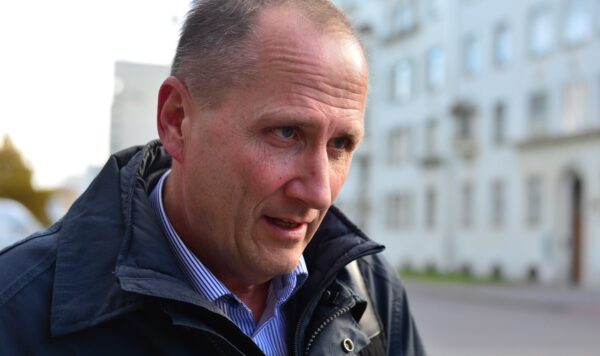
“Recent events, including the blockade of the Strait of Hormuz, are a stark reminder that Europe’s energy security is shaped not only by its immediate neighbourhood, but also by global chokepoints far beyond the continent. Disruptions along such critical routes can quickly and significantly affect fuel availability, prices and, ultimately, defence readiness. Strategic vulnerability today can emerge thousands of kilometres away.”
“In practical terms, a prolonged disruption in the Strait of Hormuz would cause not only price shocks, but could also directly limit Europe’s ability to sustain military operations.”
According to him, this leads to a broader conclusion for European security policy.
“Energy security must now be treated as an integral part of Europe’s security and defence policy. Modern armed forces still depend heavily on liquid fuels, and this dependence will remain for years to come. Without reliable access to fuel, even the most combat-ready armies cannot function effectively.”
“The situation around the Strait of Hormuz has exposed an important weakness: Europe still depends on global supply routes that it does not control. If such disruptions become prolonged, Europe must be able to compensate for them through alternative sources, larger reserves and flexible logistics. At present, that capacity exists only partially.”
“Europe cannot assume that global energy markets will function normally during a crisis that also has a military dimension.”
Earlier, in a comment to Guildhall, Michael Liebreich, honorary fellow of the Energy Institute and visiting professor at Imperial College London, said that Europe should take a pragmatic approach to energy independence by combining expanded domestic oil and gas production with accelerated electrification of the economy.
Только главные новости в нашем Telegram, Facebook и GoogleNews!
Tweet