
Europe has already reduced its dependence on some external suppliers, but this is still not enough to ensure long-term energy security. The next steps should include further diversification of imports, development of domestic resources, faster transition to new energy sources, and a complete phase-out of supplies from aggressive regimes.
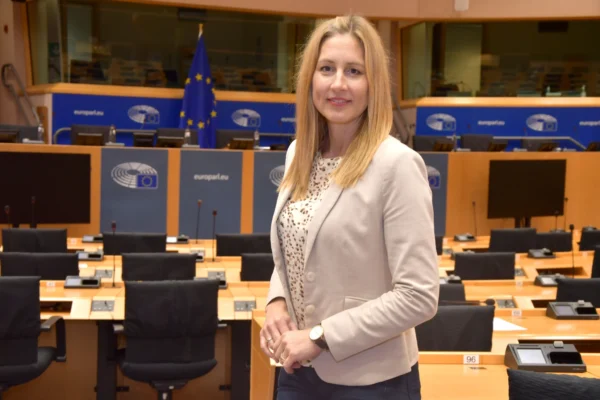
This was stated in an interview with Guildhall by Verena Mertens, a German Member of the European Parliament from the European People’s Party.
What steps can Europe take to achieve energy independence?
The fact is that Europe is no longer dependent on certain authoritarian countries, such as Russia, in the way it still was just a few years ago. As for Iran specifically, only 0.03% of Europe’s oil imports come from Iran. When it comes to gas, more than 30% of Europe’s gas imports come from Norway, and thus effectively from Europe itself. In the case of natural gas, that figure is as high as 51%.
With the RepowerEU programme, a strong response was given to Europe’s energy dependence in the wake of Russia’s war of aggression against Ukraine, and a mechanism was created to diversify suppliers. The task now is to implement this programme and all the measures it предусматривает in a consistent and determined way.
In particular, Europe needs to seek out more energy suppliers, conclude joint agreements more quickly, rely more actively on renewable energy, and decisively combat illegal supplies from Russia.
What changes in the EU’s and member states’ energy priorities are needed in the coming years to strengthen energy independence?
At the core of the EPP Group’s energy vision in the European Parliament is a firm commitment to affordable, sustainable, and secure energy. Europe needs a diversified energy mix, joint gas purchasing by all member states, and a consistent ban on gas from aggressive regimes such as Russia. Such a decision was already taken in October 2025.
A key element should be the systematic rollout of all new and renewable forms of energy supply, such as hydrogen, bioenergy, and their full systemic potential. In addition, investment is needed in research and development in fourth- and fifth-generation nuclear energy, as well as in small modular reactors.
Since the beginning of Russia’s aggression, Europe has been moving in the right direction. Even amid new crises, this objective must not be lost from sight. On the contrary, Europe should stay the course and diversify its energy suppliers even faster, more consistently, and more decisively.
How do you assess the idea of increasing domestic oil and gas production in Western countries, especially in terms of its impact on defence capabilities?
Europe is already making significant use of its own resources and imports large volumes from the North Sea countries, above all from Norway. But of course, Europe must not lag behind in using its own potential and domestic resources.
At the same time, the most important step remains the accelerated development of renewable energy sources, as already mentioned. Europe must also remain open to new technologies and innovation. That is why projects such as the European Commission’s recently announced funding for small modular reactors give grounds for optimism.
Exclusively for Guildhall.
Только главные новости в нашем Telegram, Facebook и GoogleNews!
Tweet