
Domestic oil and gas production in Western countries may play not only an economic but also a strategic role by reducing external dependencies and strengthening resilience in times of crisis. In the European Parliament, it is believed that, if approached responsibly, such resources can complement a broader energy security system and be regarded as one of the elements of defense preparedness.
This was stated in a comment to Guildhall by Lithuanian Member of the European Parliament Aurelijus Veryga.
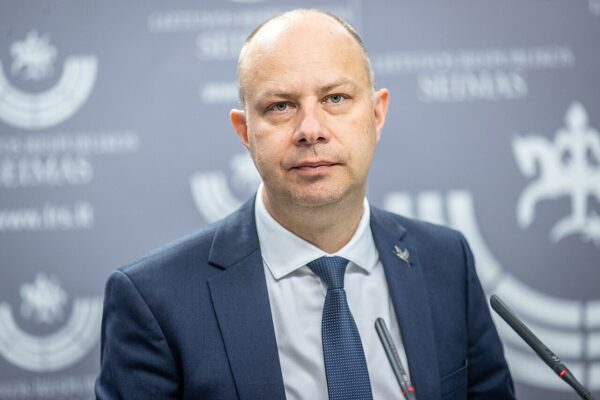
— What steps can Europe take to achieve energy independence?
— Europe sees energy independence as both an economic and a security priority. The first step should be accelerating investment in renewable energy, including wind, solar, and other clean sources, in order to reduce dependence on imported fossil fuels. At the same time, a pragmatic approach to nuclear energy can provide some member states with a stable foundation for strategic autonomy.
Equally important is the creation of a truly integrated European energy system. This requires strengthening cross-border interconnectors, expanding energy storage capacity, speeding up permitting procedures, and building a coherent European energy grid. The EU has already pointed out that insufficient interconnections, aging networks, and dependence on imported fuel contribute to high prices and vulnerability.
Europe has already taken concrete steps to strengthen its energy independence. The REPowerEU plan is aimed at phasing out Russian fossil fuels, accelerating the development of renewable energy, and improving energy efficiency. The EU has decided to gradually end imports of Russian gas by banning new contracts from 2026 and stopping pipeline imports by September 30, 2027. Sanctions have already banned Russian coal and restricted Russian oil, while diversification of supply has led to increased LNG imports from the United States, Norway, and Azerbaijan.
Finally, Europe has invested in LNG terminals, cross-border interconnectors, and storage facilities, building a more integrated and resilient energy system while preserving flexibility in fossil fuel supplies during the transition period.
— What changes in energy policy should the EU and its member states implement in the coming years to strengthen energy independence?
— The main change should be to place security and resilience at the center of energy policy, rather than treating them as secondary to climate or price concerns. Energy, industrial, and defense policy must now be coordinated much more closely. Protection of critical infrastructure, cybersecurity, domestic production capacity, grid resilience, and supply chain security must become key priorities. The European Union Institute for Security Studies has warned that large-scale attacks on critical infrastructure are among the main risks facing Europe in 2026, and has also pointed to the dangers of strategic dependence in energy technologies and infrastructure.
In practice, the EU and its member states should focus on four priorities. First, significantly accelerate the construction of grids and interconnectors. Second, ensure stable support for renewables, storage, and clean industrial capacity produced in Europe. Third, preserve a realistic role for nuclear energy where member states choose to rely on it. And fourth, provide targeted support to those countries that will bear the highest economic costs in eliminating their remaining dependence on Russian fossil fuels.
Energy solidarity within the EU is of fundamental importance. If certain member states still remain more dependent on Russian oil or gas, Europe must help them diversify their supplies rather than leave them alone to bear the costs. Only in this way will a common European energy security policy be credible.
— How do you assess the idea of increasing domestic oil and gas production in Western countries, especially in terms of its potential impact on defense capabilities?
— I view this issue pragmatically, not ideologically. If Western countries have domestic oil and gas resources that can be developed responsibly, then increasing production may form part of the solution. It can strengthen resilience, reduce external dependence, and create an additional strategic buffer in times of crisis. This also matters for defense, since armed forces, logistics systems, and many defense industries still remain heavily dependent on petroleum products, while oil is also used in the chemical industry and other manufacturing chains. In this sense, a certain level of domestic production can support both national and pan-European preparedness.
However, domestic oil and gas production should not become the central pillar of energy independence. Europe’s long-term security will not be secured by replacing one fossil fuel dependency with another narrow strategy. It will be built on diversification: more renewable energy, stronger grids, selective use of nuclear power, expanded storage, multiple import routes, and, where possible, a certain level of domestic oil and gas production as a transitional and strategic complement.
The lesson of recent crises, including the vulnerability exposed by disruptions around the Strait of Hormuz, is that dependence on too few suppliers or routes is dangerous. Europe should therefore maximize its room for choice, rather than create new points of critical dependence.
Exclusive to Guildhall.
#Aurelijus Veriga #defense readiness #domestic production #energy security #European Parliament #European security #oil and gas
Только главные новости в нашем Telegram, Facebook и GoogleNews!
TweetЧитайте также
-
Foreign Affairs Committee Chair McAllister: Kremlin’s Breaches of Neighbours’ Sovereignty Undermine European Security -
MEP Gori: Russia’s Pressure on Georgia and Armenia Is Imperial Expansion -
MEP Verougstraete: Russia Views Its Neighbours as Territories Within Its Sphere of Influence -
MEP Bloss: Europe Must Cut Kremlin Energy Money to Defend Georgia and Armenia -
The European Public Prosecutor’s Office Should Ensure a Unified Approach to Sanctions Cases — Danish MP -
European Parliament Supports Expanding the Powers of the European Public Prosecutor’s Office -
Powers in Cases of Sanctions Violations Should Be Fully Transferred to the European Public Prosecutor’s Office — MEP -
EU Should Expand Powers of Special Prosecutor for Sanctions Cases — Lithuanian MP -
Thijs Reuten: Even legally exportable goods must not end up feeding Russia’s war machine -
Nicolae Tibrigan: Romania’s far-right AUR could gain de facto power without entering government