
Europe’s energy independence is impossible without reducing dependence on imported oil and gas, accelerating the development of renewable energy and large-scale expansion of cross-border energy infrastructure. In the face of geopolitical instability, the EU’s energy policy should be considered not only as a climate policy, but also as part of a strategy for security, sustainability and economic competitiveness.
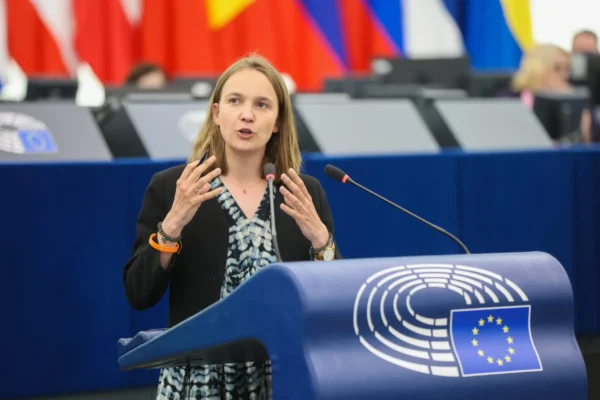
Anna Stürgh, a member of the European Parliament from Austria, who is a member of the Committee on Industry, Research and Energy, said this in an interview with Guildhall.
— What steps can Europe take to achieve energy independence?
— The most important step Europe can take towards energy independence is to reduce its dependence on imported fossil fuels. As long as Europe depends on oil and gas from geopolitically unstable regions, conflicts like the current situation around the Strait of Hormuz will continue to affect our energy prices and our security.
This means the need to accelerate the expansion of renewable energy throughout Europe. But renewables alone are not enough. In recent years, renewable energy capacities have grown much faster than the infrastructure needed to distribute them. Europe is still a space of fragmented energy networks.
That is why we need a large-scale expansion of cross-border electric power networks, an increase in storage capacity and the development of digital infrastructure. Only with better interconnected networks can wind power from the North Sea or solar energy from southern Europe be used effectively across the continent. Strengthening Europe’s grid infrastructure is essential if Europe wants to make its energy system both cleaner and more sustainable.
— What changes in energy policy should the EU and its member states make in the coming years?
— Today, energy policy is also a security policy. Therefore, the European Union and its member states should consider the energy transition not only as a climate priority, but also as a strategic security project.
This means that we need to focus much more on three areas: expanding renewable energy, accelerating the development of electric power networks, as well as investing in energy storage and system flexibility. The EU also needs much closer coordination of infrastructure planning so that national systems work together rather than as isolated networks.
In the long term, Europe needs a real Energy Union. It makes little sense that member states compete against each other over electricity prices or national subsidies, whereas Europe’s real competitors are on a global level. A more coordinated pan-European approach would strengthen both energy security and the EU’s economic competitiveness.
— How do you assess the idea of increasing domestic oil and gas production in Western countries?
— Fossil fuels will always be more expensive than our own renewable energy. Increasing domestic oil and gas production may have a limited short-term effect during the crisis, but it does not solve the structural problem of dependence on fossil fuels. Fossil resources will always be subject to geopolitical risks and price volatility.
The real long-term solution is to accelerate the transition to clean energy systems. The expansion of renewable energy, the modernization of networks and the reduction in demand for fossil fuels will make Europe much less vulnerable to geopolitical shocks.
In this sense, European climate policy is also the best defense against energy price shocks and geopolitical pressure. Clean energy is no longer just a climate policy, but increasingly a security strategy for Europe.
Exclusively for Guildhall.
Только главные новости в нашем Telegram, Facebook и GoogleNews!
Tweet