
EU sanctions against Russia will remain weaker than intended if enforcement continues to be fragmented across Member States and violations do not systematically lead to investigation, prosecution and real punishment.
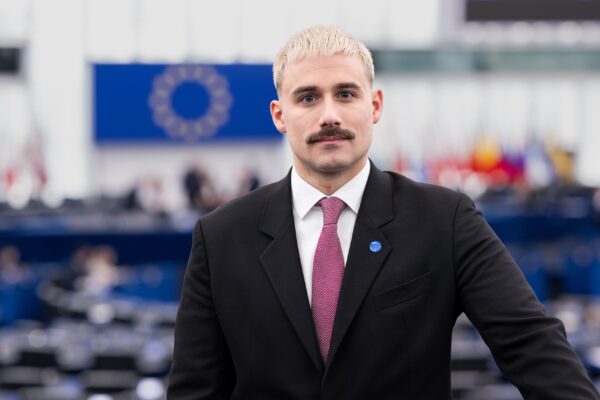
German MEP Lukas Sieper told Guildhall that sanctions circumvention is usually carried out through networks of actors, not isolated individuals, and that liability should therefore extend across the full chain where actors knowingly facilitate, conceal or profit from evasion.
— Do you agree with this assessment of the main weakness in the EU’s sanctions enforcement?
— Broadly speaking, yes. Enforcement is the weakest link. The EU has adopted strong sanctions, but implementation across Member States is uneven, and too many violations do not lead to consequences. This reduces the impact of sanctions and weakens their deterrent effect.
The problem of EU sanctions is also more structural, as sanctions are agreed at EU level, often requiring unanimity among Member States, which can dilute ambition and slow down decision-making at times when we need to act promptly.
— In your view, what should be changed to ensure that every established case of sanctions violation leads to criminal proceedings and real punishment for those responsible?
— Sanctions enforcement needs to be treated as a priority policy area by all Member States, not as a secondary legal task.
Member States need to dedicate more resources to better information sharing, proactive coordination and closing loopholes to prevent sanctions circumvention. When violations are identified, they should systematically lead to investigation and prosecution where necessary.
— Should such liability extend across the full chain of individuals and companies involved, including banks, traders, insurers, logistics operators, intermediaries and entities from third countries that knew or should have known the nature of the operation?
— Yes, with careful application. Sanctions circumvention typically relies on networks of actors and intermediaries, not isolated individuals.
To make enforcement effective, extending responsibility and liability across the full chain is necessary, especially where actors knew or should have known they were facilitating a violation.
— Could expanding the powers of the European Public Prosecutor’s Office in investigating sanctions violations form part of the solution?
— Yes, it could be part of the solution. Enforcement is currently fragmented across Member States. A stronger role for the European Public Prosecutor’s Office could improve coordination and consistency in cross-border cases.
Sanctions violations often span multiple jurisdictions, which makes them difficult for national prosecutors to handle alone. Expanding the mandate of the European Public Prosecutor’s Office could bring more consistency and help ensure that complex sanctions violations are investigated and prosecuted more effectively.
Exclusively for Guildhall.
Только главные новости в нашем Telegram, Facebook и GoogleNews!
Tweet