
Statements from Moscow about its “readiness for peace” are not borne out by Russia’s conduct: according to European Parliament Vice-President Martin Hojsík, the Russian authorities lie systematically, and trust in their statements is effectively zero. In such conditions, he emphasizes, a sustainable peace is possible only if support for Ukraine is maintained and a policy of pressure — a “position of strength,” which the Russian regime understands best — is pursued.
Assessing the impact of the escalation in the Middle East, Hojsík notes that the consequences may be mixed — from problems with Iranian arms supplies to attempts by the Kremlin to once again “push” Europe through energy leverage. At the same time, he describes the rejection of fossil fuels not only as a climate issue, but also as a key security task for Europe.
This was stated in an interview with the Guildhall News Agency by Martin Hojsík, Vice-President of the European Parliament.
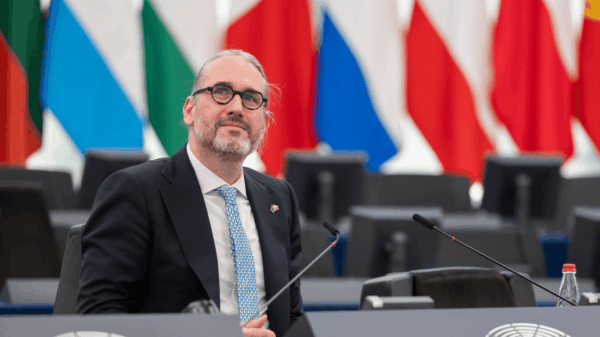
Mr. Hojsík, good afternoon. Thank you for joining us for this interview.
— Thank you for the invitation.
Against the backdrop of the negotiation process initiated by the United States of America, Russia says it is ready to end the war. Based on Russia’s actions, do you see any real readiness on Moscow’s part to stop its aggression?
— Unfortunately, this has to be said plainly: when Russian representatives open their mouths, most often what comes out is a lie. Their actions do not resemble an attempt to end the war. They lied even before the start of the full-scale invasion — insisting that no attack would take place. They continued to lie throughout the war, despite the crimes being committed. Under Putin’s regime, this has become the state’s mode of behavior.
Russia is an unreliable partner led by a war criminal. So there can be no talk of any “honest intention.” If Russia truly wanted to stop the war, it would never have started it. That is precisely why trust in statements by the Russian authorities is virtually zero.
And the most reliable approach — not only for Ukraine, but also from a European, including a Slovak, point of view — is a position of strength. That is the only language the Russian regime understands.
Do you believe Russia is using the negotiation process for other purposes?
— Of course. At the same time, there is no need to pretend that negotiations themselves are somehow “forbidden” or “unnecessary.” Of course, this does not mean there should be no negotiations. But they must be approached without illusions and with an understanding of how Russia uses them: Moscow tries to present itself as “the side of peace” and “the side of dialogue,” while in reality the opposite is true.
The situation is difficult — for everyone. But in it, it is important to continue resisting and at the same time to demand that Russia respect the fundamentals of international law and Ukraine’s internationally recognized borders.
How can the escalation in the Middle East affect the Russian-Ukrainian war? Could Russia gain advantages from it — for example, by diverting attention away from Ukraine and reducing support for Kyiv?
— This is a difficult situation, and it is hard to assess it unambiguously. Even among colleagues there are different opinions.
On the one hand, technically, it can be assumed that Russia risks losing an important supplier of weapons. Shahed drones have killed many civilians in Ukraine and were supplied from Iran. But at the same time, Russia has acquired the ability to produce licensed copies of these drones on its own territory. So developments around Iran will not necessarily stop that part of the production — and there is no certainty here.
On the other hand, there is a risk that seems particularly dangerous: the impact on the fossil fuel market from the Persian Gulf countries. This could give rise in Europe to a harmful logic — “let’s start buying from Russia again.” And that would be, in essence, suicidal for Europe. In that case, Europe could simply “hand the keys” to Putin.
From a security point of view, abandoning fossil fuels is not only about climate — it is a fundamental issue of Europe’s security. This should have been addressed earlier and more decisively. The fact that it was not done was a major mistake of previous political courses.
Historical experience shows that an aggressor is usually forced to end a war by military and/or economic means. What additional instruments, in your view, can the West use more forcefully?
— In addition to the economy and weapons, it is necessary to speak about subversive activity — about “subversion.” This is what the KGB engaged in for decades, and what Russia is doing today. A significant part of the threats consists of disinformation warfare and attempts to undermine the resilience of societies.
Ukraine sees this better than many others. But, for example, in Slovakia, to speak honestly, this struggle is currently being lost: under Robert Fico’s government, the population is being subjected to extremely powerful disinformation. A similar problem exists in Hungary. And, unfortunately, even previous governments underestimated the risk.
In this assessment, Fico is also using this wave as an instrument of his own political protection — including to reduce the risks of being held accountable for corruption. That is part of the problem.
What can be done in practical terms.
First, close the “gaps” through which components for Russia’s war machine are still reaching Russia from Europe. It looks absurd, but this is still happening, and control must be far stricter.
Second, tighten visa policy. It is unacceptable that people connected to the war can travel freely to Europe. This should become a form of tangible “pressure” on the regime’s inner circle.
Third, take a tougher approach to assets: verify the ultimate beneficial owners of real estate and property in Europe. Why do the children of regime representatives still live in Western Europe? Why do they still retain assets there? Why has this not been dealt with for years? We are talking about people who simultaneously oppress their own population and help the regime kill in Ukraine. This must be stopped.
The current scale of military assistance to Ukraine appears sufficient primarily for defense. Is a sharp increase in support from the EU possible — and what would be needed for that?
— Unfortunately, I am not a military expert. But the reality is this: Ukraine has to defend itself, and Ukrainians are paying for it with their lives every day.
And it is surprising that even under Merz’s government, Taurus missiles have still not been delivered. At the same time, long-range capabilities are also a form of defense. Ukraine is not planning to march on Moscow — it is Putin who wants to march on Kyiv. And strikes against bases and logistics that enable Russia to continue killing people in Ukraine are a way to prevent attacks.
In addition, the war has become a war of technology and “low-cost” solutions. Ukraine is very effectively creating inexpensive ways of striking enemy targets. Support should take this into account — including through expanded production. If some of these production facilities are located in Europe, they do not need to be protected from air strikes in the same way as in Ukraine, and this reduces the burden on air defense (AD).
Therefore, cooperation is important: learning from Ukraine and producing in Europe some of the technologies and solutions that Ukraine has developed and tested in practice.
Around 60% of Russia’s budget depends on hydrocarbons. What additional instruments does the EU have to increase pressure on Russia’s energy sector?
— The main answer is to reduce Europe’s dependence on fossil fuels without qualifications. It is good that pressure on the “shadow fleet” is finally increasing, but honestly: four years is far too long. Why was so much not done immediately?
Dependence on fossil fuels is a huge part of the problem. Europe, in effect, financed Putin’s war in advance and handed Russia the leverage of pressure. Back in the early 2000s, it was already clear that the export of fossil resources was a weapon of Russian foreign policy.
And it is important to understand: renewable energy is not “to blame” for the crises — on the contrary, it reduces dependence. The more diversified and distributed the energy system is, the more resilient it becomes and the harder it is to disable.
Has the EU defined what “victory” in this war means? Is there a formally established goal?
— No. And in any case, it is not for Europe to decide which terms of victory or peace are acceptable for Ukraine. This should be discussed together with Ukraine, but the final decision belongs to the Ukrainian people. Europe’s task is to help, to participate in consultations, and to provide support. But the choice is Ukraine’s. It is your country.
Thank you for the conversation and for your position.
— Thank you. It was a pleasure to talk.
Только главные новости в нашем Telegram, Facebook и GoogleNews!
Tweet