
The United States is revising its strategy toward Ukraine within the logic of simultaneous confrontation across several theaters, particularly against the backdrop of the war involving Iran. However, despite widespread assessments that Ukraine has lost priority status, it remains in Washington’s focus. The United States should not expect voluntary concessions from the Russian Federation, but should abandon half-measures, properly arm Kyiv without fear of Russian rhetoric about “escalation,” send the Kremlin a clear signal of resolve, including through the possible deployment of an American contingent, and view Ukraine as a future outpost of the West in Eastern Europe and as part of NATO.
At the same time, Europe, which for years ignored Donald Trump’s calls to build up its military potential and undermined its own defense capability through energy dependence on the Russian Federation and the Middle East, must move to active measures, in particular by joining efforts to protect commercial shipping in the Strait of Hormuz. Iran is presented as a transatlantic strategic threat that had been implementing the concept of the “five capitals” — a network of influence through Tehran, Baghdad, Damascus, Beirut, and Sanaa — while U.S. actions against it are described as serving the interests of the entire West, despite Tehran’s continued capacity for asymmetric threats. Against this backdrop, China seeks to preserve access to Middle Eastern energy resources, while Russia seeks to use the crisis to restore its influence in the region.
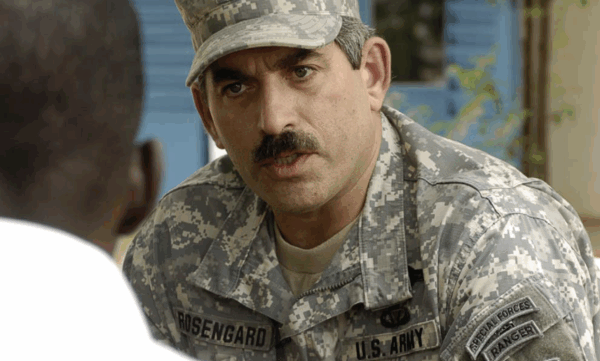
This was stated in an exclusive interview with Guildhall by retired senior U.S. officers — Major General Michael Repass, former commander of the U.S. Army Special Forces Command and U.S. Special Operations Command Europe, and Colonel Mark Rosengard, former chief of staff of U.S. Special Operations Command in the CENTCOM area and former director of operations of U.S. Special Operations Command Europe.
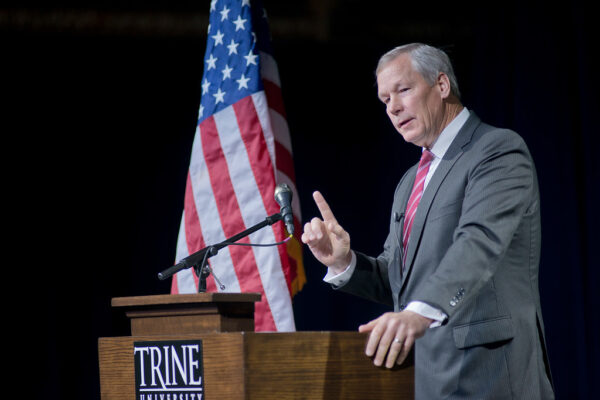
— Mr. Repass, given your experience at the intersection of military strategy, allied coordination, and defense policy, it is especially interesting to hear your view: how would you characterize the current strategy of the U.S. administration toward Ukraine? Is the White House trying to rethink that strategy today?
Major General Michael Repass: I think your assumption is correct: they are trying to rethink it. Moreover, they have in fact already rethought it and are moving along a different trajectory from the previous U.S. administration. Their goal is to achieve peace, but there may be consequences in the process of achieving it. That is exactly what the main debate is about right now — whether those consequences are acceptable or unacceptable. Will they ultimately lead to acceptable conditions for both sides? Or will one of the sides face unacceptable conditions and continue to contest the situation? This is a very interesting period of time.
— Mr. Rosengard, especially given your experience in the Middle East, it would be very interesting to hear your answer to the same question.
Retired Colonel Mark Rosengard: Similarly, I think the strategy is constantly evolving, and as circumstances change, sometimes from week to week, it requires constant reassessment. I think the most interesting thing here is what you hinted at: all of this is interconnected. Part of these interconnections is economic. Part is religious. Part is political and ideological. It all begins with understanding.
As an American, I acknowledge that our understanding of the interconnections between cultures needs improvement. That is what shapes strategy and our understanding of where, in what General Repass was talking about, these things come together — the question of conditions, the understanding of where changes in trade, changes in cultural relations, and other factors potentially create unacceptable conditions. That is exactly what must be taken into account, assessed, and reassessed.
— Are there risks that Ukraine will move to the periphery of American strategy and priorities? Are there any risks for the United States itself if this happens?
Retired Major General Michael Repass: I think there is really no “if” in that statement at all. Ukraine has already moved to second or third place after China and some other global threats we are facing. You have a regional threat, while we face a global threat led by China, plus its unholy alliance with North Korea, Iran, previously with Venezuela, and its coercion of less capable states through unfavorable trade relations. All of this is aimed at feeding the Chinese economy, I would say, at below-market prices so that China can compete unfairly and not on equal terms with democratic states. So this is a larger global problem than a regional one.
— Ukraine must occupy its place in this global game.
Retired Major General Michael Repass: I think I should note very clearly that support for Ukraine among the public, as well as among the leadership in the Senate and the House of Representatives — our legislative branch — is very strong. Moreover, legislation aimed at funding the military effort here has already been passed. So although attention is divided right now, that does not at all mean, I would say, that Ukraine has disappeared from the radar; we remain engaged.
We spoke with embassy representatives two days ago, and I asked essentially the same question. I was very pleased to learn that the embassy believes Ukraine remains in focus in Washington. So I do not agree with the common view that Ukraine has disappeared from the radar. You are still there, but you are definitely in second or third place after China.
— And where would you like to see Ukraine? What goals would you like to see within the framework of the U.S. strategy toward Russia’s war against Ukraine?
Retired Colonel Mark Rosengard: First of all, I would say that what you originally described — that before the current set of problems with Iran, and before the current efforts focused on Iran, it was probably fair to say that our main security problem was here.
But there is a very large difference between the current position and the periphery. There is a great deal of space between those two statements. And I believe that is exactly where Ukraine is now and will remain for a number of reasons. Not least because we Americans, within the logic of American security strategy, regardless of the administration, will be watching very closely what the Russians are doing. We will be sensitive to how the state assesses what is happening. Without trying to speak on behalf of the American government, I would put it this way: we Americans, to a certain degree, understand the nature of Russian thinking and what it has been like over the last hundred years — though to a lesser degree than Ukrainians. I understand that your connection to this is deeper than ours, and I value that very much. That is why we are here.
We are learning to understand all these nuances better. But attention to what is happening here will remain part of our broader thinking. So even if this is the second or third most important issue compared with what currently appears to be a more important problem in the global picture, it still remains connected to other processes and does not disappear from view. It is still important for us to understand what is happening here — not only because of its connection with other problems we face, but also because the problem you are facing first and foremost remains on our radar. Therefore, I would never call this a peripheral issue, and I do not see it becoming one. That word simply carries a semantic shade that, to me, is inaccurate.
Retired Major General Michael Repass: Yes. This idea of focus, attention, and so on has already come up a couple of times in our conversations during previous trips here and, of course, during this trip as well. But I would note two things. The new administration has made it very clear that the priority is the defense of the homeland and, essentially, taking care of the Western Hemisphere — North, Central, and South America. And right now that process is underway. We saw how it began with Venezuela. It continues with Cuba and some other countries such as Nicaragua, Mexico, and so on. So this is happening simultaneously with what is happening in Ukraine, what is happening in Iran, and our efforts to deter China from attacking Taiwan or its regional neighbors, as well as to limit some of its capabilities. The main point here is that a great power is capable of doing more than one thing well at the same time. We have not reached the limit of our resources and, certainly, we have enough attention to handle both.
— What we hear today from political proxies linked to the Russian government and from representatives of the expert community is the claim that the United States is allegedly incapable of operating in several theaters of war at the same time. So it is good to hear such an assessment from you. It is also important to understand that Ukraine and Russian aggression remain among U.S. priorities. At the same time, do you see a need for any specific adjustments to the U.S. strategy toward Ukraine?
Retired Major General Michael Repass: In an ideal world, Ukraine would be provided with the resources for full self-defense, for driving the Russians from your territory, restoring sovereignty, and then creating conditions under which Russia would be unable or unwilling ever to attack Ukraine again. That is the ideal world. That is the end state. But the reality is that we have to move from that objective to the circumstances we actually have. And the circumstances are these: Russia gives no indication whatsoever that it will cede territory it already controls. There is no precedent in its history for that. I do not think the United States should realistically expect Russia to do this voluntarily.
The second point is that Ukraine must be supplied and armed in such a way that it can defend itself adequately, without provoking some mythical escalation by Russia. That will not happen. Russia will not escalate over territory that is, in fact, not its own. There are several components here. Politically, I would like to see Ukraine as part of the EU. I would like to see it as part of NATO. I am describing my ideal option to you. Part of the EU, part of NATO, a country that contributes. I would like to see Ukraine sovereign and independent, free from Russian influence — direct or indirect — and a viable economic partner in Eastern Europe, probably an anchor state in Eastern Europe, unlike Turkey at its current stage of decline and some Eastern European countries on your border.
I think that after the war Ukraine will have opportunities to prosper internationally — economically, technologically, and militarily. You have advantages that other countries simply do not have because of your experience here. I do not want to downplay the seriousness of the situation, but the fact is that you have significant advantages that other European countries, in particular, do not have.
— Colonel Rosengard, I assume you at least partially agree with what the general said. If you would like to add anything, please do. But I would also like to ask you briefly to explain why such adjustments serve American national interests. One often hears claims that this is supposedly not an American issue. Could you, as an American and as an officer, explain this?
Colonel Mark Rosengard: In my view, they reflect our interests as a function of having an open set of global economic opportunities. I fully agree with the statement that Ukraine can become an anchor state in Eastern Europe. And having been to all the other countries — I think all of them — I cannot imagine, I cannot recall a single one where we have been during this period in which Ukraine is not at least equally capable economically. Of course, its resilience is impressive. And why we would not want it connected to us as part of our network of friends and allies makes no sense to me. That is how it should be, and it is to our mutual advantage.
As for what I would like to see done differently, I do need to add a little to the discussion. I think all of us would benefit if there were a contingent here that we could mutually agree upon in terms of American military capability. And if I were king for a day — may I appeal to the 1st Armored Division? Briefly speaking, I have some family ties to the U.S. Army’s 1st Armored Division. All right. That is a significant force. It should be here today. Not on a permanent basis, but its place is here today.
We resort to half-measures in matters like this. And I think we should be visibly present here in order to send a clear signal: first, that we are your friends; second, that we are committed; and third, that we are participating as a determined partner in the resilience you have demonstrated against, suffice it to say, the imperial intentions that some attribute to Mr. Putin. I think such signals need to be sent.
Major General Michael Repass: Yes, certainly — a demonstration of political will.
Colonel Mark Rosengard: That would be a statement I would like to see. I understand that such things have pros and cons, but to me the pros outweigh them.
Retired Major General Michael Repass: I had an interesting phone call the night before last. At 3:30 in the morning, I got a call from an old friend who is, in fact, a member of the House of Representatives, our lower house of Congress. The next day he had a meeting with a Russian delegation from the Duma, and he had talking points for that conversation that he wanted to discuss with me. I have known this man for 15 years. We are good friends. We are candid with each other. And he had some talking points that, it seemed to me, reflected Russian influence. I was particularly unfriendly with him, although we are good friends. I said: you are badly informed, and not only that. So your thesis about Russian influence in North America is absolutely accurate. And it does have a certain influence in Washington.
People who have followed Ukraine closely and who are outside the Washington circle, outside that Washington complex, are in something of a state of shock at the fact that such traditional values as the preservation of democracy, the inadmissibility of changing borders by force of arms, and so on — all these notions in American foreign policy are, at this moment, I would say, being diminished. But the conversation ended on an unfriendly note. So I think I did my part.
Later I continued the conversation with a very long text message in which I explained some details. And the next morning, in the early hours, he wrote to me: all right, now I understand. But I think that participation in such forums, in such discussions, allows us to return and speak on your behalf with people who truly matter. We do not talk to the Russian Duma, but we talk to people who talk to them.
Retired Colonel Mark Rosengard: And those conversations are shaped by our discussions with you.
Retired Major General Michael Repass: Yes. So that in itself has consequences.
— This should become a separate topic for an interview. At the beginning of the war, Ukraine actively worked with Western political elites, but when attention weakened, Russia became noticeably more effective at influencing them. Thank you for this work — it should be part of our bilateral strategy.
Retired Major General Michael Repass: I understand that you are concerned about American interests, presence, and involvement here in Ukraine. But returning to my broader global and regional approach, the Trump administration made it very clear that Europeans must step up. He told them, even during his first administration, that they needed to increase defense spending. And he was very sharp with NATO leaders at the NATO summit. He was criticized for it because in his comments he was absolutely rude. He said it publicly. And he was very harsh regarding the underfunding of national defense by NATO countries. But he, as we say, spurred them on, like a cowboy spurs a horse. He really did spur them on.
And after he was not elected a second time, the Europeans returned to their old habits. And now that the United States has stepped back from the role of leader on Ukraine, the Europeans have realized how weak they are. But they still have not understood the signal. They are moving at the pace of process, not with the sense of urgency required by national defense and national security.
And now we are involved in Iran. And 80% — I should not put it that way — a large share of European energy comes from Iran and from the Middle East. The United States gets nothing from there. So now, when it comes to the global threat Iran represented through its missile program and its nuclear program, this is not a regional threat; it is a global threat. And this is clearly demonstrated by their recent launches of intercontinental ballistic missiles. Europeans must rise. They must rise and defend their interests there, namely free and unobstructed access to energy exports from the Middle East. Europeans are not acting with the speed and urgency this situation requires.
Colonel Mark Rosengard: And in some cases they have refused to act at all.
Major General Michael Repass: Exactly. So if you are an American, you lean back and look at Europeans, who have very good social programs and live quite comfortably. For almost eight decades, the United States has sacrificed its domestic programs for international security. And you can see the difference between European programs and American programs. The United States lags significantly behind because we spend such a large percentage of our gross domestic product on national defense. But we are not defending the homeland as such. We are not fighting at home, as Ukraine is. We are fighting in places such as Iran, Afghanistan, and Kuwait — which, by the way, was also a European problem.
Thus, we are defending Western interests without the help of our historic partners. So if you are an American, you look at the international situation and say: look, we have carried your risks for eight decades already. And we expect you to step in as well. Therefore, I think there are justified grounds for concern and dissatisfaction with our traditional European partners.
— Colonel, two short questions. It should be obvious that without energy independence there is no defense capability at all. Why do Europeans still act this way? And how, in your view, should they act now in the situation with Iran?
Retired Colonel Mark Rosengard: I think the first reason they act the way they do is that they have not had war on their doorstep since 1945.
— And the experience of 1973?
Retired Colonel Mark Rosengard: And what happened in 1973 in Western Europe?
— I mean the Yom Kippur War and the major energy and economic crisis.
Retired Colonel Mark Rosengard: That is not the same as getting a bullet in the face.
— Yes, but now, in terms of energy and the economy, it is the same. For essentially the same reason — to become free from oil again.
Retired Colonel Mark Rosengard: All right, you make a fair point. But I would suggest that there is a difference between freezing and bleeding to death.
Retired Major General Michael Repass: And suffering inconvenience.
Colonel Mark Rosengard: You see, there is a difference. And I think they have not faced the existential threat that you are facing. And I will refrain from discussing their intellectual inability to recognize this, except simply to mention it.
And I cannot understand it. I suppose President Trump cannot understand it either, although, again, I am not trying to speak for him, for American policy, or for the course. But I think his irritation is the same. I think he wants to see these interests defended more actively, rather than sitting back and refusing to participate in operational actions to open the Strait of Hormuz or in the deployment of combat power here, on the ground, where it is needed. So again, that is my opinion. But I think their reluctance to do this stems from an eighty-year period without an existential threat right at the front door — ringing the bell and pressing against their chest. That has not happened. And it is not the same as what happened in 1973. I understand your point of view.
— All right. How would you like to see Europeans act right now?
Colonel Mark Rosengard: I would like to see them use their naval forces to support the freedom of commercial shipping from the Persian Gulf — for a start. I would like to see them invest much more in the military capability needed for deterrence. And I would like to see them determine how best to change their energy policy. Although I do not in any way claim expertise here — my experience does not allow it. But I think they are too dependent on things they should not be dependent on, and that makes it difficult for them to accomplish the first and second tasks.
— Right. That is why we began with strategy. Let us go deeper into the subject of the Middle East and Iran. It is difficult even to ask a general question here, because there are many possible scenarios for how events may develop. But you have already, at least partially, described the situation with commercial shipping in the Strait of Hormuz. And President Trump quite clearly outlined the goals of the entire operation. Given how this is developing now, what main threats for the United States do you see?
Major General Michael Repass: First and foremost — the nuclear threat. The confirmed nuclear threat that Iran possessed. They had somewhere in the range of 400 kilograms, I believe, or 200 kilograms of nuclear fissile material, or material capable of becoming fissile. And they had some additional quantity, to be determined, unconfirmed, enriched to 60 percent, which could rapidly be brought to a sufficient threshold to be weaponized. What had not happened was the combination of a weapon, a device, with a missile. In other words, they had developed these technologies independently of each other, with help from China, Russia, North Korea, and, some would say, Pakistan as well. And as part of their foreign and domestic policy, they were anti-Western — especially anti-American and anti-Israeli. That is, Israel first, the United States, anti-West. So the question is: why do you need intercontinental ballistic missiles and fissile material? That is not for defending your borders. You do not do that for that purpose. In addition, they have a declared policy — and it is part of the foundational documents of the revolutionary government — calling for the destruction of Israel and America. So what, are we supposed to stand on the porch of our own home and watch storm clouds gathering on the horizon? Is that what we are supposed to do?
Colonel Mark Rosengard: And say, “Well, it hasn’t rained yet”?
— No one has any doubts about the validity of these goals, sir. Neutralizing the Iranian threat unquestionably serves the interests of the entire West. At the same time, despite the fact that most military goals have been achieved, the regime is still there. And looking at how everything is developing, and at preparations for an operation in the Strait of Hormuz, on Kharg Island, what exactly are the threats that exist for America and for the entire West?
Major General Michael Repass: In addition to the nuclear component, Iran retains a very powerful and deadly irregular capability internationally through the IRGC — the Islamic Revolutionary Guard Corps. So they are present in many countries. If a country matters, they have a footprint there. And they are not there to open pizzerias and run auto repair shops. They are there for a specific purpose. They are there to serve as an advance detachment for what I would call influence operations, as well as potentially hostile actions against the countries where they are present, in order to attack U.S. or Israeli interests wherever those interests may be.
I will give two examples. The first is the attack on the Israeli embassy in Venezuela. That was in Brazil, in South America. During that attack, they killed several people. And it was carried out by the IRGC. About 10 years ago, the United States foiled a plot against the Saudi ambassador that was being developed and carried out by the IRGC in Washington, D.C. So these are not hypothetical cases. These are real cases. He and I know very well about other similar things that were prevented during our time in service. But because of the sensitivity of that information, we can never speak about them.
— I suppose what has been said is already more than enough.
Major General Michael Repass: Yes, more than enough. So the unconventional threat from Iran is substantial. Absolutely substantial right now, as we speak. It has not gone anywhere. Now, as for Iran itself, the theocracy that ruled the country has essentially been destroyed. So who governs the country now? It is the IRGC — these radicalized military leaders, military-political leaders, who now govern the country.
Colonel Mark Rosengard: Without restraints.
Major General Michael Repass: Unrestrained by the religious and political leadership.
Colonel Mark Rosengard: Correct.
— But that is even worse.
Major General Michael Repass: It is absolutely less predictable than it was before. And, as Mark says, constrained by nothing. So let me hand it over to you.
Colonel Mark Rosengard: Add to that the religious divide and the fact that, in Islam, the Iranians — the Shiites — want to become a greater hegemony than they were, even greater than they were before, and that is already saying something. But they are interested in strengthening their influence within their own religious sphere. So this increases the significance of what is happening. I cannot say with certainty how this changes after the theocracy disappeared or was decapitated. But I would suggest that now they will seek to rebuild themselves, rebuild their agenda, and rebuild their goals.
So for me, this means the matter is not over, and that work remains to be done not only in trying somehow to change the situation, but also in trying to induce, encourage, or catalyze the emergence of perhaps less fundamentalist, more people-oriented movements within the Persian diaspora. And to some extent it flourished decades ago, 40 years ago, within our memory. We are older than you guys. So we remember when Iran was different. And you do not. That is all right. This should be encouraged. And I do not claim expertise in how exactly to do that. But I know what it looked like back then. And I think we should seek to encourage the revival of a society that wants to become part of a broader community of cooperation, trade, and intellectual exchange. All of that is there, and it should be encouraged.
Major General Michael Repass: I would also add that, at the regional strategic level, Iran had a very deep and truly viable plan — the so-called strategy of the five capitals. They wanted to surround Saudi Arabia with regimes of a similar type in order, over the long term, to influence Saudi Arabia and weaken the Sunni element of Islam. What they were striving for — and achieving strategically — was control over Muslim holy sites.
So, you had Iranian influence on the Arabian Peninsula, in Sanaa, Yemen. Very strong influence — through the Houthis. They have been supported by Iran for about 15 years; it is a very powerful force in the south. You have, at least temporarily, deprived Iran of the ability to support them there. So now you are opening freedom of navigation in the Red Sea by weakening or destroying Iran, which in turn is no longer capable of sustaining the Houthi threat in the south.
So Yemen is the fifth capital. Obviously, Tehran. The third capital would be Baghdad. They still have enormous influence in Baghdad, in Iraq, through the paramilitary structures there — irregular forces without uniforms that are part of Iraq’s defense structure. But their influence is weakening because Iranian support is no longer as active or as strong as before.
Then you move to Syria. Well, when did Syria fall? It fell shortly after Trump’s second term, a couple of months later. Syria fell, and Iranian influence there was completely eliminated. I would say overt Iranian influence disappeared from there. People will no longer tolerate overt Iranian activity there.
And then, of course, Lebanon. Lebanon still remains a contested space. But Iranian influence through Syria has been significantly reduced, as has the role of Hamas. And then add to this the Gaza Strip — Hamas, sponsored by Iran.
And it is still sponsored by it. So you are breaking this strategy of five capitals plus one that Iran was implementing on the Arabian Peninsula, and you are changing the future dynamics of Sunni dominance in the region — for the better, I would add.
— We will sum this up later from the strategic point of view. But I would like to look at a possible operation in the Strait of Hormuz from a military point of view. I do not know what resources Iran and the United States have; of course, you have incomparably greater understanding. How would you assess the complexity of a possible operation, if it does take place in one form or another in the Strait of Hormuz?
Colonel Mark Rosengard: As I understand it, what remains of Iran’s capabilities is still substantial. And now it is almost exclusively the capability of small boats. Very, very, very many — thousands of small boats.
— Unmanned vessels?
Colonel Mark Rosengard: Including those, but some of them are manned. And striking all of that is difficult. Possible — to strike them as they appear. But when they appear, they have already laid mines in the strait. And that is already a major problem. Again — green rucksack, Army guy, boots. My boots have mud on them, by the way. I cannot speak specifically about what the naval tactics would be. But I think it would all begin with the earliest possible warning. How do you know when a flotilla of small boats is ready to start its engines? I think you can know that. And then, I think, you can determine where it is coming from. And then something has to be done about it. That increases the scale of what is happening now. It probably shifts the focus of what is happening a little. I cannot imagine — I am not directly connected to this — that this line of thinking is not now right at the center of the Pentagon leadership’s attention. I am sure they are examining it very closely. But everything must be focused on those assets in order to prevent the closure of the freedom of shipping that exists now. And the extent to which this can be shut down by mines must become the first priority.
Major General Michael Repass: The strait itself is rather restricted geography. It is 23 miles wide. There are two shipping channels there. And each of those channels is two miles wide. And between them — another two miles. So you effectively have six miles out of those 23 miles that must be defended. They need to be cleared. And they need to be defended. Not only from the threat posed by boats, but also from long-range cruise missiles, coastal anti-ship cruise missiles, which, as I learned from my work on Taiwan, are radar-guided. So you need to suppress the radars in order, I would say, to neutralize the capabilities of those coastal anti-ship cruise missiles. Some of the technologies underlying them came from Russia and China. So now we are dealing with the side effects of that technology. And another component that must be defended against is a huge number of long-range drones — Shahed drones.
— Not only Shaheds, FPV drones as well. We see that they are actively using those too.
Major General Michael Repass: Yes, but FPVs would certainly inflict controlled damage on warships. As for commercial shipping, I would think that effective firefighting aboard some of these vessels, if they are prepared for that, would allow them to cope. So I do not think the problem posed by FPV drones is… It is not zero, and it is not insignificant.
Major General Michael Repass: That is, a landing operation by the United States, the Europeans, or anyone else. So what exactly would you be landing on? I think you would be landing in places that… If it is strategic terrain, then of course, yes, but this is not controlling terrain. The controlling terrain lies farther inland, in the coastal zone, from which they can launch long-range drones with a high-explosive warhead on board.
Whatever mines have already been laid have already been laid. I think the possibility of further mine-laying has been significantly reduced or has almost disappeared. So there is already an unknown number of mines there, but there are others that can be laid easily; they are smaller and cause less damage. So if I were in the planner’s place, I would focus on coastal areas within range. For example, within Shahed range.
— Yes, that is exactly what interested me.
Colonel Mark Rosengard: I like that idea. I think there are things that can be struck. The secondary and tertiary effects of such a strike are significant, if only because of the signal it sends. I think there is also a negative political side to striking something in an attempt to control terrain. Tactically, I would prefer to do that from remote platforms. But I think you are right. I think we need to strike those places from which Shaheds are launched or from which cruise missiles are being launched.
That is exactly what it should be. But keeping six miles of waterway open — two and two, with the space between them — is the operational task. Tactics must ensure that.
Major General Michael Repass: As for your question about Kharg Island, the United States has already struck any militarily significant infrastructure on the island. What we have not bombed, and as far as I know do not intend to bomb, is the oil transfer infrastructure located there. It is still functioning. It is still intact. Because damage to that infrastructure would have a long-term effect on global energy and, consequently, on world markets. We do not want that.
So it is entirely possible to disable that infrastructure by landing a small team there that would go in, conduct a planned penetration and a planned exfiltration. They go in, remove one or two key components of that oil infrastructure, which disables it and makes it unusable until we want to change that dynamic, until we want to put everything back.
Retired Colonel Mark Rosengard: To put it all back together again.
Retired Major General Michael Repass: That option, by the way, does not require an invasion force. It requires a strike team of one kind or another.
— I would like to return our conversation once again to the strategic aspect. What are the strategic interests of China and Russia if we are talking about the war in the Middle East? What would they like to achieve?
Major General Michael Repass: China wants unrestricted access to energy resources. That is its strategic interest. It is not a matter of survival, but for its economy it is absolutely necessary. A significant part of its oil came from Venezuela. It no longer has that. I think that is around 20 percent. And another very large percentage, probably 40 or 60 percent, came from the Middle East. So China has a significant strategic economic interest here. That is regarding China. And what do you think about Russia?
Colonel Mark Rosengard: I think they want to be involved in this. For the Russians, this is, in some sense, a double-edged sword. They can benefit from the fact that there is now a market seeking additional sources at a high price, so this can work in different ways for them. But I think they really want influence in this part of the world not only because of energy, but also for broader economic reasons. And they used to have it in several places. Now they no longer have it to the extent they once did. The best example is Syria. And I think they are losing part of their reputation as a consequence of what they are doing here. And I think that if they somehow managed to reassert themselves through nodes of presence in the Middle East, they would regain part of that at the global level, in the global information sphere. So their interest is somewhat different. But for them, the Middle East is an issue that works in several directions.
Major General Michael Repass: I think their influence has been greatly undermined.
Colonel Mark Rosengard: Without a doubt.
Major General Michael Repass: I should add Venezuela here as well, because on the day Maduro was captured, or the day before, he had a meeting with China. They had a Chinese delegation there. It was a very high-level delegation. And they signed a letter of cooperation and eternal friendship. All right. And immediately after signing it, Maduro was pulled out and put in prison. China had absolutely no ability to influence that. Chinese equipment — air defense radars, air defense systems, missiles, and so on, which they claimed could detect stealth technology — did not work. For some reason, it did not work. Then you move on to Iran — there is Russian and Chinese equipment there that can detect stealth technology, can do this and that. None of it worked. Neither China nor Russia came to the aid of either Venezuela or Iran. They are not capable of doing that. So I think the operation in Iran hit them very hard.
— I simply want to thank you for such a deep analysis. And I would honestly say: for an interesting conversation, for a very high quality of discussion and assessment, which, I would say, is not all that common in the modern world.
Colonel Mark Rosengard: Good questions.
— Thank you very much for the conversation. And I want to agree with what the general mentioned: yes, we did not have the opportunity to see and remember Iran as a society integrated into the international community. But I want to say that we still have the opportunity to see that in the future. So let us hope. And thank you very much to everyone for watching and for your attention. Until next time.
Background
Michael S. Repass is a retired U.S. Army major general, founder and CEO of Able Global Solutions LLC, and a West Point graduate who served for more than 30 years in the U.S. Special Forces and held, in particular, the positions of commander of the U.S. Army Special Forces Command and U.S. Special Operations Command Europe.
After completing his military service, he has worked as a consultant in the fields of defense and international development, served as an instructor with the Ukrainian Special Operations Forces in 2016–2021, served as NATO’s strategic adviser to their Special Operations Command in 2021–2025, and also worked with Taiwan’s senior military leadership on defense policy issues.
Retired U.S. Army Colonel Mark Rosengard is an independent consultant working on strategic initiatives for U.S. Special Operations Command (USSOCOM). He previously served as corporate vice president at CACI, Inc., and before that spent more than 31 years on active military duty.
During his years of service, he participated in numerous special operations around the world and held, in particular, the positions of chief of staff of U.S. Special Operations Command in the CENTCOM area, deputy commander of NATO Special Operations Forces in Afghanistan, director of operations of U.S. Special Operations Command Europe, was one of the key organizers of the first U.S. operations in Afghanistan after 9/11, and served in a number of countries, including Iraq, Afghanistan, Pakistan, Bosnia, Kosovo, Turkey, Korea, and Panama.
Guildhall News Agency, exclusive.
Только главные новости в нашем Telegram, Facebook и GoogleNews!
Tweet