
Decisions on nuclear energy remain a matter of national sovereignty, but stressed that in France he personally supports more nuclear power as part of a broader effort to strengthen energy independence and resilience against external shocks.
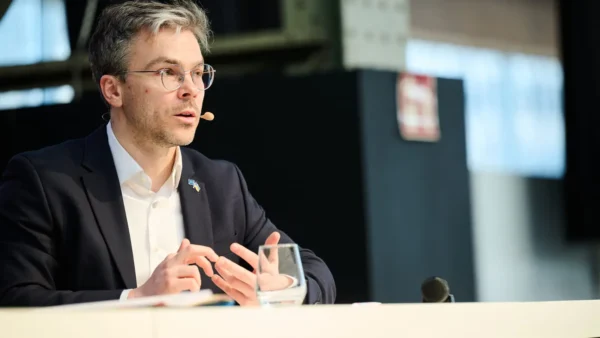
This was stated in an interview with Guildhall by French MEP Thomas Pellerin-Carlin.
What concrete steps should Europe take over the next three to five years to strengthen its energy independence and reduce its exposure to external energy shocks?
The changes Europe needs are actually very straightforward, and they are things we already know well. We need to renovate our buildings so that they consume less energy. We need to install more renewables — more solar power, more wind power, more heat pumps — and we need to electrify both our industry and our cars.
Today, most cars in Europe still run on oil. Tomorrow, they need to run on electricity. Today, we use a great deal of gas in industry, even for very simple processes such as making cheese or brewing beer. In many of those cases, we can use heat pumps instead.
These are practical steps. But they require political action. And to have that political action, we need to understand that what is good for the climate also happens to be good for European freedom. When you install a heat pump or electrify a car, that is not only a win for the environment — which has been the main reason for doing these things for decades — it is also a win for European freedom, because it makes us less dependent on the Russian war machine and less exposed to whatever happens in the Middle East.
Can renewables alone provide the round-the-clock energy needed for defence, military logistics and emergency response in the near term?
Not in the next few years. This is a transition that takes time. It is a bit like preparing to run a marathon. If you are not in shape, you cannot run a marathon tomorrow — but you can train, and the more you train, the farther you can go. It is similar with the clean energy transition. The more we invest in renewables, the freer we already become. That in itself is already an improvement.
And since you mention the military, this is actually the only way for Europe to have a genuinely free military. Today, we import 97 percent of our oil. If we want our military to be able to defend our territory against Russian aggression, we need to make sure it has access to the freedom energy it needs. In most likely cases, that would mean using biomass and electricity to produce liquid fuels — electro-kerosene, biofuels and similar solutions that can be manufactured in Europe and used to ensure that our soldiers have the energy they need to defend European freedom.
What changes in EU and national energy policy priorities are needed in the coming years?
The first thing we need to do is implement what we have already agreed. The EU has actually done quite a lot already. In 2015, we created the Energy Union. Why was that? Because it was one year after the beginning of the war in Donbas and the annexation of Crimea. Already then, many people in Europe understood that Russia was a threat and that it would weaponize energy against European freedom.
So we are not starting from nothing. The first step is to implement the good ideas we have already adopted. That includes the Renewable Energy Directive. It also includes the CO2 standards for cars, which push manufacturers to produce more electric vehicles — and that is one of the ways out of oil.
The second thing we need is more investment. We already have the technologies; what we need now is financing. One example is what I have been advocating for: social leasing for battery electric cars. The idea is to allow working people, including poorer households, to access an electric car without having to buy it outright. Instead of paying €20,000 upfront, they could pay something like €100 a month. In Western Europe, that is not far from the monthly cost of public transport — in Paris, for example, it is around €80 to €90. That would allow more people to switch to electric cars, which would reduce oil consumption in Europe, lower global oil prices, and ultimately reduce the money flowing to Russia.
How do you assess the role of domestic oil and gas production in strengthening Europe’s energy security, defence resilience and industrial stability?
The first thing to say clearly is that Europe does not really have major resources in most places. The reason we do not produce oil in France is not that we do not want to — it is that we simply do not have it. There is really only one country with significant gas resources, and that is Romania, and Romania has chosen to develop them.
Under EU law, the EU is not an empire. It is a democracy. That means national sovereignty is preserved in certain areas, including the exploitation of oil and gas. So this is not something I want to prescribe as a French politician. It is for Romanians to decide whether they want to produce more or less gas, just as it is for the French to decide what is right for France.
How do you see the role of nuclear power in Europe’s effort to strengthen energy independence?
Here again, I would give the same answer, because this is also a matter of national sovereignty. It is up to each country to decide whether it wants to favour nuclear power or not. In France, I personally strongly support more nuclear power for exactly the reasons you mentioned. But ultimately, that is for the French people to decide.
Exclusively for Guildhall.
Только главные новости в нашем Telegram, Facebook и GoogleNews!
Tweet