
At the end of 2025, Russia’s revenues from the export of oil and petroleum products were lower than military spending for the first time. This indicates the deepening of imbalances in the Russian economy, which is increasingly working exclusively for the needs of the war.
Mykhailo Gonchar, President of the Strategy XXI Center for Global Studies, said this in an interview with Guildhall.
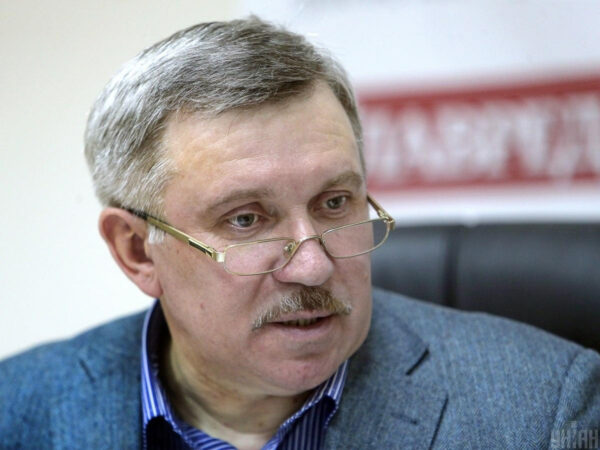
“We at the Center made appropriate calculations at the beginning of the year, when the final figures for 2025 became more or less clear. And for the first time in the entire post-Soviet history of the Russian Federation — and we have been keeping statistics on Russia’s energy revenues since 2012, primarily on exports of oil and petroleum products — the following picture has developed: revenues from the export of oil and petroleum products have become less than military spending,” he said.
According to the expert, the Russian model used to look different: oil revenues were not only enough for the war.
“It used to be very different. If we compare military spending with revenues from the export of oil and petroleum products, this used to be about 30%, and when oil prices were lower, it was about 40%. And then, in 2023, 2024 and 2025, this indicator began to grow rapidly. In other words, roughly speaking, oil revenues used to be enough not only for the war, but also for everything else — for social projects, for investments, for expanding economic infrastructure, for any “beautiful life”, Gonchar explained.
Now, he stressed, the situation has changed fundamentally.
“And now this gap has obvious consequences: everything else is underfunded. There’s no money for anything else. All the money, as they say, goes from the wheels through the bank directly to the war budget. In fact, they immediately finance the war,” the expert said.
Against this background, even the rise in oil prices due to the crisis around Iran is not able to radically change the situation for the Kremlin.
“Over time, as the market puts the risks of a Gulf war at a price, its financial situation will certainly improve. But this will not be a salvation for the Russian economy,” Gonchar stressed.
“If we pay attention to what Putin said just yesterday, this is exactly what he should not have said, but said. They say that oil revenues have now gone and will continue to go, so companies need to pay banks quickly. This means that banks obviously have serious problems,” the expert noted.
According to him, this is not just about supporting the financial system, but about directing revenue to military production as quickly as possible.
“And this is not just about improving the financial condition of banks. The point is to ensure that banks receive revenue as quickly as possible and that banks quickly finance production — or rather, the needs of the war. First of all, the defense industry, to ensure the further production of weapons and, in general, the ability to continue fighting. This, in fact, is the quintessence,” Gonchar said.
As additional evidence that the Russian military vehicle is working “from wheels”, the expert cited the recent incident with the wreckage of a downed missile.
“At the end of January, a report appeared about the wreckage of a downed missile. When we looked more closely, it turned out that it was a rocket not made sometime in the third or fourth quarter of last year, but a very recent one, made in early January this year. This also confirms the thesis that everything comes off the wheel for them,” he said.
“We sold oil, quickly received the money into our account, a loan is promptly issued from a bank account to a plant that produces Shaheds or missiles, then purchases materials and immediately starts the conveyor, because literally everything is missing,” Gonchar summed up.
According to the expert, even a temporary oil gain amid the escalation in the Middle East does not negate the main thing: the Russian economy is increasingly entering a regime in which export earnings are almost directly converted into a resource for continuing the war.
Earlier, in a comment to Guildhall, Lithuanian MEP Aurelijus Veriga said that he called on the European Union to put more active pressure on third countries that continue to buy oil and gas from Russia as an important step to stop financing the war.
Только главные новости в нашем Telegram, Facebook и GoogleNews!
Tweet