
On the 12th day, Viina brought Russia more minutes, nizh pluses, zocrema through the actual consumption of that Iranian kernel, as it emphasized the strategic nature of Moscow, as well as a blow to the reputation Russian PPO systems, which, in the words of the expert, were “fatally ineffective”. Moreover, Iran’s political support from the side of the Kremlin may help Russia’s relations with the Arab powers of Zatoka — a transfer from the UAE, as Russia has turned it into an important hub for the delivery of sanctions goods and financial operations yeah. At this aphid, in other words, the situation may also be embedded in Moscow’s position in the middle of OPEC+, as Saudi Arabia’s dissatisfaction with the destruction of quotas on the side of Russia earlier became a factor in the change in policy in the naphtha market.
The water conflict gives Russia and singing advantages — the growth of the center for naphtha and gas, which will quickly paint over the financial institution of the country. However, you can’t wait for the Russian economy, skilki, for the pidbags of 2025, get from the export of naphti and naphthos products, they did not directly turn to the military stained glass of Russia, and the otrimani kohti actually come straight to the financial institutions of Russia once suvana viina. The water expert means that the profit of naphti is on the global market and the growth of production in the OPEC countries — ahead of us, the United States, Canada, Brazil and Guyana, which in the future may be squeezed into lower prices.
Mykhailo Gonchar, President of the Strategy XXI Center for Global Studies, said this on an exclusive Guildhall interview.
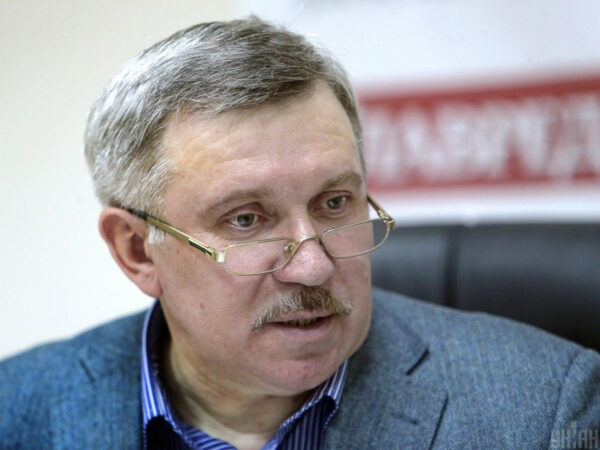
— For us, it is important to look at the military actions involving Iran through the prism of threats and opportunities for the Russian Federation, as well as their potential impact on the war against Ukraine. So, as of now, how has the situation in the Middle East already affected Russia in political and economic terms?
— If one were to take stock of the temporary balance of pros and cons for Russia as of the 12th day of the war in the Gulf, the negatives outweigh the positives. First and foremost, this is effectively about the loss of the Iranian leadership that embodied the strategic nature of relations with Russia. Under Ali Khamenei’s leadership, Iran provided Russia with serious assistance. How the new leader will behave remains an open question. He may be his father’s son, but certain conclusions about Putin and Russia have probably already been drawn. Above all, this is because the much-advertised Russian air defense systems proved catastrophically ineffective.
Iran’s de facto military rout became possible because of the ineffectiveness of the Russian air defense systems that had been supplied at various times. Yes, there were Chinese systems there as well, but above all these were Russian ones. And this is undoubtedly a powerful blow to Russia also from the point of view of its future contracts in military-technical cooperation with various countries — from India to states in Africa, Asia, and Latin America.
Among the negatives is the loss of trust in Moscow on the part of the Arab Gulf states because of Russia’s political and diplomatic support for Iran. This affects Moscow’s relations with other Arab states of the Persian Gulf, above all the United Arab Emirates, which Russia — with the consent of the Emirates themselves, of course — turned into a powerful hub for the supply of various sanctioned goods, for money conversion, if one recalls at least the problems with Indian rupees — in fact, for just about everything.
Against this backdrop, when Iran began launching UAV and ballistic missile strikes, primarily against the Emirate of Dubai, it was probably also understood there that Russia was not on their side in this situation, despite all the assistance previously provided. And this, too, will seriously affect bilateral relations.
There is also another important point. Support for Iran, even if only at the political level, did not earn Russia any points in Europe on the question of whether any dialogue with Moscow is worth pursuing. This is especially true in the context of the initiatives that were periodically voiced, including by Macron, about a willingness to meet and talk with the Kremlin. Putin, in essence, demonstrated exactly how he is prepared to speak — in the language of force.
But there are also obvious advantages for Russia. These are, of course, the spike in oil and gas prices. It is also the surge in Trump’s interest in lifting sanctions on Russia, even if only temporarily, although Trump himself has already let slip that later there might be no need to reimpose them. That is clearly what Putin is counting on — just as he is counting on the situation in the Gulf not stabilizing for a long time, so that the much-desired high oil prices will remain in place.
Yes, the intensity of the strikes may decrease, but the calculation is that Iran — already under new leadership — will in principle continue to sustain a high level of tension in the region. And that means the price of oil will stay higher because of it than it otherwise would. After all, if one recalls last year and the beginning of this year, oil prices were falling. And that is deadly for the Russian economy. They were already lamenting that they had been forced to put only 59 U.S. dollars per barrel into the budget, and at such an average weighted price, revenues would not be sufficient.
Then, when the price jumped to above 100 U.S. dollars per barrel, Russia immediately brightened up and began counting additional tens of billions of dollars in oil and gas revenues if such a price were to hold. But as soon as the price began to fall again, the mood changed immediately. Still, one way or another, one of the Kremlin’s dreams — serious destabilization in the Persian Gulf zone — has partially come true.
The other question is how long this will last. But after the first ten days of the war, it became clear that all of this would not die down as quickly as Washington — and, in essence, everyone around it — would have liked. So from this point of view, the situation for Russia looks like this: for a certain period of time, while the market prices in the risks of war in the Gulf, its financial situation will undoubtedly improve, but this will not save the Russian economy.
— Why will it not?
— If one pays attention to what Putin said the other day, it was essentially a confession. He said that oil revenues are now going to start coming in, so companies need to settle quickly with the banks. This confirms what both Ukrainian and Western experts were saying throughout last year — Russian banks have serious problems. And Putin did not mean simply improving the financial condition of the banks. The point is that revenue must reach the banks as quickly as possible, and through the banks, the production of means of destruction and, generally speaking, the ability to continue the war must be financed as quickly as possible.
That, in fact, is the essence of it.
At the Strategy XXI Center, relevant calculations were made back at the beginning of the year, when the final figures for 2025 became more or less clear. And for the first time in the entire post-Soviet history of the Russian Federation — with statistics having been kept since 2012 on Russia’s energy revenues, primarily under the category of “exports of oil and oil products” — the picture that emerged was this: revenues from exports of oil and oil products do not cover military expenditures.
Previously, the situation had been completely different. If one compares military spending with revenues from exports of oil and oil products, it used to be around 30%, and when oil prices were low in 2016 and 2020, about half. But then in 2023, 2024, and 2025, this indicator began to grow rapidly. In other words, roughly speaking, oil revenues had previously been enough not only for war, but also for everything else — social projects, investment, industrial infrastructure development, all kinds of “good living.” In 2025, revenues from exports under this category for the first time did not cover Russia’s military expenditures.
And now this gap is leading to obvious consequences: everything else is underfunded. There is no money for anything else. All the money, so to speak, goes straight through the banks directly into the war budget. In essence, it immediately finances the war.
And there is another point worth noting. At the end of January, there was a report about the fragments of a downed missile. When they were examined more closely, it turned out that this missile had not been manufactured sometime last year but was completely fresh — made at the beginning of January this year. This also confirms the thesis that everything there is being done in real time. They sold oil, quickly received the money into the account, a loan is promptly arranged from the bank account for the factory producing “Shaheds” or missiles, then materials are purchased and the conveyor is launched immediately, because literally everything is in short supply.
— If there are no other quick sources of oil, how can a possible lifting or easing of sanctions against Russia be prevented?
— In reality, Trump is acting on the principle of “I do whatever I want.” Although the recommendations of the International Energy Agency belong to the realm of entirely rational things. And even the very appearance of information from the agency about its readiness to recommend opening strategic oil reserves for major economies already curbed the rise in oil prices. So that would have been a perfectly logical decision.
At first, Trump seemed to agree with that. And then he said no, we are not going to open strategic reserves, there is enough oil as it is. So to a certain extent, the impression is created that he is consciously steering the situation toward the need to revise sanctions against Russia. Something he himself has already spoken about more than once.
This is being presented under the guise of temporarily lifting restrictions. But he himself let slip that, perhaps, there would later be no need to restore them. In this sense, he is acting entirely within the algorithm of Russia’s interests.
Moreover, looking at these swings in oil prices, and given that Trump and his entourage’s favorite business is to monetize everything, there is a deep suspicion that there may also be an element of plain profiteering here. So far, there is no direct evidence of this, but when one sees oil prices swinging back and forth, and every such day means colossal sums of money — literally billions earned out of thin air — such suspicions arise inevitably.
Especially since the Russians are constantly pushing the demand to lift sanctions. And the Dmitriev–Witkoff channel is working. One cannot exclude the possibility either that if sanctions are eased and Russian oil begins to flow in larger volumes, Moscow, so to speak, will be ready to share the benefit with those who facilitate such a scenario.
— Does it make sense for the West to return to the discussion about increasing its own production?
— If we are talking about the territory of the European Union, there are no such major oil and gas reserves there that could radically change the situation. What the Netherlands had — the legendary Groningen field — has effectively been shut down. Yes, there is the North Sea resource, and this is in fact Europe’s main oil and gas hub, operated primarily by the Norwegians. But it will not be able to cover everything. It is possible to drill farther away, in the Norwegian Sea, farther north, but that takes time, years, and billions in investment, and it would run counter to the renewable energy course.
If, however, one looks more broadly, not only at the EU, then the situation is different. This is precisely where the fact becomes important that the International Energy Agency, already in its review for the fourth quarter of last year, noted the existence of an oil surplus on the global market. Therefore, from an economic point of view, the rise in oil prices in fact has no fundamental basis. On the contrary, the price should have been falling, which is exactly what happened throughout 2025.
The second important thing is production growth in countries that are not part of OPEC. First and foremost, these are Canada, the United States, Brazil, and Guyana. In other words, these are countries outside the Persian Gulf and outside OPEC’s cartel arrangements. Venezuela is also a separate issue, with its own specifics, but one way or another it also remains a factor.
And that is precisely why, for those North American companies operating in the shale segment, the current formula of “drill, baby, drill” looks entirely attractive. Yes, this will not happen instantly. If, for example, we are talking about shale production, it will take months. But the overall dynamic will be upward.
In this respect, Europe remains hostage to its “Green Deal.” But Canada, for example, could quite seriously expand its production. The same is true of Brazil. And especially little Guyana, where there are deposits of low-sulfur light crude. All the more so since the threat previously posed there by Maduro with his annexation claims is no longer present.
— If frictions between Russia and the Gulf states intensify, could this hurt Moscow’s position inside OPEC+ and affect its quota?
— Someone still has to raise the issue in precisely those terms. But I do think the situation could indeed move in that direction.
One way or another, over a certain period of time — whether that is a month, or a hundred days, as was discussed in the United States, or even longer — the situation will gradually move toward some form of stabilization. How quickly that happens depends on the effectiveness of the measures now being carried out by Israeli and American aviation in destroying not only what can fire, but also what can produce what fires.
Stabilization will come one way or another. But it will probably be such that from time to time new batches of “Shaheds” will appear somewhere and be launched at targets in the Gulf, sustaining a certain level of tension. Much like the Houthis: they have not disappeared, they periodically launch anti-ship missiles, drones, or unmanned boats at vessels moving through the Bab el-Mandeb area, and this is restraining the restoration of full container traffic through the Suez Canal, the Red Sea, and Bab el-Mandeb. As a result, a significant part of logistics goes around Africa.
From this point of view, of course, Russia is interested in the Strait of Hormuz and the Gulf being in a similar state — with the continued risk of tankers moving there being hit by the surviving forces of the IRGC.
But it should be recalled that as early as September 2024, even before Trump’s election, the Saudis, through Mohammed bin Salman, made it clear that from 2025 Saudi Arabia would change its course on the global oil market. And this was driven by their dissatisfaction with the actions of Russia, Kazakhstan, and Iraq, which were violating quotas within OPEC+.
In effect, they were deceiving the other OPEC+ members. So the Saudis said: from 2025, we are starting to expand our market niche. And that means selling more oil and lowering the price.
That, incidentally, is one of the reasons why oil prices in general declined in 2025. There was only a separate spike during the short 12-day Iran-Israel conflict, but overall the trend was downward. And this was precisely the manifestation of Saudi Arabia’s policy.
So it is thought that they will not revise that policy now — on the contrary. They need a lower price in order not to allow Iran, by exporting oil, to recover. And at the same time — as happened already in the mid-1980s — to punish Russia.
— So there is a historical pattern here?
— Yes, and it is very revealing. In the mid-1980s, when the Saudis crashed the price of oil, their goal was not to bring down the Soviet Union, as Russian propaganda likes to claim. Their main problem at the time was Iran, which was beginning to gain the upper hand in the war with Iraq.
Saudi Arabia and the Arab monarchies of the Persian Gulf in general supported Iraq, although Saddam’s regime, of course, was not ideologically close to them. But it was an Arab country. On the other side was Ayatollah Khomeini, who wanted to destroy the monarchies as such and export the Islamic revolution. That is why they provided Saddam with significant financial resources — in total, somewhere up to 50 billion U.S. dollars in concessional loans, half of which were provided by the Saudis.
But the scale of Iran and the scale of Iraq are different. Iran was gradually beginning to win. And then the Saudis reached a simple conclusion: oil prices had to be brought down. Iran would get less money and, accordingly, have fewer capabilities. And that is exactly what happened.
So it is thought that now the Arab countries will act according to a similar algorithm. Above all the Emirates, which have already suffered, but which also have production reserves and reserves of oil. And the Saudis as well.
— What should Ukraine do in this situation?
— Diplomacy has to work here — both with the Saudis and with the Gulf states in general. All the more so because Ukraine is of interest to them. In particular, from the point of view of our technologies for intercepting Iranian “Shaheds” — without spending millions of dollars on a single launch of a Patriot interceptor missile, but instead using much cheaper solutions. This is an entirely practical subject for cooperation.
— And what about logistics? Is there potential for developing alternative energy transportation routes?
— There is. The Saudis took care of this a long time ago. They have the East–West oil pipeline (Abqaiq–Yanbu), which runs to the Red Sea through the entire Rub’ al Khali desert. Likewise, the Emirates have the Habshan–Fujairah pipeline, bypassing the Strait of Hormuz. Roughly one-third of oil exports can go around Hormuz.
But these routes do not fully solve the problem of bypassing Hormuz. At the same time, given that these countries have money, nothing prevents them from laying several more lines of oil pipelines to ensure a complete bypass of the strait.
But there is another problem here. In the Saudi case, the situation is such that one cannot simply go south into the Indian Ocean, because to the south of the Arabian Peninsula there is Yemen, and there are the Houthis there. In the southern part of the Red Sea — again the Houthis. Yes, the Yanbu terminal is located above the Bab el-Mandeb Strait, but if there are “Shaheds,” they can of course reach there as well. So once again everything comes down to the need to remove the Iranian regime itself, as the source of aggressiveness feeding its proxies with means of attack — the Houthis among them, since all the ballistic missiles, cruise missiles, and strike drones are of Iranian manufacture. In turn, Iranian missiles are built on the basis of either Russian or Chinese prototypes.
And in this context there is also another tough but rational scenario. To speak frankly, the idea of taking control of the terminal on Kharg Island looks logical. About 90% of Iran’s oil exports pass through it. And then, regardless of what regime is sitting in Tehran, its capabilities can be severely constrained.
Iran will not be able to create alternative infrastructure quickly. This terminal was built back in the time of Shah Mohammad Reza Pahlavi, in the early 1960s, and was later expanded and modernized. In terms of capacity, it is the second largest in the world and only slightly уступає the largest oil terminal, Ras Tanura, in Saudi Arabia. Creating something else would mean years and years and many billions in investment. So this cannot be solved quickly or simply.
If the Americans were to pursue such a scenario, the situation could undergo very serious changes. And then it would be possible to impose some modified model like the one that operated with respect to Saddam’s Iraq after the first Gulf War — “oil for food.” That is, oil could be exported, money could be received, but it could be spent only on very strictly defined civilian needs. Everything else would already be under external control.
— Mr. Mykhailo, thank you sincerely for this interesting and meaningful conversation.
— Thank you.
Guildhall News Agency, exclusive.
Только главные новости в нашем Telegram, Facebook и GoogleNews!
Tweet