
Attempts to ease sanctions pressure on Russia amid the escalation around Iran would be a strategic mistake by Europe, as they would give the Kremlin additional resources to continue the war against Ukraine. At the same time, the European Union should respond more firmly to Russian information operations, the activities of oligarchs linked to Moscow, and political sabotage within the bloc itself.
This was stated in an interview with Guildhall by Finnish Member of the European Parliament Pekka Toveri.
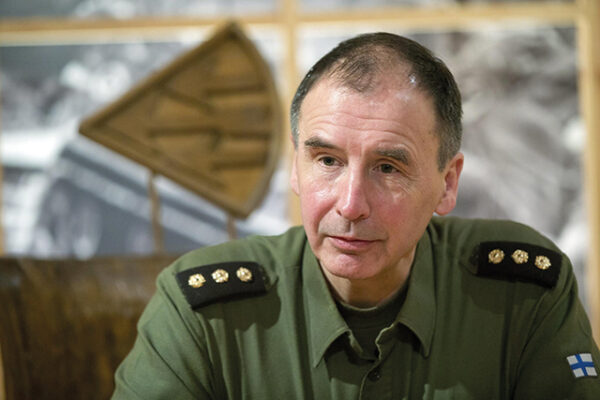
— Mr. Toveri, when it comes to countering Russian influence within the European Union, what steps should Europe take right now?
— First of all, it is necessary not only to monitor but to pursue Russian information campaigns and the people behind them. We also need to deal with specific Russian citizens and oligarchs who still move freely around Europe and continue doing business here.
One striking example is Vladimir Lisin. He owns metallurgical companies, he is linked to sectors operating in the interests of the Russian war industry, and I have long advocated imposing sanctions on him. In addition, he exerts influence on European sports organizations. Unfortunately, this is being hindered, among other things, by Belgian interests, since he owns assets in Belgium.
This has to stop. And if countries such as Hungary and Slovakia continue to act in Moscow’s interests, the response must be much tougher. If Orbán stays in power with Russian backing and continues to undermine European unity, the European Union must clearly show that such a course will have consequences. Article 7 should be activated, meaning the issue of suspending Hungary’s voting rights and blocking EU funding should be raised.
That would also send a very clear signal to Robert Fico: continued support for Putin is not a course that can remain without consequences. Tomorrow we are meeting with Finnish European Commissioner Henna Virkkunen, and this issue needs to be raised as directly as possible. Europe has been inactive for too long, and passivity and political correctness have produced no results.
— At the same time, Hungary is not among the EU’s key contributors. Why, then, does Budapest continue to dictate terms to the entire bloc?
— That is exactly where the absurdity lies. Hungary is not one of the European Union’s largest contributors. On the contrary, it benefits significantly from EU membership. And yet a country that does not belong to the leading economic, political, or defense contributors in Europe continues to dictate terms to those who actually bear the main burden.
It makes no sense. We are probably talking about one of the most corrupt countries in the EU, with a deteriorating economy and extremely limited defense capabilities. During Hungary’s membership, we have provided it with more than 60 billion euros net. So the obvious question is: why does Europe continue to tolerate such behavior at all?
— It is obvious that Russia is trying to use the war around Iran to shift the attention of Ukraine and its Western partners. What threats does this create for Europe if the focus really shifts from Ukraine to the Middle East?
— The threat is quite obvious. When oil prices rise, national governments begin to think more about their domestic economies and less about supporting Ukraine. If the United States starts easing sanctions pressure on Russia, especially with regard to oil exports, this will also create additional pressure in Europe: perhaps we should do the same in order to curb energy prices and support our own economy.
But that would mean only one thing: giving Russia additional money to continue the war. That is one of the main threats.
In this situation, there is a whole range of risks. One can only hope that even if the war around Iran does not end quickly, the United States will stop its misguided operation together with Israel, and then at least the economic situation will become more predictable.
On the other hand, this has also become an opportunity for Ukraine to demonstrate its advanced counter-UAV technologies. Even while under constant attack, Ukraine is capable of supporting other countries and sharing practical solutions. This is a very important signal for all of Europe: Ukraine is needed in the European Union, because with Ukraine, Europe will become much stronger.
— Russia is already trying to strengthen its position in the energy market, and we hear statements from certain politicians about the need to lift sanctions on Moscow. What do you think of this idea?
— That would be one of the most misguided courses Europe could choose right now. And, of course, Orbán and Fico are the ones promoting this position most loudly.
But the European Union already has a legal framework in place that provides for ending purchases of Russian oil and gas by the end of 2027. So discussions about easing sanctions run counter to the course that Europe itself has already set.
This is simply not the discussion we should be having now. It is far more important to continue efforts to ensure Europe’s energy security so that it is not dependent on Russia, the United States, or anyone else.
— So, in your view, short-term crises in other parts of the world should not change Europe’s approach to sanctions against Russia?
— Exactly. We are currently preparing a joint statement. The EU-Ukraine Parliamentary Association Committee will hold a meeting in Kyiv in the coming weeks, and in that document, in my view, it must be emphasized that sanctions must remain in place and be strengthened if Europe truly wants to support Ukraine and thwart Russia’s plans to continue the war.
A short-term crisis somewhere else in the world must not cause us to lose focus. Europe’s main focus is here, in Europe. And that means support for Ukraine and pressure on Russia cannot be pushed into the background.
Exclusively for Guildhall.
Только главные новости в нашем Telegram, Facebook и GoogleNews!
Tweet