
Western countries have opportunities to increase oil production outside the Organization of Petroleum Exporting Countries (OPEC), and the increase in oil prices amid the escalation around Iran has no fundamental economic basis.
Mikhail Gonchar, President of the Strategy XXI Center for Global Studies, said this in an interview with Guildhall.
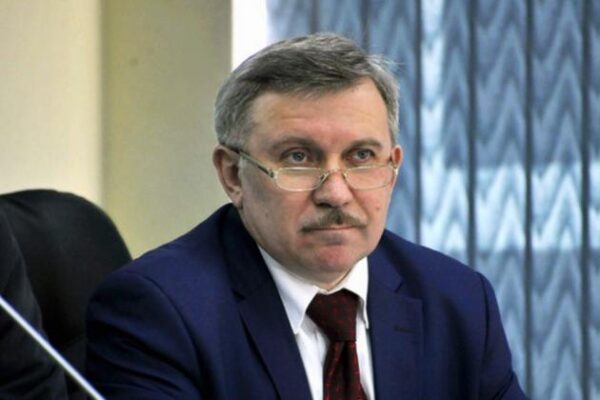
According to him, “Since the fourth quarter, the International Energy Agency has assumed that there is basically enough oil in the world, moreover, there is even a surplus. Therefore, from an economic point of view, the increase in oil prices does not actually have a fundamental basis. On the contrary, the price should have been reduced, which, in fact, was what happened,” Gonchar said.
Separately, the expert drew attention to the fact that production is growing in non-OPEC countries.
“The second important thing is the increase in production in countries that are not members of OPEC. First of all, these are Canada, the USA, Brazil and Guyana. Venezuela is also a separate issue with its own specifics, but one way or another it also remains a factor. In other words, we are talking about countries outside the Persian Gulf, outside the OPEC cartel agreements,” he said.
According to Gonchar, this is why talking about increasing production in the West makes quite practical sense.
“And that is why the current “drill, baby, drill” formula looks quite attractive for companies operating in this segment. Yes, it won’t be immediate. When it comes to shale mining, for example, it will take months. But the dynamics themselves will be upward,” the expert emphasized.
At the same time, he said, if we talk specifically about the territory of the European Union, the resource base there is more limited, and new projects will require time and large investments.
“As for the territory of the European Union, there are no oil and gas reserves that are so serious that they could radically change the situation. What happened, say, in the North Sea, in the Netherlands, such as Groningen, was actually closed,” Gonchar said.
He added that even the existing resources of the North Sea are not able to quickly cover all needs.
“Yes, the North Sea has a resource, and it is, in fact, Europe’s main oil and gas hub, which is primarily operated by Norwegians. But it can’t cover everything. You can drill somewhere further, in the Norwegian Sea, to the north, but this is the time, it’s years and multi-billion dollar investments,” the expert explained.
At the same time, according to him, outside the European Union, the potential for production growth is much more noticeable.
“In this regard, Europe remains hostage to its “green course”. But, for example, Canada may well develop its production quite seriously. It’s the same with Brazil. And especially small Guyana, where oil is of high quality,” Gonchar concluded.
Earlier, Mikhail Gonchar also said in a comment to Guildhall that it is necessary to raise the issue of the Russian Federation’s membership in OPEC+.
Только главные новости в нашем Telegram, Facebook и GoogleNews!
Tweet