
A violation of the sanctions regime should become grounds for a criminal case not against one formal participant alone, but across the entire chain of involved persons and entities.
This was stated in a comment to Guildhall by Lithuanian Member of the European Parliament Petras Auštrevičius.
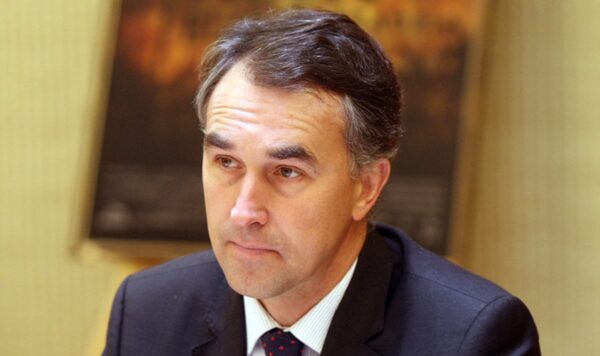
According to the parliamentarian, the European Union “is not bad at adopting sanctions packages, but is rather slow and relaxed in implementing them.” He believes this is linked “to certain political and economic interests vis-à-vis Russia,” as well as to the fact that “national politicians really differ greatly in their views and political line regarding EU sanctions.”
The MEP also warned that “Russian penetration or integration into the political life of some member states poses a threat,” as a result of which certain countries “are in no hurry to move forward toward full implementation of sanctions” and “are trying to find any possible justifications to postpone it, to see some loopholes.”
At the same time, he stressed that when it comes to practical action, the authorities are “indeed extremely, extremely slow and relaxed in taking any concrete measures, in particular criminal prosecution and any other legal actions.” In his assessment, established cases of sanctions violations should trigger a mandatory response in the form of criminal proceedings.
Earlier, the European Parliament had already called for strengthening criminal-law mechanisms against sanctions circumvention. In particular, in the EU it was proposed to expand the powers of the Union’s existing prosecutor to investigate such cases, and it was also emphasized that established cases of violations of the sanctions regime should entail a mandatory criminal procedural response.
Только главные новости в нашем Telegram, Facebook и GoogleNews!
Tweet