
Cases involving sanctions circumvention in the EU often do not reach criminal prosecution because of the difficulty of proving intent, the lack of resources among national prosecutors, and the challenges of collecting evidence in third countries. Under these conditions, the creation of a single prosecutor at the European Union level for sanctions cases, analogous to the EPPO, could strengthen investigations and reduce the dependence of such proceedings on political and lobbying factors in individual member states.
This was stated in a comment to Guildhall by Czech MEP Markéta Gregorová, who is also a member of the European Parliament’s Committee on Security and Defence.
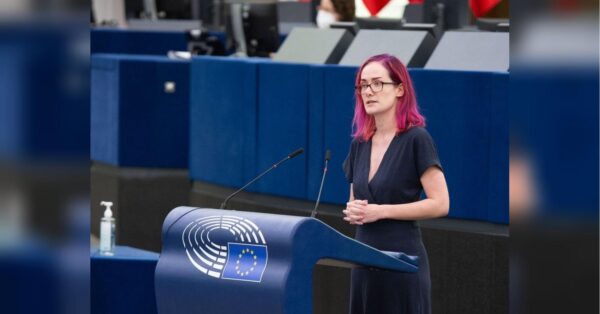
According to her, the key problem in investigating sanctions circumvention is that “the main answer lies in proving intent.” She noted that companies often claim “that they did not know that the end user was under sanctions,” as a result of which “such cases are difficult to bring to criminal prosecution.”
She also stressed separately that sanctions circumvention routes usually pass through third countries. “Routes for circumventing sanctions usually go through third countries — Turkey, the UAE, Armenia, Kazakhstan,” Markéta said. According to her, “collecting evidence in these non-cooperating jurisdictions is almost impossible,” and “without intent, criminal prosecution is also impossible.”
In addition, she pointed to an institutional problem within the EU itself: “most national prosecutors do not have the resources and specialized financial crime units familiar with sanctions law.”
That is precisely why she advocated a centralized approach at the European Union level. “I think that if we had a single prosecutor at the EU level for sanctions, like the EPPO, which deals with fraud involving the EU budget, and member states were not doing this on their own, it would help a lot,” she said.
She added that such a model would also be important for political reasons. Because “some member states historically have closer trade ties with Russia and are susceptible to lobbying by their industries.”
Earlier it was reported that the United States decided to partially lift sanctions on the largest Belarusian state-owned banks and potash fertilizer producers, including Belaruskali, the Belarusian Potash Company, Belarusbank, and Belinvestbank. Washington explained this step by citing considerations of global food security and the need to prevent fertilizer shortages on world markets.
Только главные новости в нашем Telegram, Facebook и GoogleNews!
Tweet