
In Latvia, Russia is promoting disinformation narratives about a “failed state” and the systemic oppression of Russian-speakers, using state media and a broader ecosystem of information influence for this purpose.
This was stated in an interview with the Guildhall news agency by Aiden Hoyle, Associate Professor in Intelligence and Security at the Institute of Security and Global Affairs.
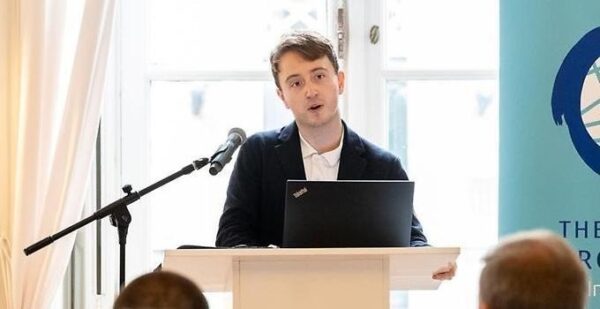
He stated that “two main narrative strategies” had been identified. The first, according to him, was built around the idea that Latvia is a “failed state.” This narrative emphasized that “the government does not control what is happening in the country,” “the police do not control the situation,” and that “life in Latvia is bad.” He noted that this image was then “implicitly linked to the fact that they had distanced themselves from Russia.”
The second strategy, according to him, was connected to issues of identity and was built on “emphasizing discrimination or Russophobia and discrimination against the Russian-speaking community in Latvia.” As noted, Russian-speakers were portrayed as a community “persecuted by the Latvian state,” while the discrimination itself, according to these materials, was allegedly manifested “at the state level, but also at the interpersonal level.”
He added that this line also incorporated publications about the demolition of Soviet monuments, travel bans, and discussions about abandoning education in Russian in the state system. “But those were the two main narrative strategies that we saw — this kind of failed state idea and then this idea of Russophobia,” the analyst emphasized.
Earlier it was reported that Latvia had built a model for countering Russian information operations based on the concept of comprehensive defence, relying on the “moral resilience” of society, interagency coordination, media literacy, and restricting access to Kremlin resources.
Только главные новости в нашем Telegram, Facebook и GoogleNews!
Tweet