
Russia is waging an aggressive campaign against Europe – drones and fighter jet incursions, a “shadow fleet,” damage to undersea cables, cyberattacks, and GPS jamming. The response must be firm – reflecting every attempt at an attack while simultaneously strengthening aid to Ukraine. The real front line is there right now, and comprehensive support must be increased. Sweden understands this and is rapidly building up its capacity to provide assistance and defend itself.
The practical steps are clear: more air defense and ammunition, as well as funding for Ukrainian arms production. Cut off the Kremlin’s income – inspections and stopping the “shadow fleet” in the Baltic, complete rejection of Russian gas, and ending dependence on Rosatom. It is also necessary to move towards using the frozen assets of the Russian Federation in the interests of Ukraine and to support human rights mechanisms in the occupied territories – including UN missions. A defeat for Ukraine would send a signal to autocracies, including China; therefore, Europe must be reliable regardless of US fluctuations.
This was stated in a lengthy interview with the Guildhall News Agency by Jonas Sjöstedt, a Member of the European Parliament (Left Party) from Sweden.
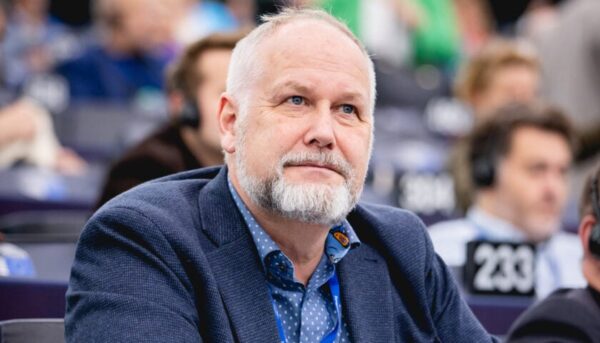
– We all heard about Russian drones over European airspace – over Denmark, Germany, Poland, and other countries. There were also Russian warplanes in Estonian and Finnish airspace. NATO says Russia bears full responsibility for these incidents. Can we consider these cases an act of Russian military aggression in Europe?
– We don’t know where every drone comes from, because there might be different sources. But we should watch Russia very carefully, because there are serious suspicions of Russian involvement. What we do know for sure is that Russian fighter jets have flown over Estonian and Finnish airspace. We know that Russian military drones have hit Poland – a lot of them. We know that ships from Russian harbors have repeatedly damaged underwater cables in the Baltic. We know that they are using this so-called shadow fleet – which is partly illegal – in the Baltic Sea to export oil. We also know that many cyberattacks on our institutions come from Russia, and that they are jamming GPS in the Baltic Sea. For example, ambulances in Sweden sometimes cannot find addresses because Russia is jamming GPS. All in all, the picture is very clear: Russia is acting aggressively and is also attacking parts of our institutions in the West. We are not at war, but Russia is extremely aggressive – and I would say also a bit desperate in the way it acts.
– In your opinion, how should Europe and the West react to this?
– I think we should do two things. First, we must be very firm. We must push back against every attack on our territory and every attempt to damage important functions in our societies. Second, we must scale up support for Ukraine. I think there is a direct connection between Russia’s aggression against us and the war in Ukraine. Russia has two aims: to intimidate us – to scare us – and to deter us from supporting Ukraine. We should do the opposite. We should be firm. We are now in a phase where we are strengthening our military capabilities quite fast – both support for Ukraine and for our own region. That is necessary. In the Swedish Parliament, everyone supports this. It’s a national interest. And I also think we should interpret this behavior as a sign of Russia’s weakness: they don’t really know what to do, because they are not doing very well on the battlefield right now.
– You mentioned scaling up help for Ukraine. Do you mean increasing military aid?
– Yes. We are seeing a shift, because today Ukraine can produce a lot of military material itself, and in some areas it’s among the best in the world – for example, drones and missiles. We see new systems like the Flamingo. Of course, Ukraine still needs help – especially with air defense and other capabilities – and we should be strong in providing that. Russia must understand that it will not win on the battlefield, and we have to do whatever it takes to make that clear. But I also think that sometimes giving money to Ukraine, so that Ukraine can produce weapons itself, is even more efficient: it can be cheaper, faster, and in some cases better.
– Do you see any signs that Russia is ready for peace, for a real peace process?
– Russia always speaks very loudly. They lie a lot. They try to look strong. But there are clear signs that Russia’s situation is getting worse. The Russian economy is no longer doing as well as it did for a while. They are running out of soldiers. They are running out of old Soviet-era military equipment. And what is especially serious for Russia is the systematic strikes on Russian refineries and oil distribution. This is really hurting the Russian economy, and it is something ordinary Russians can feel in daily life. If they cannot get gasoline for their cars, or diesel for the harvest and the tractors, then the war comes closer to them. It’s not only the bodies of dead soldiers coming home – people also see material consequences. I don’t see how Russia can stop this any time soon. I think Ukraine will keep going, again and again, until parts of Russian society are more or less paralyzed.
– Many in Ukraine believe that Russia must be pressured into peace by force, because it does not respond to diplomacy. Do you support that approach – not only by Ukraine, but by Europe and the West?
– Yes. Europe has, in many ways, supported Ukraine. Sweden has done a lot. I think we could still do more, but I am proud that my country stands with Ukraine. We see ourselves as partners in this. One day we will also ask you for help – with technology and other things. But there is one area where we have failed: we still have not fully stopped Russia’s fossil fuel exports, especially gas. Europe just took a decision to phase out all imports of Russian gas, but Russia still moves energy through other channels. They export oil to Turkey, India, China – and then fuel refined there goes onto the world market, and some of it comes back to us. If we manage to stop this, if we manage to close the Baltic Sea to the shadow fleet, it is game over for Russia. That is where we should focus. Right now, Ukraine’s own strikes on Russian facilities are more effective than many of the sanctions we have. But we could step up and do more.
– Do you think a full blockade in the Baltic Sea against this Russian shadow fleet is realistic now?
– I think we should at least start inspecting every single vessel. If they don’t meet environmental standards, if they’re uninsured, if we don’t know who the real owner is, or if they’re breaking sanctions – they should be stopped. I think there is a legal basis to do much more, and to seriously restrict this very dangerous oil export that gives Russia a lot of revenue. And I have to add one thing about sanctions. I know the U.S. is not always a reliable partner under Trump – it depends on his mood in the morning and on whether he last spoke to Putin or Zelensky. But Europe has to be reliable. That means that regardless of what the U.S. does, we continue support. There is no question about that. And if the U.S. puts demands on Ukraine that are not acceptable – like “Ukraine should give up territory in Donetsk” – Europe should refuse. Europe should never accept that kind of deal. Sanctions on Russia must continue as long as Russia occupies any part of Ukraine, even if there is a ceasefire.
– There is also the question of gas. Do you believe it is possible to fully stop importing Russian gas before 2027, the target that is mentioned now?
– Of course it is. Many countries already stopped, some did it a year ago. Sweden has now stopped it completely. We can buy gas from Norway. We can buy gas from other countries. We can invest more in renewables and cut dependence. I would say that Hungary and Slovakia have been lazy – they didn’t do their homework, they didn’t invest the way they should. And at the same time they have, in some ways, betrayed Ukraine.
– There is also Rosatom – maybe the last very big Russian state company that is still not under comprehensive sanctions. What should be done about it?
– This is sensitive, because some countries depend on old Russian technology for their nuclear power plants. So they try to block action. But for me, there is one big lesson for Western Europe: we must never again be dependent on Russia for our energy supply – whether it is gas, oil, uranium, or technology. We should phase that out. There are new nuclear power plants being built in Europe today. There are several possible suppliers. Rosatom should not be one of them.
– Another very important topic is Russian assets in Europe. Their confiscation could be a massive factor in forcing Moscow to seek peace. Do you support transferring Russian assets to Ukraine, as reparations or as support?
– Yes, I do, and I think we are moving in that direction. Some countries that were reluctant before – Belgium, for example, which held on to a lot of assets – are now looking for ways to finance support for Ukraine by using Russian assets. For me, it is simple: Russia must pay for what it destroyed in Ukraine. And even then, it will not be enough. That will only cover a small part. It would be intolerable to let Russia walk away from this war without paying reparations to Ukraine.
– Millions of Ukrainians are now living under Russian occupation. The Parliamentary Assembly of the Council of Europe recently called Russia’s actions there “ethnic cleansing amounting to genocide”, because of systematic crimes in the occupied territories. Would you back a similar resolution at home?
– I would be open to that. We see a clear policy of Russification and oppression. There is no free media, no free trade unions, NGOs are not allowed to operate. People are forced to take Russian passports – it’s not really a choice. There is intimidation, violence, and also the kidnapping of thousands of children taken to Russia. I think this is a deliberate policy to erase Ukrainian identity. That takes you very close to the definition of genocide – if the policy is to erase a people’s ability to exist as that people. So I think this is a very legitimate discussion.
– Should there be a call for a United Nations mission to monitor human rights in the occupied territories? Is that possible?
– I would like to see that as part of a future ceasefire or peace deal. But of course, I hope those territories will be de-occupied – that they will be Ukrainian again. That is the long-term goal. We should support Ukraine in getting those territories back, and we should reject the Trump–Putin narrative that someone can just give away another country’s land without that country deciding for itself.
– The Royal United Services Institute in the U.K. has reported that Russia is encouraging China to invade Taiwan, and that a Ukrainian defeat would signal to China that it can take aggressive action and face no serious countermeasures. Do you share this view?
– Yes. If we allow Russia to win in Ukraine, it sets a very dangerous precedent. It would mean accepting imperialism – the idea that great powers can simply take what they want, whether that’s Russia, or China, or even a United States under Trump when he talks about Greenland, Canada, Panama, and so on. We don’t want that kind of world. We want a world where international law is respected, where smaller states have a voice, where military force is not used just to invade neighbors. China is watching Ukraine very closely. If Ukraine prevails – and I believe Ukraine will – that will be a warning: the West will not abandon its partners. That is important.
– The question of China is very important for the United States, and the focus is shifting from Europe to the Pacific. You said it’s all connected. How should Europe make clear to the U.S. that Europe – and Ukraine – still matters?
– When it comes to Ukraine, Europe is the reliable partner. We will try to bring the U.S. with us, but Trump is Trump – he treats everything like a deal. On China, it’s complicated. We absolutely reject any idea of a military intervention against Taiwan – that would be totally unacceptable. But at the same time, the U.S. is in a trade war with China that is, in my view, quite stupid and very confrontational. We don’t want to be part of that trade war. We want to trade with different regions and build relations. So we have to separate these issues. And honestly, right now we even have a trade conflict with the U.S.: the U.S. put tariffs on some Ukrainian goods, but not on Russian goods. That is absurd.
– And finally, maybe the most important question. Is the West united behind Ukraine’s victory and in countering Russian aggression?
– There is overwhelming support for Ukraine in the European Parliament and among most EU member states. But Europe has never been perfectly united. There are always states, and especially far-right parties, that act as Russian proxies. They will not get a majority. They will not win. Even when Hungary, for example, tries to block negotiations on Ukraine’s EU membership, we will find a way around it – I’m sure we will. So I’m not worried that Europe will abandon Ukraine. But we do have an internal battle against those who do not want to defend Ukraine. For me, as someone from the left, this is about standing up for democracy, freedom, and independence. We must defend the right of Ukrainians – but also the right of Taiwanese to decide their own future, and the rights of Palestinians and others. If we say we defend human rights and international law, it has to be consistent. There is only one way forward: continued support for Ukraine.
– Sir, it was a pleasure to hear you say all these important things. I hope we will keep in touch.
– The pleasure is mine. I strongly believe in Ukraine’s victory. People in Ukraine know very well about Sweden’s support. We are very, very grateful for it. It’s a long friendship, and we will continue it. And thank you again. Have a good day.
Guildhall, exclusively.
Только главные новости в нашем Telegram, Facebook и GoogleNews!
Tweet