
Russia is waging a hybrid war against Europe: drone and military aircraft flights in European airspace are deliberate provocations and tests of NATO and EU reactions. The response cannot be limited to words. Support for Ukraine in all aspects must be strengthened. The real front line is now in Ukraine, and that is where illegal aggression is being contained. Russia must not be allowed to impose a “peace” that means the capitulation of Kyiv; the West’s task is to strengthen Ukraine and force Moscow to accept the terms of a just peace, as Putin’s appeasement policy is not working.
The pressure must be systematic: blocking the circumvention of sanctions through third countries, striking at the sources of funding for the Russian war, limiting energy revenues, and confiscating Russian assets in Europe. Furthermore, Ukraine’s defeat would set a dangerous precedent of changing borders by force with impunity and would send a signal to other autocrats, including China in the context of Taiwan. Supporting Ukraine is not just a European issue; it is a matter of global security.
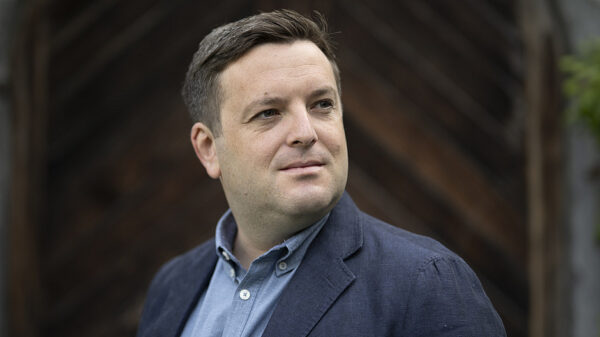
This was stated in an interview with Guildhall by Jon Pult, a member of the Swiss National Council from the Social Democratic Party.
– We all heard about drones above European airspace — above Denmark, Sweden, Germany, and other countries. There were also Russian warplanes in Estonian and Finnish airspace. NATO says that Russia bears full responsibility for this. Do you consider all of this an act of military aggression of Russia?
– I would consider it an act of military provocation. I wouldn’t necessarily call it aggression, because it wasn’t, in the strict sense, an outright attack. But it is clearly part of Russia’s hybrid warfare — testing and probing NATO member states and Europe, trying to see how we react. It’s a very dangerous development, not only for those countries directly affected, but for Europe in general. I wouldn’t call it “aggression” yet — but it is close.
– How should Europe react to that?
– In the short term, Europe needs to react with a clear and strong condemnation, and use clear and strong language toward Vladimir Putin and these aggressive behaviors. More broadly, Europe should react by supporting Ukraine more strongly than it does now. The real front, the real aggression, the real war is in Ukraine, and it is Ukraine that is fighting Russia. So support for Ukraine should be stronger — militarily, economically, and through better enforcement of the sanctions we already have, as well as considering additional sanctions. At the same time, Europe — and specifically the European pillar of NATO — must continue preparing for this kind of hybrid warfare that Russia is already waging against Europe. One thing that is still underestimated is Russia’s disinformation campaigns used to destabilize European democracies. I think that is extremely dangerous.
– At this point, do you see any willingness from Russia to enter a real peace process?
– No. I can’t look into Vladimir Putin’s head, but the answer is no. We had a very clear illustration of this after that rather strange meeting Putin had with President Trump in Alaska. For me, it became obvious that Russia and the Russian leadership have no will, no intention, to seek peace or stop the aggression. What they want is to be less isolated internationally — not to end the war. What worries me even more is that there is still no clear political will in Washington to fully understand what is happening. Everyone hopes the Trump administration will change course. Maybe it will — we’ve seen some positive signals in recent weeks. But I am still not convinced that the administration in Washington truly understands that “seeking peace in Ukraine” means strengthening Ukraine and forcing Vladimir Putin into a just peace. Appeasement toward Putin will not work.
– In that context, should Russia be pressured into peace by force, since it is not seeking peace through diplomacy?
– Of course. That is exactly what the world should do. The question is what we mean by “force”. “Force” means, first of all, supporting Ukraine — the country that is actually fighting the war and is the victim of illegal and barbaric aggression. That is one part. The second part is diplomatic and economic pressure on Russia’s partners. We must pressure countries like China, and also India, which still buys a lot of Russian oil and commodities, to reduce that support. That weakens the Russian war machine. I think we often underestimate how weak Russia’s economy already is. We should do everything in our power to weaken it further, because that is a very effective way to push Russia toward real negotiations for a just peace.
– What is Switzerland’s position in this? There were reports that Switzerland refused to let Germany send Swiss-made tank equipment to Ukraine. Should Switzerland provide military equipment to Ukraine?
– As you know, Switzerland is a neutral country. Remaining neutral, under international law, means we cannot directly supply military aid to a country at war. Personally, I am not a big fan of strict neutrality — but I have to accept that 80, 85, even 90 percent of the Swiss population wants to remain neutral. That means that militarily, Switzerland cannot strongly support Ukraine. I do, however, support letting Germany, Spain, Denmark, or others re-export systems they originally bought from Switzerland. I do not believe that violates neutrality. So on that point, I’m in favor. But we have to be honest: as long as Switzerland insists on neutrality, we cannot directly send weapons to Ukraine. What Switzerland can and should do is much more in other areas. I think it is shameful that Switzerland is not doing more financially, more in humanitarian support, and more economically by enforcing sanctions more strongly and pushing for new sanctions. Switzerland should be a leader in helping coordinate stronger sanctions internationally. Our diplomatic service is traditionally a strength of Switzerland. It should be used to build and strengthen alliances around the world, to isolate Russia, to close loopholes, and to enforce sanctions better. And maybe most importantly: Switzerland needs to keep its own house in order. Geneva and other Swiss hubs are central nodes in global commodities trading, which is important for Russia. We must do everything — legally and politically — to stop Switzerland from directly or indirectly helping Russia’s war effort. So I believe Switzerland must do far more economically, financially, and diplomatically to support Ukraine. But on the purely military side, because of neutrality and public opinion, our ability to act is very limited.
– There is also the question of Russian state assets. Russia holds significant assets in Europe, and especially in Switzerland. Confiscating and transferring those assets to Ukraine — either as reparations or direct support — could be a major factor that pressures Moscow toward peace. What is your view?
– I support finding an international solution for confiscating Russian assets in Europe. But it must be coordinated across Europe and it must be lawful under international law. I am in favor of doing it, but it has to be done very precisely. We are proud that our states function under the rule of law. We cannot simply act arbitrarily. I’m convinced that a lawful framework can be built — a framework that would allow confiscation of assets clearly tied to the Putin regime — and that this should be done jointly by Europe and other partner countries. So yes, I support the idea in principle, but it must be coordinated, and it must be legal.
– There are also parts of the Russian economy that are still not fully sanctioned. Europe is still one of the largest buyers of Russian LNG and other energy products. There’s the Russian shadow fleet, which keeps moving oil despite sanctions. Rosatom is still not under full sanctions, partly because some EU countries, like Hungary, depend on it. How do you assess this, and what should be done?
– It’s obvious that sanction enforcement is not working as it should. The fact that Europe — as a whole — is still a huge buyer of Russian commodities is a very bad sign. It shows that support for Ukraine is sometimes strong in words but not always in deeds. As a European, I’m not proud of that. We have political problems and enforcement problems, and we need to fix them. We also need a deep internal debate in European societies. We have EU member states where governments or major parties are openly pro-Russian. Hungary is the most famous example, but not the only one. Some governments publicly accept EU policy, but in practice they undermine it. This is part of Russia’s hybrid war. One of Moscow’s most powerful tools is information warfare — shaping public opinion in Europe in Russia’s favor. That really scares me.
– Millions of Ukrainians are now living under Russian occupation. There are killings, torture, forced Russification. The Parliamentary Assembly of the Council of Europe recently called Russia’s actions in the occupied territories ethnic cleansing, amounting to genocide. Would you support a similar resolution in Switzerland?
– I would want to look very, very precisely at the wording. I know what Russia is capable of, and I can absolutely imagine that what is happening in occupied Ukrainian territories meets that definition. I would not exclude it at all. But before I commit to using terms like “ethnic cleansing” or “genocide,” I want to see full documentation: facts, investigation, legal assessment. International law is extremely important, and we must not turn it into a political weapon. So, generally, yes: I would support strong statements in Switzerland — for example, by our parliament — condemning Russian crimes, condemning violations of humanitarian principles and human rights in occupied Ukrainian territories. But when it comes to the exact legal terms, I want to see the evidence and the reports first. I want to be precise and responsible.
– To protect civilians there now, should there be a call for a United Nations mission to monitor human rights in those occupied areas?
– In principle, of course, a UN human rights mission would be extremely important. Monitoring, documenting abuses, providing testimony for international courts — that would be vital. But in practice, we know the problem. Russia sits on the UN Security Council and has veto power. So in the real world, this kind of mission is almost impossible to authorize. So yes, in theory I support it. But even if we support it politically, it won’t happen under current UN rules — which means we also need to keep strengthening other mechanisms: OSCE mechanisms, international monitoring structures, and the work of Ukrainian civil society documenting crimes. That remains essential.
– I also want to turn to a broader international question. The Royal United Services Institute in the UK has published an assessment that Russia is encouraging China to seize Taiwan. The idea is that if Ukraine is defeated, it will send a signal to Beijing that it can invade and face no real countermeasures. The report also noted Russia providing China with equipment relevant for an invasion. Do you agree with that line of thinking?
– I agree with the general point. We are living in a very dangerous moment for the international, rules-based order. Russia is attacking it directly. A Russian success in Ukraine — Ukraine’s defeat, or even a “frozen conflict” that rewards Russia — would make the situation globally much worse. It would send a message to every potential aggressor that you can invade a neighbor, violate sovereignty, and get away with it. So this is not only about Ukraine’s future. A just peace for Ukraine, protection of Ukraine’s borders and sovereignty, is essential for security and stability far beyond Europe. It matters for Taiwan, for Asia, for the entire international order. On that, yes, I agree.
– Is the West united right now behind Ukraine’s victory and in countering Russia’s aggression?
– Unfortunately, I don’t feel that “the West” is really united — and to be honest, I’m not even sure that “the West” still exists as a coherent political idea. I don’t really know what the United States of America wants. When I listen to Vice President J.D. Vance, I get the impression that he doesn’t really care about Ukraine and that he doesn’t consider Russia a serious threat. He even said at the Munich Security Conference that the main threat to Europe is not Russia or China, but left-wing ideas inside Europe. That is absurd. Inside Europe, we also have parties and movements that are openly pro-Russian. So we are in a critical situation. I hope the major European countries will stay on Ukraine’s side — and not just stay, but do better. And I also believe Europe must build partnerships beyond the traditional “West,” in the Global South, with countries that actually support a rules-based international order. I think that is a challenge for Europe — and it is also in Ukraine’s interest.
– That was all for today. It was very interesting. Thank you again your position.
– Thank you. All the best.
Guildhall, exclusively.
Только главные новости в нашем Telegram, Facebook и GoogleNews!
Tweet