
Russia is not demonstrating a willingness to pursue a just peace: missile strikes on civilian infrastructure and the build-up of forces continue, and a settlement is only possible if sovereignty and territorial integrity are respected and reliable security guarantees are in place. The answer is pressure and support: closing loopholes in sanctions, preventing circumvention through third countries, working on procurement and propaganda networks; Europe must supply weapons, Switzerland must increase humanitarian and demining assistance and seek a legal path to re-export.
Next, a phased reduction in dependence on Russian gas, and the denial of insurance, classification, and port services to the “shadow fleet.” UN mechanisms are currently limited, but the focus remains on human rights and international law. Support must be predictable and long-term; Europe as a whole is united, but the US remains a factor of uncertainty.
This was stated in an interview with Guildhall by Priska Seiler Graf, a member of the Swiss Parliament.
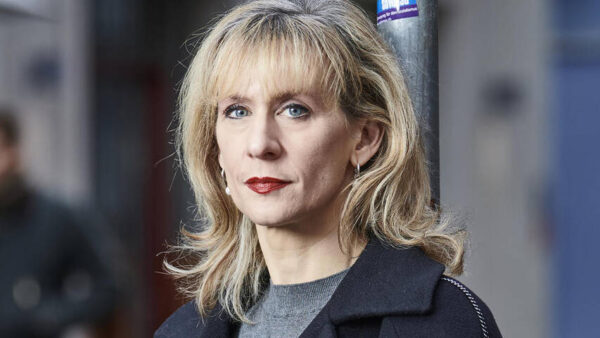
– Russia continues missile strikes on civilian infrastructure and preparations for a new offensive in eastern Ukraine. Do you see any indication that Russia is showing a willingness for peace?
– No. Russia’s continued strikes on civilian targets and its military buildup show no credible readiness for a just peace. Any settlement requires respect for Ukraine’s sovereignty and territorial integrity, compliance with humanitarian law, and — very importantly — security guarantees. Until then, Moscow’s intentions remain unconvincing. We must not be naive.
– How should the West and Europe respond? How can they pressure Moscow for peace?
– We have several levers: closing sanctions loopholes, tackling evasion via third countries, targeting procurement and propaganda networks, and strengthening asset tracing. These are the tools we can use. For Switzerland, humanitarian support for Ukraine is also important.
– There are levers of pressure that still have not been used. What else could Europe and the West do to push Russia toward peace?
– Europe must send weapons — that is clear and important. In Switzerland’s case, direct transfers are not possible because we are a neutral country. We cannot provide war material directly to Ukraine. We want to change the law so that re-export of Swiss war material becomes possible — that would not conflict with our neutrality — but direct deliveries are not allowed. It is clear, however, that Ukraine needs weapons.
– There were cases in Spain and Germany where Switzerland bans re-export of its weapons to Ukraine. What can you say about that?
– Under our current War Material Act, re-export is forbidden. Parliament wants to change the law; the government does not. It is a delicate situation. We in Parliament want the change — and we hope to achieve it.
– Do you support the broader idea that Russia must be pressured into peace by force?
– Yes, of course — but I believe the primary pressure should be economic, through sanctions. I do not think Russia will agree to a peace agreement now.
– Beyond military force, there are economic sanctions. A very important issue is Russia’s shadow fleet — it is expanding and fueling Russia’s war budget. What measures should be taken to counter it? Is a full blockade in the Baltic realistic?
– Russia’s shadow fleet should be countered by denying services such as insurance, classification, and port access. A full blockade in the Baltic Sea is not realistic, but coordinated enforcement can make shadow operations very costly and unsafe. I must add — this is not my core area of expertise.
– There is also Russian gas. Europe remains one of the largest importers. It is said that by 2027 Europe must completely stop importing Russian gas. What is your view? Could it be stopped earlier?
– It must stop — that is clear. The EU’s continued LNG imports are problematic because they finance aggression. But the exit must be sequenced step by step to avoid social and economic shocks. The direction should be diversification, efficiency, and renewables — with fairness for households at the center. That requires domestic policy measures across European countries to prevent price spikes for households. I agree with the goal — it must be done, step by step.
– Perhaps the last large Russian state company not under sanctions is Rosatom. What steps should be taken regarding Rosatom?
– Rosatom illustrates why reducing dependence is necessary. We must become independent from Russia in the energy sector. Restricting new projects and tightening export controls should be pursued, with attention to safety and energy security.
– I also want to ask about Russian assets in Europe — many are in Switzerland. Is confiscation possible, and could it make Russia more ready for peace?
– I hope so. We should not stop our efforts, but it will take time. We are moving in the right direction and must maintain these measures.
– On the humanitarian sphere: millions of Ukrainians are living under Russian occupation — killings, torture, mass Russification. Recently the Parliamentary Assembly of the Council of Europe called Russia’s actions ethnic cleansing amounting to genocide. Would you back a similar resolution in Switzerland?
– The rights of Ukrainians under occupation must be central — that is essential. We support detailed documentation of crimes, accountability under international law, and sanctions against perpetrators. On genocide, we follow the assessments of international courts. Switzerland always does so — we wait for international judicial determinations.
– Even without resolutions, there are ways to protect people. Should there be a call for a United Nations mission to monitor human rights in the occupied territories?
– A UN human rights mission would be vital to monitor abuses, though access may be blocked now. Reinforcing the UN human rights monitoring mission, the OSCE mechanisms, and Ukrainian civil society efforts remains essential.
– Is it feasible with Russia and China as members of the UN Security Council?
– At the moment, no. Sadly, I do not think so.
– Lastly — this is important for Ukraine — is the West united behind Ukraine’s victory and in countering Russia’s aggression?
– Europe remains broadly united behind Ukraine’s victory and independence. The uncertainty factor is the United States. To preserve unity, support must be predictable and multi-year. Switzerland contributes by implementing sanctions, closing evasion channels, and providing humanitarian and demining aid. As a member of parliament from the Social Democratic Party, I am convinced Switzerland should increase its support — Switzerland can do more. Ukraine is defending our values, and everyone in Europe should recognize that.
–Thank you for your position and your work. It was a pleasure to speak with you. Perhaps we can exchange phone numbers for further communication.
– See you soon, and have a nice day. Goodbye.
Guildhall, exclusively.
Только главные новости в нашем Telegram, Facebook и GoogleNews!
Tweet