
Russia is testing Europe – drone and aircraft flights in the airspace of European countries, including NATO member states, are provocations and violations of basic norms. The response must be calm but firm. It is necessary to maintain EU unity, continue military support for Ukraine, increase sanctions pressure, including secondary sanctions, reduce dependence on Russian gas, and develop alternative supplies – including LNG from Canada – to cut off the financial flows that feed the Russian military machine.
It is also necessary to limit the capabilities of Russia’s “shadow fleet,” continue to move toward the confiscation of Russian assets in Europe, and act in a coordinated manner. Otherwise, the defeat of democracy will always strengthen autocrats.
This was stated in a lengthy interview with Guildhall by Kathleen Depoorter, a member of the Belgian parliament from the New Flemish Alliance party.
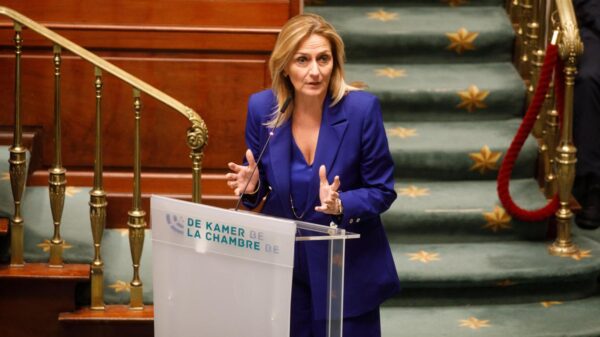
– We heard about drones over Denmark, Poland, and other countries, about Russian planes in Estonian and Finnish airspace. NATO says Russia bears full responsibility. What do you think — can these incidents be considered acts of Russian military aggression?
– They are certainly testing all NATO countries in Europe, and it is a kind of military provocation. We can agree they have ignored basic norms. By sneaking into our countries and our airspace, they show aggression. I wouldn’t quite call it military aggression, but in my country they flew over a military base on their way to Germany— and that makes it tricky. We’re not sure they were targeting the bases, but the coincidence is too much. I am convinced that we Belgians, and the other EU member states, must keep our cool. We should not react too aggressively, but we must remain aware of the danger we are living with right now.
– How should NATO and Europe respond?
– As I said, we must stay cool and calm and think carefully about what we do — and what we declare. I agree with the Danish prime minister, who pointed to Russia and said she is convinced Moscow is behind these drones and these so-called incursions into European airspace. We can name the problem, but we should stay calm and be reluctant to take rash action. Of course, we must be aware of what is happening — this is quite historic.
– To be frank, in Ukraine we believe Russia ultimately understands only force — only military signals. Do you support a significant increase in military aid to Ukraine as a response to this aggression?
– It’s clear that everyone in Europe — including Belgium — stands behind Ukraine and wants to defend the Ukrainian people’s right to self-determination. Russia does not respect your rights and has occupied territory — we do not accept that. We must stick together and continue the military support we have been giving. When I speak with people on the street, they support Ukraine — that is not in doubt. Do we do enough? For those who suffer, it will never feel like enough. But every measure we take — including sanctions — is intended to have impact. We still lack some impact. We need secondary sanctions, because we still see support flowing to the Russian economy. I proposed a resolution on secondary sanctions here in Parliament — we fully agree on that. As for military support, we are doing what we can. An overly aggressive reaction could hurt Ukrainians more than help them. We should show Russia that we are not afraid, that we stand behind Ukraine — a clear message of “don’t touch us, don’t touch them, we will take care of them.”
– Do we see any sign that Russia really wants peace — that it is ready for a peace process?
– The last thing I read in a newspaper said Mr. Trump agreed you would give away the occupied territory. I don’t think that is what Ukraine wants. If you pursue a peace track, you must listen to the people involved. From the very beginning, Ukraine’s purpose has been to defend its self-determination, its people, its territory. Giving it away means you are not listening to Ukrainians. I truly hope any peace negotiation leads to peace — but peace acceptable to both sides. Does Russia want that peace now? I don’t know; I can’t see into Putin’s head. What I do know is that, if what is reported is true — and it’s not always easy to get the truth, including from President Trump’s declarations — then Putin just wants to win the war by gaining territory. Looking at Gaza, we also heard claims the war was “solved,” and it was not. So I view such statements with some distance.
– I agree that Russia does not really want peace — it wants victory. In that context, do you support an approach that Russia must be pressured into peace by force, because it understands only that signal?
– They are a huge country, of course — so they respond to international force. From the beginning, EU member states have sought to act together: sanctions, and diplomatic isolation of Russia. It would be very good if the West stayed united and consistent in its message to President Putin. I do see a problem when one day you declare one thing, and the next day another — you give him room for interpretation. I fully agree that Europe should keep applying diplomatic and sanctions pressure — and it would help if the U.S. joined us consistently in that.
– On sanctions — what additional levers are available in Europe but have not yet been used?
– Secondary sanctions. We still fund Russia’s economy via bypass routes through third countries. We still buy gas and other goods we should not be buying under sanctions — we buy them in other countries, but they are supplied by Russia. Last year we were missing €34 billion of economic flows in this way. We should work on that. My prime minister said the same a couple of months ago. We must ensure we no longer support Russia in any economic way. On gas: I spoke with the Canadian ambassador, who told me they have LNG supply not focused on Europe because, at the time, they knew we were buying Russian gas. Canada is now building facilities on its Pacific coast. Perhaps this could help if we buy LNG from our Canadian partners in the coalition of the willing. As I said, we should stick together and be more strategically autonomous so we do not rely on Russia for anything — and we stop giving it money to build more war factories.
– On gas more broadly: there are initiatives that by 2027 Europe must completely stop importing Russian gas. Is it possible to do it earlier — to stop fully before then?
– I don’t know. It also depends on European producers such as Norway. It’s not really my portfolio, but we should make it happen and do everything to get there. We currently point to 2027 — I’m sure the European Commission chose that date because it was reasonable — but if we can do it earlier, we should.
– There is also the Russian “shadow fleet,” which is expanding and fueling Russia’s war budget. What more should be done to stop it? Is a full blockade in the Baltic realistic, given most of those ships operate illegally?
– As I’ve heard from my advisers, it would not be legal because we do not have a formal state of war. We are in a kind of military crisis — everyone knows it — but not in a declared war from our side, and we must follow international law. So a total blockade is not possible right now. We can deny port services and coordinate with other member states to do the same — to refuse entry to those vessels — but a total blockade is not feasible.
– A very important topic is Russian assets in Europe. Belgium holds many, and has a specific position. Its confiscation could be a major factor pushing Moscow toward peace. What do you think about confiscation and/or transferring them to Ukraine as reparations?
– It sounds like a good idea — if the money is available and clearly state-owned — and if you have a legal solution for the challenges that will follow. It’s so much money — more, I think, than we have in Belgium — and the legal claims and penalties could bankrupt us here. I want to spare our people from that. What we are doing now — as you know — is giving all accrued interest to Ukraine for defense and reconstruction. If we took the next step, Belgium would want it taken at the European level — then we are big enough to withstand legal proceedings that will follow. But I still see this as very difficult. There are private assets involved. If we respect international law, it becomes hard. We also hold assets from, for example, people from Rwanda and Congo — wars are ongoing there. Can we seize those? The same applies to Israel and the Palestinians. We should be very careful. I am convinced we must help rebuild Ukraine after the war — the European Commission has committed to that — and everyone agrees. We will have to find the money, but we must be careful not to bring us all down economically and financially.
– On the humanitarian situation in Ukraine: millions live under Russian occupation. There are many crimes — killings, torture, Russification. The Parliamentary Assembly of the Council of Europe called Russia’s actions “ethnic cleansing amounting to genocide.” Would you back a similar resolution in Belgium?
– I would surely support a resolution calling for the ICC to determine whether genocide has been committed. We see the deportation of children, torture, killings, deliberate targeting of Ukrainian civilians — many red flags that must be investigated. I also supported such steps regarding Gaza — the Belgian government joined written procedures. So yes, we would support an investigation.
– To monitor human rights and protect people now — should there be a call for a United Nations mission in the occupied territories? Is it possible?
– You have to measure and verify anyway — it is always good when a UN mission is on the ground. In Gaza, for example, we often only hear from people there; it is better when UN personnel can be present, record, testify, and then bring cases to the ICC. So yes, it could be good.
– On broader international policy: RUSI reported that Russia encourages China to seize Taiwan, and that a Ukrainian defeat in Europe could signal to China it can do as it wishes without facing countermeasures. Do you share the view that Ukraine’s defeat would signal authoritarian regimes to act as they want?
– Every defeat of a democratic country by an autocratic ruler gives them more power — or at least the image of power. If Russia were to win, it would encourage other autocrats to think they can change the world and use their power freely. It’s unfortunate — but logical.
– Last question: is the West united behind Ukraine’s victory and in countering Russia’s aggression?
– I am sure the European Commission and Europe are fully behind Ukraine. In the broader “coalition of the willing,” we have Canada, Australia, and many others. As for the U.S., I think they truly want peace — but we must be careful in negotiations with dictators. It is the diplomatic task of Europe and the coalition of the willing to engage U.S. diplomacy so that it keeps its eye on human rights, international law, peace, and democracy. That is the heart of who we are in the West — and we cannot let it go.
– Thank you for the interview and for your kind words — it is very helpful. We are grateful to Belgium and to you for your work.
– Thank you very much. Bye.
Guildhall, exclusively.
Только главные новости в нашем Telegram, Facebook и GoogleNews!
Tweet