
Europe is living in a state of hybrid warfare — drones, aircraft flights, attacks on infrastructure, and Russia’s information operations are designed to intimidate citizens and divide support for Ukraine. We must send clear signals of readiness to Russia. Helping Ukraine in this context also means strengthening Europe’s own defense.
The priority is to use specific levers: introduce new restrictions on the “shadow fleet,” accelerate the complete abandonment of Russian LNG, strengthen sanctions, including restrictions on Rosatom, and begin confiscating frozen Russian assets. In addition, Europe needs to take on a greater share of the burden of helping Ukraine, while seeking security guarantees from the US.
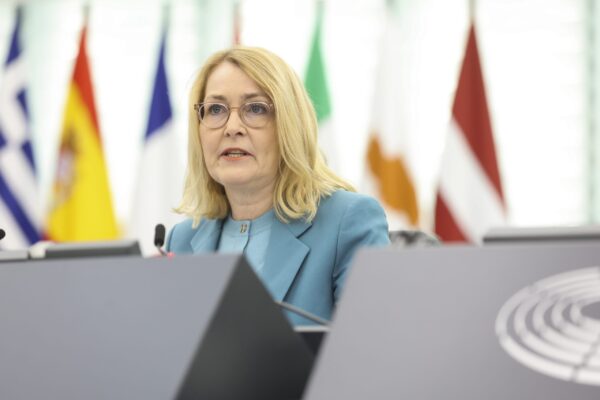
This was stated in a lengthy interview with the Guildhall news agency by Christel Schaldemose, Vice-President of the European Parliament (Social Democrats) from Denmark.
– We heard about Russian war drones above Denmark, above Germany, above other countries. Also, there were Russian warplanes in Estonian airspace. And NATO says that Russia bears full responsibility for those cases. Can we consider them as an act of military aggression of Russia?
– That’s a very, very good question. And I think some of the incidents are still not documented that Russia was behind. But some of them we know for sure. You know, some of the drones over Poland and Estonia have been identified as Russian drones. But what happened in Copenhagen and in Germany and other places, we’re not still sure. However, in my opinion, based on what the authorities are talking about, I think it is possible to say that we are in a kind of hybrid war mode. So, we don’t really have war, but we don’t have peace either. And I guess that Russia is trying to send signals to the European citizens what they are capable of doing. And they want to do that in order to create fear amongst the citizens and to split the citizens. So, I think they want to make sure that there is less support for the aid we’re giving to Ukraine. I think that they want to try to create a situation where citizens demand from the politicians that they scale down the way they’re talking about Russia. So, it’s a classical Russian-Soviet kind of mood. And I’m a historian by training. I’ve read European history in particular. And I can recognize the tools from other times in history. And it scares me quite a lot because what they’re doing is very effectively, unfortunately.
– And how do you think NATO, the West and the EU should react to that?
– Well, I honestly think that’s a difficult question. Because on one hand, we need to send clear signals that we are ready and we are capable of tackling these things. On the other hand, we also need to make sure that we’re not scaring the population so much that they are getting afraid of a war. Because it’s not imminent. It’s not that I think that Russia will send bombs over Europe. So, we need to be aware of not scaring citizens. But on the other hand, be crystal clear that we are ready to act and react. And that’s why I think what Russia is doing with the drones is unfortunately rather intelligent. Because as you have learned, and it is amazing what we have seen from Ukraine. As you have learned, even with the best defense against drones, it is impossible to get rid of all the drones. Of course. And that’s why they use the tool. Because we can see that in Ukraine and the citizens can kind of compare and say, well, then it’s also difficult even with the best of tools in Europe to avoid the drones coming here. So, I think we need to stand firm and understand that Russia doesn’t want to do any good things for Europe. And we need to send the signal that we are ready. But at the same time, try to avoid an escalation into a real war.
– You mentioned history. And as we see in history and in Ukraine, we believe that Russia understands only force, only military signals after all. Maybe there is a need for a significant increase in military aid to Ukraine as a reaction to those cases with drones?
– As you probably know, I’m Danish. And in Denmark, we are supporting Ukraine. Because we believe that what you’re doing is amazing and it is admirable. But it’s also you help us in our defense. So, when we help you, we even help ourselves. We do it because we want to help you. But we have also seen that if we don’t help you, it will be more difficult to withstand the pressure from Russia. But unfortunately, a lot of citizens throughout Europe, I just heard it this morning, that new studies shows that the support for Ukraine in terms of military spending has gone down dramatically since the springtime. And that scares me a lot because somehow it is as if the EU or Europe or NATO doesn’t really… I kind of think that maybe some of the states think that, well, it’s not our job, it’s the others. Because we cannot afford it, so we leave it to the others. But the thing is that everybody, if they end up leaving it to you, then you will be all on your own. And then you have no chance. So, we need to help you to fight Russia. And it is effective because you have been able to stand up against them in a very strong manner. So, I hope that we can continue supporting Ukraine in the way we have done so far. But we need to talk about it over and over again. And honestly, I hope and I believe that what we have seen with these drone events might even help European countries to understand that this will not disappear if we don’t stop the war. And you are the one to stop the war.
– Do you see any indication that Russia demonstrates willingness to peace? To find a peaceful process, a peaceful settlement?
– No, I don’t see anything like that. What I see, unfortunately, is that the Russian propaganda and Russian way of acting has had an impact in the EU. So, we are seeing more and more citizens and politicians in the European Parliament supporting Russia or raising the question about the support to Ukraine. And I see it as, you know, a success from Russia’s side to try to split Europe and split the citizens. So, honestly, I am concerned. I think that they will not be successful. But they have been quite good so far and we need to understand that that is what is happening.
– If Russia is not ready for peace, do you support and promote that it must be pressured into peace by force?
– Yes, I do. But there are different ways of showing this force. One is what you are doing in Ukraine on the front line, really fighting the Russians. But I also think that a part of it is also using NATO to say that we are not willing to accept what is happening. And without any comparison at all. But I have seen that Mr. Trump has been quite successful in opening up for a hope for peace in the Middle East. We are not there yet, but at least the hostages came home. And I think he plays a key role because the U.S. has the best military in the world. And if he has the will, Mr. Trump, to put force behind his demands, something will happen. So I hope that what we will see as a consequence of what has just happened in the Middle East is that Mr. Trump will use NATO to kind of put pressure on Russia to stop the war. So it might not be directly with force, but it is with the threat of using force that we might be able to push them back.
– What additional levers of pressure haven’t been used yet in Europe? Maybe gas, maybe a shadow fleet. What do you think about it?
– I mean, for instance, take the gas. I am so frustrated because ever since the full scale invasion in 2022, February, we’ve been discussing this. But we have in Europe financed Russia’s war against you by buying gas in Russia. And we’ve been talking about it. And yet we still import a lot of gas from Russia. So one of the very important things is to stop that. And I would prefer us to buy gas in U.S. or other places, but not just from Russia. So we need to end that now. Next week in the European Parliament, we’re going to have a debate about this. And we probably also are going to vote for a resolution in the European Parliament pushing the commission to act faster. So kind of, you know, make sure that we end using Russian gas much earlier than expected. So we already want it to end next year because at the moment we are financing his war against you. And it is simply not acceptable. So that is maybe the strongest tool we can use because I don’t believe that the Russian economy is that strong. So if you can put pressure on them here, it will have an impact.
– What about the shadow fleet? It is still expanding, it is fueling war budget. Is a full blockade in the Baltic realistic for their ships?
– Well, I’m not sure that it is completely realistic. But we need to understand that, you know, the Russians are clever and they’re using this shadow fleet. And we need to push for that not to happen. And I think that the recent events around the drone, you know, what happened with the drones in that region. I think that has helped the understanding of Russians way of acting. So there is a more, I think there is another awareness around the shadow fleet right now. And also Ursula von der Leyen, the president of the European Commission mentioned the shadow fleet when she spoke in the European Parliament last week. So I think that awareness is increasing and we need to do something at full scale. Blockade is probably difficult. But sanctions is needed and we need to do more. But as you probably know, we also have a couple of European countries who is against sanctions towards Russia. And I honestly also see some companies from many different member states that are trying to, you know, not doing all they can to avoid trading with Russia. We need to stop that financing of the Russian war and we need to use the tools available.
– There are also Russian frozen assets in Europe and maybe it’s confiscation and transferring to Ukraine could really be a massive factor for Moscow to seek the peace?
– Well, I believe that’s a tool as well. As you know, it is highly debated because primarily Belgium, which is the country that has the most of the Russian money assets, they are afraid of the consequences toward Belgium in case we start spending the money for Ukraine and or other military purposes to keep Russia away. So I guess that we relatively soon will get some legal clarification about what happens and then we can start using it. But I also understand that it is a quite sensitive question and Belgium fears consequences for them if they allow the use of the money. So we need to find ways where we can protect Belgium in case they accept that we use the assets. But no doubt, I think that a part of that asset should definitely go to rebuild Ukraine. And I think if you look at the support for that position, it is quite clear. There is a high, high level of support for using these frozen assets. It makes sense.
– Probably the last big Russian state company that isn’t under comprehensive sanctions is Rosatom. What is your position here? Must it be sanctioned in the fourth year of war?
– Well, in my opinion, I think that like when we talked about what is Russia reacting to, they react towards strength and the risk of force used against them. I also think that they react to consequences for the economy. And therefore, I believe that we need to have a very strong sanction regime in place. And we haven’t closed all the loopholes yet. And it is because even though the trade with Russia is seen from a European perspective rather low, it’s still there and we have companies earning money on this trade, even Danish companies, unfortunately I have to say. And it is difficult. It’s always a question of legal responsibilities, liabilities and the right to freely trade with whoever you want to trade with. So it is difficult, but I think we are not there yet. We need to close all the loopholes and sanctions. Everyone that accepts food and medicine, I think we should be quite tough on Russia when it comes to sanctions.
– I also want to talk a little bit about wider international policy. British RUSI has posted a report that Russia encourages China to seize Taiwan. And it is said that Ukrainian defeat would be a signal for China to start these aggressive things, maybe a war against Taiwan. Do you share this point of view?
– Well, honestly, I believe that China is going to do what they want to do no matter what happens in Ukraine. I think they have a long-term plan to get Taiwan kind of back, if you understand what I mean. And they are going to do that no matter what. So, of course, they are looking at international consequences. They are looking at trade. China is quite dependent on the trade with Western countries. So if that is at risk, they might be a little bit more concerned. But the plan is there. There is no doubt Taiwan have this one-country policy. And I think that they are going to try to deliver on it. But they are looking at what we are doing here now with Russia. And therefore it has an impact, I’m sure. But to what extent, I don’t really know. We haven’t been that successful with the sanctions, as I said before. We still have loopholes. And when you look at China, we are more dependent on China than we are on Russia. And especially on critical raw materials. Unfortunately. Well, we are trying to work on that. And we have in the long run, you know, Greenland and other areas where we have a chance to get at least some of the rare earth materials. But at the moment we are quite dependent and they know that. So it is kind of a chicken game, you know, who blinks first on this. So China is following the international development. But I think it’s difficult to tell when they are going to act differently than from now. But the dependence on us is clear.
– It is also said in that report that Russia has equipped the Chinese military with vehicles, with weapons to seize Taiwan. And obviously the West should react to that. Ukraine’s defeat really would be a signal to China that you can invade a country and did not receive any measures for that. And how Europe and the West should react to that. Maybe you can somehow show the United States that it should provide more help to Ukraine, to Europe?
– Yeah, I think it’s a very difficult thing to tackle. To be very honest, the US has supported Europe for decades, ever since the Second World War. And we haven’t been doing enough ourselves in Europe. We have been depending on and relying on the help from the US in terms of military support. And, you know, the security guarantee in the NATO-US security umbrella. And I think, to be very honest, that Mr. Trump is now saying that he’s fed up with that and the Americans are fed up paying for Europe. And to a certain extent, I do understand that point of view because we haven’t done enough. However, recently we have seen that European countries have stepped up, starting to rearm Europe again. First and foremost, in terms of helping Ukraine. Secondly, in trying to rebuild our own defense and maybe even more than defense, but also capabilities to, you know, send missiles to Russia, whatever. So we are working on it. And it’s difficult for us to say that the US should do more because they have, in fact, done a lot over the last 80 years or something like that. But what we need is, you know, what we need is we need the US to help us with the security guarantee for Ukraine, not for Europe, but for Ukraine. So we need Mr. Trump to help us because he’s apparently rather skilled in this to try to find ways to create peace, a fair peace, not a peace on Russian terms, but a fair peace. And I think that if we can make Mr. Trump help us there, we would be very grateful. And then we would find a way to finance the rest. So if you understand what I’m saying here, that I think that there are… We cannot ask the US to pay much more, but we have to pay and that therefore we need all the European countries to stand up for Ukraine.
– Millions of Ukrainians are living now under Russian occupation. Parliament Assembly of the Council of Europe called Russia’s actions as ethnic cleansing amounting to genocide. Would you back a similar resolution in the European Parliament?
– That’s a very good question. I think we have passed a lot of resolutions sending strong signals on Ukraine that we want to support Ukraine, that we have a responsibility, that you’re fighting also for our security, that we are taking a stand against Russia and this illegal aggression and this illegal war. So I think we have done a lot. The occupation is problematic, deeply problematic. I’m not sure that there would be a support for calling what is seen in Ukraine right now a genocide. As you know, we have had a long debate about that on Gaza. I’m not sure that that’s the way to go forward. I think the war in itself, the unfair illegal aggression against you is enough. It’s a strong argument. It’s against UN laws. And I think that we have a lot of good, strong legal aspects in this as well. And I think we can continue to let the country of Europe and let UN know this, that we are on your side and we are not supporting Russia. So I think we are willing to go very far, but calling it a genocide, I’m not sure yet.
– To protect those people under occupation, should there be a call for a United Nations mission to monitor human rights. Is it possible?
– You have very good questions. To be very honest, I think that due to the way UN works right now and with the Security Council and China and Russia being a part of that, it would probably be difficult to get a UN-supported mission. But there is no doubt that we need to work on the future. What can we do with the occupied territories? What can we do to protect the rest of Ukraine as well? What can we do to make sure that people have a right to decide for themselves? So depending on what happens when, hopefully soon, a ceasefire is in place and maybe even a peace agreement is in place, what do we do then with those people who might be, I don’t know if the right word, but misplaced, that want to stay and live other places? What do we do on that? We have to work because we truly believe in people’s right to decide by themselves. And we should never, ever reward Russia for what they have done. So you can count on EU support in this. But well, let’s wait and see. We’re not there yet. But I hope you really understand how grateful we are for what you’re doing. You’re fighting for your country. Really amazing. And it is simply not anything you can take for granted these years. And we really appreciate it. And we try to do what we can to help you in terms of weapon and money. We’re also talking about how we rebuild Ukraine afterwards. We’re talking about membership of EU, etc. So we’re trying to do a lot of things to make your daily life a little easier while we hope for the war to end soon.
We are grateful too.
– Is the West united now behind Ukraine’s victory and countering Russia’s aggression?
– No, we are unfortunately not united completely. What I know best is, of course, Europe. And here I do see differences. But what I think is important is to say that the big, big, big majority of EU’s member states are behind Ukraine. Are standing on Ukraine’s side in the war. And only one or two countries. And I’m not even sure that is for the population. But only for the leaders of these countries kind of tend to support Russia. Which is completely weird. Their history taken into account. I have difficulties understanding that. But the big, big, big majority are supporting Ukraine. Which is both needed and important. So I hope that we will see some movements fast. So the war can end. But also end on fair terms. In order to do so, I think we need Mr. Trump. Because of the force that he has behind him as US. And then in the daily work it will be EU and EU member states that will help you to recover.
– I thank you very much for your work, for your position, for your time, for kind words. It is really important to us.
– Thank you very much. And also let all your friends know that I think a big part of European citizens think that you are the bravest persons in the world daring to fight for your own country against a big aggressor like Russia. So thank you very much for that and we support you fully.
Exclusively, Guildhall.
Только главные новости в нашем Telegram, Facebook и GoogleNews!
Tweet