
Estonia treats Russia as the principal external danger. Since 2022 hybrid pressure has escalated – sabotage, arson, cyber strikes, drone sightings – designed to unsettle society and pull focus from helping Ukraine. Moscow also probes NATO cohesion, yet the Alliance has strengthened its posture in Estonia.
The toolkit is old, the delivery new: digital operations, drones, and plausible deniability, including airspace incursions. A large-scale attack is unlikely while Russia is tied down in Ukraine, but small tests will continue. The answer is clear: secure a Ukrainian victory, harden deterrence and civil resilience, raise costs through sanctions and law enforcement, and avoid illusions about a quick reset after a ceasefire.
This was stated in a lengthy interview with the Guildhall News Agency by Henrik Praks, Research Fellow at the International Centre for Defence and Security Studies and an expert on hybrid warfare.
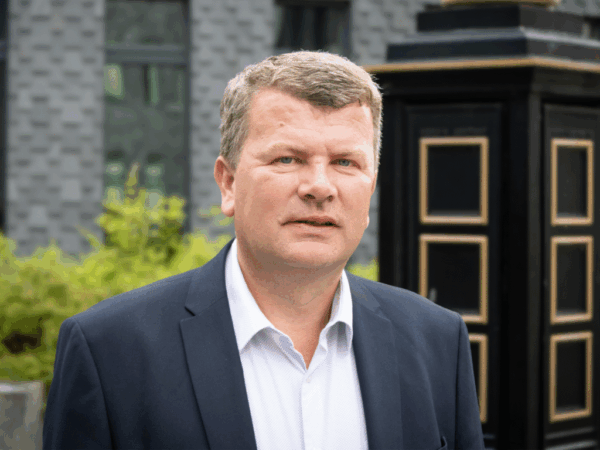
– In your assessment, do Estonians see Russia as a danger to them and to their country?
– Because of our history, even before the full-scale war in Ukraine, the majority of Estonians viewed Russia as a clear threat. There are different trends in society, but Russia is essentially the only external actor that can endanger Estonia. Our relations with neighbors are friendly. That does not mean everyone sees it the same way. Among the Russian-speaking population, understanding of the threat is less widespread.
– Approximately how large is the Russian-speaking population in Estonia today?
– It depends whether you mean ethnic Russians or people whose first language is Russian. As a first language, it is roughly 35%.
– According to the Royal United Services Institute, after the full-scale invasion Russia has increased its hybrid operations against Europe. Do you see such an escalation?
– Yes. We have lived with Russian hybrid, subversive, malign activity since the 1990s. In 2007 we had the Bronze Soldier crisis, which showed almost every element of hybrid power except military force. Since 2022, especially in the last two years, Russia has intensified activity and introduced new forms. There have been sabotage, arson, and vandalism ordered by Russian services, mainly the GRU, including in Estonia, as in other European countries. Targets have included businesses linked to Ukraine, national monuments, and private property of a politician and a journalist. Our counterintelligence has caught a number of one-time agents and criminals hired by Russia. That is new since 2022 and it is worrying because small attacks on property can escalate. There are other areas where activity has expanded as well.
– What are the goals of these operations?
– Destabilization. They seek chaos, fear, and instability. They exploit divisions within society and try to distract attention from support to Ukraine. Responding to incidents consumes resources, and constant reporting about tension and hybrid activity can affect investment and confidence. It is a long-term strategy aimed at reducing support for Ukraine by forcing us to focus inward.
– Russia also tries to divide NATO through pressure on the Baltic states, using military and hybrid tools. Do you see attempts to split the Alliance this way?
– Russia’s long-term aims were visible in the proposals it sent to European states and NATO in late 2021, and later repeated. It wants a sphere of influence over NATO members that joined after 1997 and restrictions on NATO’s presence in those countries. The idea is to separate the eastern members from Western Europe and North America. It has not been effective. NATO has increased its presence in Estonia and along the eastern flank.
– On methods: beyond old KGB-style active measures, do you see newer techniques?
– The playbook is old, but the tools are new. The digital and cyber domains are central, with Russian services, state-linked hacker groups, and criminals who work for money or for state tasks. We also see drones. Not only spillover from attacks on Ukraine that crossed into Poland or Romania, but mysterious sightings near airports in places like Denmark and Belgium. There have been some in Estonia, though not at a scale that disrupted air traffic. New technology allows covert action with plausible deniability, which is key to hybrid warfare. Russia denies everything even when caught. For example, in September Russian aircraft entered Estonian airspace for 12 minutes over the Gulf of Finland, the longest such incursion. They denied it despite clear facts. As in Crimea with the “little green men,” there were “green airplanes” in our airspace.
– And the old Soviet methods in Estonia specifically? Influence on politicians or other levers?
– Disinformation is constant. It is not always about making Russia look good, which is difficult here because the Russia “brand” is toxic among Estonians. More often it is about divisive topics that aggravate social tensions: anti-renewables activism, anti-factory campaigns, or other local protests. Some actors may not even realize when their cause is being amplified from abroad, but Russia pushes anything that raises tensions.
– Returning to Russian-speaking communities: what do they think about Russia?
– Like any community, it is diverse. Younger people without a Soviet past are more integrated and look more to the West. Older groups differ. In general, Russian speakers view Russia less as a threat than Estonian speakers do, and their views of Russia are more positive. But they prefer to like Russia from a distance. Despite propaganda about discrimination, almost nobody moves back to Russia. It is a complicated picture. The government regularly commissions polling on national security and foreign policy; we can consult the latest numbers if needed.
– Russia funds far-left and far-right groups across Europe, adding fuel to radicalization. Do you expect further radicalization of hybrid operations in Europe and Estonia?
– Russia can intensify these activities. At the moment its focus is more on larger European countries whose political orientation may be easier to influence than in Estonia or the other Baltic states. Germany and France, for example, are prime targets.
– What about conventional military danger from Russia?
– The risk exists, but Russia is militarily preoccupied with its war against Ukraine. As long as that remains the priority, a major new conflict with a NATO member is unlikely. Any attack on Estonia would trigger Article 5, making it a conflict with NATO. Smaller provocations are possible as a test of Alliance unity, and the Baltic region could be one area for that because we share a border with Russia.
– President Zelensky has warned Russia might invade another country before the war ends. Do you think that could be a European country?
– It is unlikely with NATO or EU members. Such an action would require significant resources, which Russia is using in Ukraine. At least in our direction, it seems unlikely.
– We agree the danger persists. How can Europe, NATO, and Estonia make this threat impossible, whether hybrid, military, or cyber?
– The most important step is Ukraine’s victory and Russia’s defeat in Ukraine. Russia must fail to achieve its objectives and feel it has lost in a significant way. If it feels on the rise, it will be tempted to go beyond Ukraine. Beyond that, we must strengthen deterrence and resilience against both conventional and non-conventional attacks, and raise Russia’s costs through sanctions and other measures for its war and its broader activities.
– Even if Russia loses, many believe it will try again unless the regime changes. Is a change of regime necessary?
– There is no Putin without Putinism. The problem is not one man; it is a system and a mentality that will not vanish in a day. There is no “reset” with Russia just because the war ends and a ceasefire or peace deal is reached. The need to contain the regime will remain unless its nature changes.
– Is Russia using proxies inside Estonia to influence or destabilize the country?
– There are public figures who echo Russian narratives and engage in activity that divides society. Our counterintelligence has made arrests and brought cases to trial. Some non-citizens have been expelled. We are vigilant. There is no large, organized movement that serves as a direct proxy. Russia instead exploits divisions that exist in any democracy, sometimes through people who present points favorable to Russia without necessarily intending to.
– That is all from my side. Thank you for your time and your work.
– Thank you. All the best to you.
Exclusively, Guildhall.
Только главные новости в нашем Telegram, Facebook и GoogleNews!
Tweet