
Swedes broadly see Russia as a threat to Europe, including their own country, and support for Ukraine is strong across society and all parties in parliament. Hybrid pressure has intensified: cyberattacks have hit banks, factories, and authorities, there are indications of sabotage against telecoms and water facilities, organized movements of “refugees” toward Finland included people meant to spy or sabotage, and there have been attempts to buy land near sensitive sites. Russia uses troll factories and proxies, including organized crime, to divide and undermine, yet remains unpopular in Sweden.
A bad peace in Ukraine would let Russia shift troops to the Baltic and Finnish borders and raise the risk of future conflicts. The answer is to stop Russia in Ukraine, expand military capability, and keep NATO and the EU united so deterrence is clear and costly. The “28-point plan” linked to Donald Trump gives Moscow too much influence and is unacceptable without Kyiv’s consent. Even if Russia loses, the danger will persist for decades, so Sweden needs a long-term total-defense posture and sustained support for Ukraine.
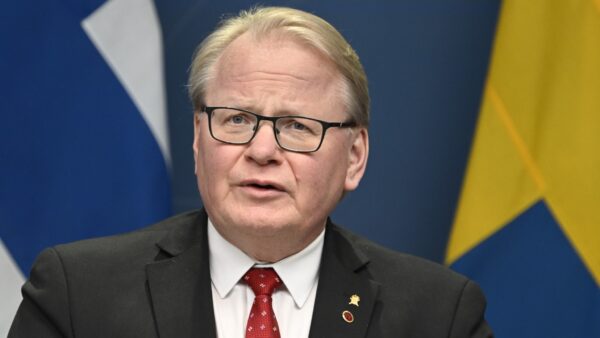
This was stated in a lengthy interview with the Guildhall News Agency by Peter Hultqvist, Member of the Swedish Riksdag from the Social Democratic party and former Minister of Defense.
– In your opinion, do Swedes perceive Russia as a danger to them and to their country?
– There is huge support for Ukraine in Sweden. People clearly see that Russia is a threat not only to Ukraine but to all of Europe, including Finland, Sweden, and the Baltic countries. That view is broadly accepted in Swedish society.
– Do you see an escalation of Russian hybrid warfare after the full-scale invasion of Ukraine?
– Yes. Russia has long used different hybrid activities. One example was during our NATO application, when extremists burned the Quran. For weeks there was activity around that, and Russia amplified it on social media in the Arab world and in Turkey. It created problems for our NATO process and for Swedish companies in the region. We have also seen cyberattacks on Swedish banks, factories, and authorities. There are indications of sabotage against telecommunications and activities against water plants. In Finland we saw organized movements of so-called refugees at the border, with the ambition to enter Finland and then the EU. Among them, some were intended to spy or sabotage. We also see Russian interests trying to buy land and houses in Sweden, including near sensitive sites and companies. That looks like preparation for escalation, using such infrastructure against Sweden. We know about Russian wartime planning on our territory and ongoing espionage. Overall, Russian activity in Sweden is clearly negative.
– Can you say more about people who might spy or sabotage?
– We have clear indications that Russia is constantly involved in efforts to undermine Swedish society in different ways. I won’t go into details, but while we maintain diplomatic relations, they act against us. The push to acquire land, houses, and infrastructure near military bases or sensitive companies is a concern. We can now block much of this, but we see how they work, including using people from other countries and individuals inside Sweden as the visible “surface” for these activities.
– About the Quran incidents: do you believe Russia poured oil on the fire?
– Very clearly. Russia is involved in anything that can split society. They use troll factories to divide Sweden. Their problem is that Russia is very unpopular here, so it is harder for them to succeed. Our population largely understands what Russia is doing. Support for Ukraine is very strong, and all eight parties in parliament back the military and civilian aid packages.
– On possible radicalization: Russia supports far-left and far-right groups and exploits social tensions. Do you see radicalization in Sweden or Europe?
– In Sweden there are Nazi and fascist groups on the right that support Russia, and small left-wing groups that do as well. They have no influence in government or parliament. All 349 MPs have voted for every aid package to Ukraine. The situation is more serious in countries like Germany and France, where parties such as AfD and the National Rally have been close to Russia; AfD has a very clear pro-Russian view of the war. Similar examples exist elsewhere in Europe. This is a real problem. Russia exploits these openings to split Europe, split individual countries, and weaken cooperation. Unity in NATO and the European Union is essential.
– Methods: beyond old KGB-style active measures, do you see any newer methods in Russia’s hybrid operations?
– One that deserves more attention is the link to organized crime. Russia uses organized crime to undermine society and to support operations. This is not very public in the debate, but it is a clear problem.
– How do they use crime groups?
– A person whose affiliation is hidden can pay a criminal group to commit an offense that creates a problem for Swedish society. If that person pays once, he can pay again. In different ways, organized crime is used to advance Russian goals.
– NATO: do you see operations aimed specifically at the Alliance?»
– If there were a bad agreement for a so-called peace in Ukraine, I think Russia would move troops and materiel to the Baltic and Finnish borders. After some years, if they sensed weakness, they could maneuver to challenge NATO. We must be clear that a bad peace for Ukraine can lead to new wars in Europe. We need to stop Russia in Ukraine.
– What about the “28-point plan” associated with Donald Trump on Ukraine?
– Russia has too much influence over that plan. It is unrealistic, and if I were a Ukrainian politician I would not accept it. You cannot have a “peace” without Ukraine’s consent, and Ukraine must be treated with respect in any discussion.
– Conventional military danger: what is the risk to Europe and Sweden?
– Look several years ahead. With a bad peace in Ukraine, Russia would likely build up forces at the borders of the Baltics and Finland and increase military activity along NATO’s frontiers where possible. That could lead to future conflicts. Russia’s ambitions go beyond Ukraine, and we must recognize that.
– How to make this danger impossible, both hybrid and military?
– First, support Ukraine now with materiel and weapons, and work closely with the Ukrainian government. Second, keep increasing our military capability and stay united in NATO and the EU so Russia cannot split us. Clear deterrence is essential. They must see that aggression will carry a very high price. But the priority now is supporting Ukraine so it can fight back effectively.
– Even if Russia loses, it will remain dangerous. Many in Ukraine believe only a change of regime in Russia — not just the president but the whole system — can alter this.
– We will have a Russia problem for a generation, at least 50 years. My party argues for a 50-year perspective in building a strong total defense. We cannot reduce defense just because the situation looks better for a time. Russia is unpredictable. On regime change, I won’t speculate. Historically Russia has had authoritarian governments. I remember Putin’s 2007 Munich speech — he was very clear. Few wanted to listen, but he did what he said.
– That was all for us. It was a pleasure to speak with you. Ukraine and Sweden have much in common in history and in countering Russia. I hope we can keep in touch.
– Thank you. I hope to see you soon.
Exclusively, Guildhall.
Только главные новости в нашем Telegram, Facebook и GoogleNews!
Tweet