
Europe largely perceives Russia as a threat, a view reflected in polling, yet policy often lags behind rhetoric. Since the full-scale invasion of Ukraine, hybrid pressure has intensified: mass drone incursions toward Poland and other states, airspace provocations, sabotage of undersea cables, election interference in Moldova and Romania, and support for far-right and far-left forces. The aims are fear, fragmentation, and constant strain on institutions while testing NATO below Article 5. Latvia sees the same pattern at home through migrant pressure orchestrated via Belarus with criminal networks, targeted information operations around Russian-speaking communities, and drone incidents from the eastern border and over the Baltic.
The takeaway is to convert threat perception into action. Priorities include protecting critical infrastructure and airspace, fielding counter-drone solutions, hardening elections, exposing infiltration, and coordinating across the EU and NATO. The conventional danger is growing as Russia militarizes and expands its war economy, leaving limited room for diplomacy; sustained support for Ukraine remains central to deterrence and to preventing wider aggression. Near-term regime change in Russia is unlikely, which means long-term readiness, credible deterrence, and resilience are required.
This was stated in a lengthy interview with the Guildhall News Agency by Ivars Ījabs, Member of the European Parliament from Latvia.
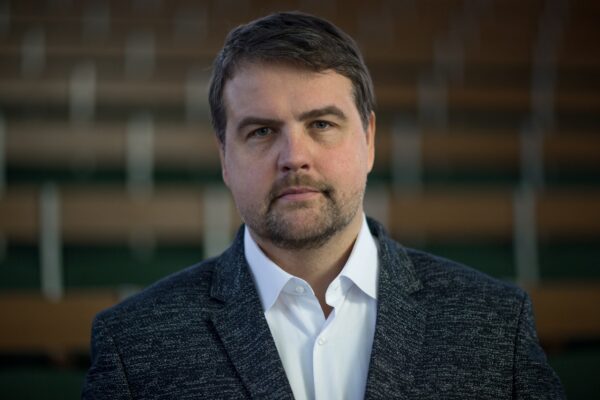
— According to your estimate, do the societies of Europe and Latvia perceive Russia as a danger to them?
— As for whether Europeans perceive Russia as a danger – yes, they do. You can see it clearly in Eurobarometer polls that include a question about perceptions of Russia. Of course, there are differences among member states, but overall a substantial majority of Europeans do see Russia as a threat. This does not always translate into political decisions. As we know, many EU countries still don’t support Ukraine enough: they like to talk about support, but in terms of fiscal aid and defense materiel, it’s too little and on too small a scale. Nevertheless, there are differences, and it would be good if the right perception were actually translated into decisions.
— According to the British Royal United Services Institute, after the full-scale invasion of Ukraine, Russia is increasing them. Do you see such an escalation of Russian hybrid warfare against Europe and NATO?
— It’s hard to say “no”, especially over recent months: since this summer we have seen numerous aerial incursions and hybrid attacks into European airspace. It’s not only about drones flown toward Poland on a massive scale and other countries, including Latvia and Lithuania; drones are also trying to disrupt our airspace. Look at certain air bases and airports in Western Europe – Denmark, Belgium, for example – it’s happening. That’s probably the most recent layer of our experience. But Russian hybrid warfare has very long traditions, and apparently they have agents in many European countries capable of various actions – not just flying drones; there are other dimensions. We all know that the undersea-cable infrastructure has been sabotaged many times by Russian agents, mostly starting in 2024. And we see support for all sorts of anti-democratic and anti-European movements and parties across Europe. Behind initiatives on both the far right and far left there are strong suspicions of GRU and other special-service operations and backing. And electoral interference: Moldova, and before Moldova – Romania; attempts in Germany and elsewhere. This is the new reality we face. Across Europe we must recognize we’re dealing with a malevolent force in the East that tries daily to damage our cohesion, our democratic institutions, our economic infrastructure. You can see it everywhere. The EU should take it seriously.
— You mentioned destabilization and disruption, but what other goals do these Russian hybrid operations pursue?
— I’d also see them as a sign of weakness. The so-called “second army in the world” hasn’t achieved its stated goals since 2014. Not just the 2022 invasion – it started earlier, and nothing like their aims has been reached. Over time the regime changes internally, moving toward a totalitarian state and a war economy, so tactics also change, and they have been rather skillful at promoting hybrid methods. The “aerial” aspect is the most urgent now: it’s everywhere. Not only flying objects like helium balloons into Lithuania, but also tampering with navigation – that’s not suspicion, it’s established fact. Imagine what it means for Europe if they deliberately hit that part of our infrastructure. As for aims: they constantly test reactions. The mass drone flights toward Poland were a clear test – they wanted to see the response. And they try to keep everything below Article 5: actions that can be framed as a mistake or a blunder, without crossing into overt military aggression. The purpose is to sow fear and create mayhem in European countries in every possible way, from cyberattacks on systems to closing airports. That affects Belgians, Latvians and many others, shaping negative attitudes. In parallel, they test NATO’s agency – especially with airspace violations observed in Estonia and elsewhere. With small “bites” they undermine NATO’s credibility: where is the point at which the Alliance reacts, what are the steps? NATO needs to prepare for this model. There’s that old story of “death by a thousand cuts”: not a knife to the heart, but many tiny wounds that bleed you out. That looks like the Russian Federation’s approach: a direct attack on the Alliance would be suicidal, so they act this way. We’ll face such an adversary for the foreseeable future.
— Could you name specific hybrid operations against Latvia? Moscow sees the Baltics as its “own” region, like Ukraine and others.
— For Latvia it started long ago, even before the 2022 full-scale invasion. It’s a continuing process – a kind of “hybrid invasion”: pushing migrants across the border with the help of Belarusian services and organized crime. That’s crucial: Russian hybrid operations massively enlist criminal networks in our countries. We also know of GPS disruptions in Estonia. And we shouldn’t forget information operations. Where substantial Russian-speaking minorities remain, Russia has for at least 25 years tried to exploit them as “agents of influence”, including through fake news aimed at undermining institutions and the state. We see all of this in Latvia. We’ve also had Russian drones – from the eastern side facing Russia and from the western coastline over the Baltic Sea. The experience is similar across the region: colleagues in the European Parliament report increases in this activity.
— It’s clear Moscow uses old Soviet-style KGB methods. But are new methods being recorded, not only the old ones?
— Drones are, of course, a new technology. The EU is now massively building up air defenses, but traditional air defense isn’t ideal against drones: it’s too big and expensive, geared to planes and missiles rather than quadrocopters. Ukrainians are very good at developing counter-drone systems – we’re pushing the idea that your rapidly scaling drone industry should be integrated with Europe’s; you have a lot of know-how. From the “new”: undersea cables. From the “old”, still very present: the use of the Russian Orthodox Church as an influence tool. In 2024 Sweden’s security service said a recently consecrated church in Sweden was linked to intelligence activity. Similar cases exist in Georgia and elsewhere. It’s a mix of new and old methods.
— What about operations specifically against NATO?
— I wouldn’t separate them. In official discourse NATO is the main adversary. The story that “NATO expansion” caused the invasion of Ukraine is essentially an excuse. Until very recently NATO was almost pacifist, with defense spending around 1.5% of GDP — hard to see that as a threat. So we also watch our transatlantic partner closely. The difference between the EU and NATO is we “keep the Americans in”. Right now the Kremlin likely hopes for a “big deal” with President Trump, which will probably not happen. Hence their focus on Europe. You can see it in the MFA rhetoric: Maria Zakharova now says it’s “the Europeans’ fault”, not the Americans’. Something like that.
— This hybrid warfare is getting more violent: Polish civilians killed by drones, attacks on politicians. Russia uses both far-right and far-left parties in Europe, with obvious links to the FSB. Do you share concerns that it’s becoming more radicalized?
— It comes back to deterrence. If we let them, they’ll use every weakness to split us. We must invest more in protecting infrastructure. Many attacks have been wake-up calls. The “drone wall” discussed in the European Parliament is urgent. Without Russian use of drones as a key hybrid tool, the EU likely wouldn’t be reacting this fast. As for violence: although they try to project confidence, Russia’s leadership is increasingly desperate — it’s clear they’re not winning in Ukraine. Claims about “fighting for 100 years” aren’t real. Hence the risk of radicalization. But Europe is learning lessons. Look at the most scandalous example in Romania. We’re already preparing for upcoming elections — my own country votes for parliament in October next year, and elections are happening across the EU. Electoral systems must be made far more resilient. Likewise internally: identify Russian agents. They’re extremely professional — a Cold-War Soviet school. They can infiltrate organizations in EU member states and plan hostile actions below the threshold of an official NATO response. We must be prepared.
— Stepping away from “hybrid” to conventional military risk: what are your thoughts on Russia’s conventional threat to Europe now?
— The threat is growing. Russia’s defense budget is likely larger than officially declared. Yes, a portion of the population wouldn’t like full mobilization, but any resistance has already been jailed or exiled – they’re preparing. Officially, defense is around 8–9% of GDP. They’re arming up; industry is moving. Large-scale nationalizations are still limited to certain assets, but the militarization course is obvious, including for a possible invasion. We should have no illusions. There is room for diplomacy and it should be used, but it is limited. Over the past half-year the U.S. administration tried maximum diplomatic moves — even up to a “red-carpet Alaska visit” for Putin. Apparently the Kremlin isn’t ready for any solution that doesn’t involve Ukraine’s capitulation and Europe’s humiliation. Hence our support for Ukraine: we hope for a swift victory, but we must be ready for a long war – there are no signs the Kremlin treats “peace proposals” seriously.
— Lastly: how to neutralize Russia’s danger? In Ukraine we believe the path is one but in two parts — Ukraine’s military victory and regime change in Russia; otherwise Moscow will try to come back to Ukraine and other post-Soviet states. Do you agree?
— On military victory – certainly; that hasn’t changed and shouldn’t. On regime change – I still teach political science at my home university and tell students that one advantage of democracy is the ability to change leaders. Putin has been there since 2000; he has built the entire structure around himself and his mindset. Unfortunately, a majority of Russians have accepted this imperial, anti-Western outlook promoted by President Putin himself. But on the other hand, I’ve been observing Russian domestic politics quite closely, and unfortunately I don’t see any signs of an approaching regime change or a more or less viable opposition. The entire political landscape has been burned out by Putin and his cronies. There are different views on what might happen internally if Russia loses the war. Of course there would be huge public dissatisfaction: “What did we do this for? Why? According to some calculations, about a million people on the Russian side have been killed. Why? What was the point?” In that sense, there could be public sentiment against Putin as a failed dictator. But looking at the current landscape, there are very few people who could be considered future opposition leaders. Russian history has this experience — you never know who might appear. Navalny was killed by Putin. He was a pro-Western, broadly liberal alternative. Some, like Professor Kotkin in the U.S., argue we should perhaps look to a more right-wing alternative — nationalist but not expansionist or aggressive — because there are very few liberals in Russia. Yes, there are people around Echo of Moscow, a pro-Western intelligentsia, but it’s a very small minority. That’s why, if we are looking ahead, there might be a nationalist stance that isn’t as suicidal for Russia’s national interests as this war. But who might that be? I’m not that familiar, yet when the time comes, figures can emerge — that’s how it often happens. Maybe a future Russian leader who is more reasonable, not fighting the West, and more invested in improving ordinary Russians’ lives than Putin is, maybe he’s already around — we just don’t recognise him. That’s possible. But right now I don’t see any preconditions for regime change in the near term.
— There are some nationalists of Russia in the Ukrainian army.
— Yes. As an example of such people: they exist, they’re fighting, and maybe someday they will take power somewhere in Russia.
– Thank you for your work and your stance.
– Good luck. Thank you very much.
Exclusively, Guildhall.
Только главные новости в нашем Telegram, Facebook и GoogleNews!
Tweet