
Denmark treats Russia as a real and present threat. Drone incursions over Polish and Danish airspace and cyberattacks that are tracing to Russia have reinforced that view. Denmark’s location magnifies the risk, since the “shadow fleet” skims past its waters along international routes. Intimidation has not worked: public backing for Ukraine is strong, cross-party support in parliament remains solid, making it a leading supporter per capita.
Moscow’s goal is to divide allies and strain democracies, including through election interference abroad, which is why Copenhagen argues for a “democracy shield” alongside cyber and drone defenses. There is no immediate conventional threat while Russia is tied down in Ukraine, yet a shaky peace could let it build up again. Because of that, Denmark is lifting defense spending above three percent. Also, there is a need for an Airbus-style European defense industry to scale production. Regime change in Moscow is uncertain, so the response is European unity with Ukraine and sustained readiness.
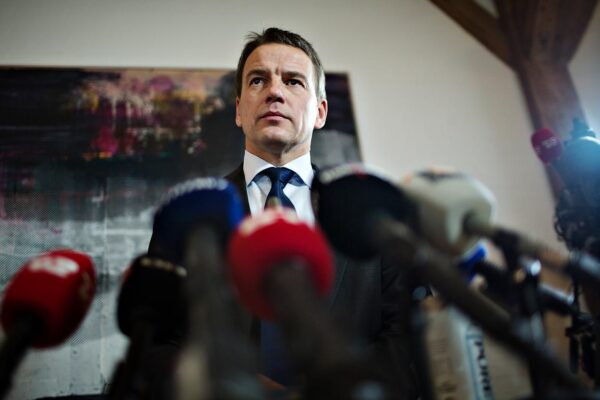
This was stated in a lengthy interview with the Guildhall news agency by Christian Friis Bach, a member of the Danish Folketing from the Vestre party.
— According to your estimates, do the people of Denmark perceive Russia as a danger to them and to Denmark?
— Definitely. In the Danish population, people see Russia as a threat. The awareness of the actual threat that Russia poses may not be fully explained or fully understood in all parts of society, but broadly Denmark stands strongly behind Ukraine, and Danes definitely understand that Russia is a threat not only to Ukraine but to all of us.
— After the start of the war in Ukraine, Russia is only increasing its attacks and hybrid operations against Europe. Do we see such an escalation now against Denmark, Europe, and the West at large?
— We definitely witness hybrid warfare and a hybrid threat against Denmark, and the drone incursions into Polish and Danish airspace are definitely an eye-opener for all of us, especially for those who said Russia is not the threat we say it is. We see that these incidents, and also the many cyberattacks we can clearly trace back to Russia, are strengthening our understanding that Russia is a threat – not only a military threat, but a threat to our critical infrastructure, our cybersecurity, our companies, and therefore to all our citizens. The recent drone incursions we have seen, not only in Denmark but in many other countries, are definitely increasing awareness of the threat Russia poses.
— Maybe you can tell a little more about specific operations against Denmark.
— Denmark is in a very important geographical position. The “shadow fleet,” which – even under sanctions – brings oil out of Russia and brings supplies into Russia that may violate sanctions, passes near Danish territory along international sea routes close to Denmark. For Russia, Denmark is crucial. I think this is why we see increased hybrid attacks against Denmark: to scare us and to show we should not support Ukraine. It has had the opposite effect. The more hybrid attacks and threats we experience, the stronger our determination to support Ukraine all the way because Ukraine is fighting not only for itself, but for all of us.
— You said Russia is attacking Denmark because of its crucial geography. What are the goals of these attacks?
— We don’t fully understand the precise goals behind every threat, but we see an increased number of hybrid attacks. We see cyberattacks against Danish companies and municipalities; a number of those can definitely be traced back to Russia. Our assessment is that this is meant to scare us and make us less united. Up to now, it has had the opposite effect: we are more determined to support Ukraine and more united against the threat. In Denmark we have lost no lives and seen no critical damage yet, so we are not complaining. But when we see what is happening in Ukraine – it is devastating. That’s why we stand strongly behind Ukraine.
— Can those operations be directed against NATO specifically – distracting or dividing allies?
— There is definitely an attempt to divide us and increase tensions between NATO countries. We do have NATO countries that are not as firmly behind Ukraine as we would wish, and that is a deep concern. We also have EU countries that stand in the way when we try to strengthen sanctions or increase support for Ukraine. For Denmark this is unacceptable. It matches the hybrid “script book”: make us less united, more divided, arguing among ourselves instead of standing united toward Russia. We must understand this and act on it – stand united and stronger when we see these attacks.
— It’s also important to know how Russia is doing this. It uses old Soviet KGB methods, but have you or your country`s special services recorded new methods of hybrid warfare?
— Much is classified, but openly we have seen cyberattacks. Numerous reports from many European countries show hybrid attacks, cyberattacks, incursions into airspace, and even threats of sabotage and destabilization. We also see attempts to interfere in elections and destabilize democracy – Russian actors intervening via social media to undermine our systems. We should take this extremely seriously and build a “democracy shield,” just as we need a physical drone shield. We must protect democracy against misinformation and destabilizing actions from foreign powers and here Russia is the biggest threat.
— Are you talking about elections in Denmark or elsewhere? Are there signs in Denmark?
— We haven’t seen it as severely in Denmark, but in a number of countries there are clear attempts traced back to Russia to influence elections. For example, in Romania and Moldova. I can’t say more about Denmark specifically; our democracy stands strong, and our engagement with citizens is strong. But we also see that some voices more favorable to Russia, and questioning Denmark’s very high support for Ukraine, are becoming stronger, unfortunately. We must take this seriously. Broadly, the Danish population stands strongly behind Ukraine, and in parliament a substantial majority supports every donation package – we have now made 29 packages since the start of the war. Denmark is by far the biggest supporter of Ukraine per capita, and one of the largest in absolute terms, even though Denmark is small. That’s because support in parliament and among our people is strong. Russia has not succeeded in destabilizing our democracy or our support. We stand firm.
— Russia supports both far-right and far-left groups in Europe; tensions are rising; violence against politicians and migrants appears. Do you fear radicalization of its methods in Europe?
— We see very concerning trends. The outer far right is gaining ground in many countries. Migration is being instrumentalized by Russia – trying to open borders and use migration to destabilize democracies. Some trends are extremely worrying in Europe, and I have no doubt some of this is influenced and linked directly to Russia to create tensions between our peoples and parties. We must build a democracy shield, strengthen neutral, public-service information flows, and counter misuse of social media to stir tensions and misinform people. We are scaling up efforts to counter such hybrid warfare against our democracies and stable societies.
— Conventional war: what are your thoughts about a traditional military danger from Russia for Europe and Denmark?
— Thanks to Ukraine’s extremely brave fight on behalf of all of us, right now Russia does not pose a direct military threat to Denmark or other EU countries. But the war machine Russia is building is so forceful that if the war in Ukraine were to stop soon (knock on wood, we hope for the best), then in a short number of years Russia could expand militarily to pose a direct threat to Denmark and others. If we do not ensure Ukraine’s success on the battlefield, Russia will soon threaten all of us. We take this very seriously – Denmark is substantially increasing military spending: already well beyond 3%, with more coming. If we don’t take the future threat seriously, we will regret it. Denmark is in the forefront of scaling up security and military capacity to counter this.
— Even if Russia loses in Ukraine, it will remain dangerous. How can we make this danger impossible in the future?
— EU, Western Europe, and Ukraine must stand strong and united and be able to defend ourselves. It’s the only way. We can hope for regime change and a return of a rules-based order, but we should not be naive. We are in an “Airbus moment”: decades ago Europe had few and not very good airplane producers; Europe joined forces to create Airbus – now one of the biggest, most innovative producers in the world. We must recreate that for the defense industry: an Airbus for artillery, for air defense, for aircraft – strong, united military production so we can scale up together and ensure Russia is no threat to Europe.
— Do you think regime change in Russia is a solution?
— I can see no peaceful Russia with the current regime. I cannot judge who may come after Putin or what a post-Putin regime would be like, so I won’t be naive. The only solution is that we stand strong and together in the EU and Western Europe, together with Ukraine.
— That was all for us. Thank you and Denmark very much for your position and help. It’s really important for us.
— Thank you. Good luck. Slava Ukraini.
Exclusively, Guildhall.
Только главные новости в нашем Telegram, Facebook и GoogleNews!
Tweet