
Russia is now seen in Sweden as a real threat – hybrid and cyber attacks, drone activity, and a clear pattern echoed across Europe. Public backing for Ukraine is overwhelming – over 90% support continued aid – and Stockholm is moving fast on deterrence: defence spending is set to climb to 3.5% of GDP by 2030, with Army, Navy and Air Force expansion, a strong domestic defence-industry base, and tighter cooperation around the Baltic Sea to signal that any attack would be met with force.
Moscow’s toolkit is broad – cyber strikes, weaponized migration, and political influence that plays both the far right and far left – but Swedish politics remains united for Ukraine and tougher sanctions. A direct strike on NATO is unlikely while Russia is tied down in Ukraine, yet a “peace” that lets the Kremlin rebuild would raise risks for Moldova and, later, even a NATO state. The task is deterrence and resilience — raise the threshold, reinforce the transatlantic link, and leave no openings.
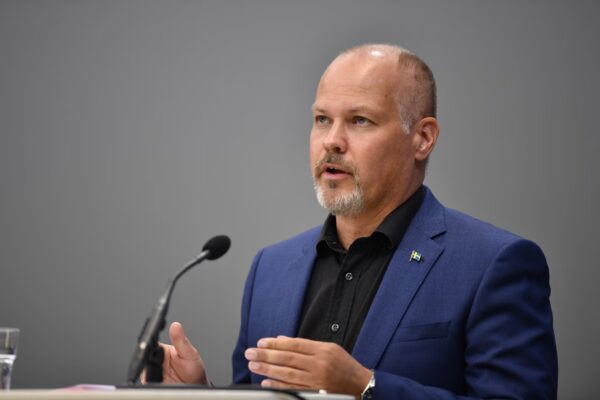
This was stated in a lengthy interview with the Guildhall News Agency by Morgan Johansson, a member of the Riksdag from the Social Democratic Party.
— According to your estimates, do Swedish people perceive Russia as a threat for them and for their country?
— The short answer is yes. After the attack on Ukraine in 2022, it became obvious for everyone that there is a real risk of Russian aggression not only against Ukraine but also other countries. We’ve seen that in Georgia, Crimea and Moldova. In Sweden we have also seen many hybrid and cyber attacks in recent years. Those who hesitated before about the danger from Russia do not do that anymore. There is very broad support in Sweden for Ukraine – when people are asked if Sweden should keep supporting Ukraine, over 90% say yes. So there is broad support and a strong sense of real danger.
— As the war is now expanding, do you see such an escalation of hybrid warfare by Russia toward Sweden, the Baltic region and Europe in general?
— We see reports about this all the time. We have also seen drone activity in Sweden. It is sometimes hard to attribute them and point directly to Russia, but regarding cyber attacks it is obvious that many of them have Russian origins. We recognize the same patterns from many other countries. This is not new – activity and disturbances have been very high for a number of years.
— What are the goals of these actions?
— To disturb us in different ways, to tie up our resources, and to scare us – showing they have the capacity and are willing to use it as intimidation.
— Do you see attacks specifically against NATO?
— Russia is walking on the edge: they don’t want to challenge NATO directly. But they have entered Polish airspace, and we see ongoing cyber disturbances. So far there have been no direct attacks on NATO, because they realize that would be really dangerous.
— In your opinion, how should NATO and Europe react?
— We are raising our defence expenditures very strongly. A couple of years ago we spent just over 1% of GDP on defence; now we have more than doubled that and are going up to 3.5% by 2030. We’re expanding in the Army, Navy and Air Force. Sweden has long had its own defence industry – our own submarines, our own fighter planes – so we have a base to build on and we’re investing heavily now. We are also increasing cooperation with countries around the Baltic Sea. With Finland we have had very close cooperation for more than ten years; now more and more also with the Baltic states, Poland and Germany, and of course Norway and Denmark. The goal is to ensure we can defend our part of Europe strongly and send a signal to Russia that attacking us would be very difficult because we are ready to fight back.
— Which new methods of hybrid warfare do you see Russia using, beyond the familiar Soviet KGB methods?
— Hybrid warfare can be many things: cyber attacks; sending refugees to borders, as we saw with Belarus and also Finland; political influence to create divisions within countries and between EU members. They have been successful in tying up some European countries – Hungary especially – in ways that serve Russia’s interests. The big change this last year has been the shift in the U.S. position. It is obvious Russia has targeted American politicians for a long time to change their sentiments, and it is worrying how the U.S. is behaving now. This very week negotiations have been dramatic; the European Union had to step in for Ukraine when the U.S. came with completely unacceptable suggestions. Influencing politicians is another way of hybrid warfare. We have seen this with some right-wing parties in Europe: in Germany (AfD), in France (Putin supporting Le Pen and lending money to the National Front), and in Austria where a government collapsed after revelations. We must be very clear: we see this, we reveal it to the public when we have signs, and we do everything we can to resist it.
— Russia finances both far-right and far-left forces, playing both flanks, using immigration tensions and pushing radicalization. Do you share concerns about possible radicalization and divisions in Europe and in Sweden?
— In Europe we already see it: some countries gravitate toward Russian interests and work with these parties. Imagine AfD in government in Germany, Le Pen in power in France, and the Reform Party in the UK – our Russia policy would totally change. That is what they are working for. In Sweden, so far we have not seen that development. A couple of years ago there were signs they were trying to work on the Sweden Democrats (the Swedish far-right party). A few of their MPs were revealed to be spreading Russian propaganda and narratives. In Sweden it is almost impossible to do that without very tough criticism. The party leadership acted, and those people were removed from the list and from parliament. In the Swedish parliament support for Ukraine is unanimous – from the far right to the Left Party. It is 100% support for Ukraine and for tougher sanctions on Russia. There are no divisions so far in Swedish politics on this.
— Let’s turn to conventional military threats. How real is the threat from Russia to Europe now?
— Right now Russia’s whole military effort is directed at Ukraine, so I don’t think they are ready to attack anybody else – it would be too much for them. And they have not succeeded in Ukraine. Their goal was to take the whole country in a few weeks. When I was in Kyiv in the spring of 2023, I was taken to the place where the Russians were stopped. They were close, but you managed to push them out of the Kyiv region. That was not in their plan – they intended to do it quite fast in spring 2023, and they did not. So right now they can irritate us with hybrid means, but they can’t attack us. If there is a peace – whatever it looks like – that would create calmer conditions for Russia and a possibility to build up again; then you never know the next target. Moldova would be in very serious danger, and in the long run maybe even a NATO country. That is why all NATO countries with borders facing Russia are quickly rebuilding military defence.
— There are vulnerabilities like the Suwałki Corridor near Kaliningrad. Will the United States and Western Europe help the Baltic states if needed? What is the plan?
— We have already shown it in peacetime: we have Swedish army troops in the Baltic states helping them protect their country. We have helped Poland with air surveillance of its airspace. We are planning to deepen cooperation with Finland. We are ready to send Swedish troops to the Baltic states and to Finland, and we are doing that to signal that in the event of war we are ready to engage and help our Baltic and Finnish friends. The difficulty is we don’t really know where the U.S. is going. If they reduce American equipment and soldiers in Europe, that would send a difficult signal. So we keep underlining the importance of the transatlantic link and our cooperation with the U.S. I am going to the United States in two weeks for a transatlantic forum, together with other European parliamentarians from NATO delegations, to meet American congressmen from both parties. That is another forum to explain how important this is – not just for Europe but for the U.S. in the long run – so we send Russia the signal there will be no openings.
— In Ukraine we believe there are only two ways to make Russia’s danger impossible: first, defeating and weakening Russia’s army on the ground; second, a change of regime in Russia – because it’s not only about Putin but an imperial system. What is your view?
— It’s true, but unfortunately we see no signs of that. Even if Putin were gone tomorrow, someone else would probably step into his shoes – not necessarily better. Over centuries there have been many wars between Sweden and Russia. Many thought Russia would change in the 1990s after the fall of the Berlin Wall. But even in Soviet times they used the same infiltration, hybrid warfare and interference abroad, with ideas about needing a protection zone and being “surrounded.” You can go back to tsarist times – the same reflexes. In communist times they infiltrated Western European communist parties – exactly as they now work with radical right and radical left. We had ten years in the 1990s when Russia was weak and perhaps on the road toward democracy, but that ended when Putin seized power in 2000. He has been in charge for 25 years, and each year things got worse – rolling back democratic development, removing opposition and free speech, eliminating challengers. We see nothing that could change that right now. So we must see Russia as a threat to Western democracies for the foreseeable future. We have to raise the threshold and send the signal that if you attack us, you will meet a very tough response. We will never lower our guard again—as many countries, including Sweden, did when they cut defence spending in the early 2000s. Putin is a KGB man—he served in the GDR—so it’s no surprise he uses what he learned then.
— That was all for us. Thank you for the interview, for your work and your country’s help.
— Thank you very much. See you soon. Bye.
Exclusively, Guildhall.
Только главные новости в нашем Telegram, Facebook и GoogleNews!
Tweet