
For Finland, Russia is a permanent potential threat — the illusion of a “predictable partner” collapsed after the 2022 invasion. The response was near-unanimous: join NATO, close the eastern border in 2023, and adopt emergency tools in 2024. Hybrid pressure arrives as small probes — instrumentalized migration, pinpoint incidents, resource-draining mischief — so readiness without paranoia and steady political will are essential.
The strategic task for Europe is self-reliance and resolve: rebuild defence, assume greater responsibility for aiding Ukraine and the continent’s security, and raise the threshold so aggression brings no reward. There is no immediate conventional threat while Russia is tied down in Ukraine, but any “peace” that lets it build up again will raise the danger; stopping Russia in Ukraine now is cheaper than stopping it later elsewhere.
This was stated by Jussi Halla-aho, Speaker of the Finnish Parliament, in an extensive interview with the Guildhall News Agency.
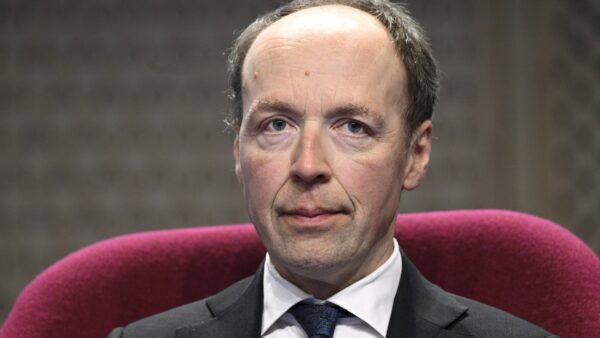
— Finland and Russia have a long history of wars and confrontation, and it’s interesting to know what Finnish people think now about the Russian Federation. Do they perceive it as a danger to them and to their country?
— Because of our complicated history with Russia and our geographic location, Russia is always a permanent potential threat to our existence, and we have always had to take that into consideration. At the same time, there is a genuine will in the Finnish population to coexist peacefully with our Russian neighbours. Until the full-scale invasion in February 2022, the mainstream thinking in Finland was that, despite its peculiarities, Russia was still a predictable and manageable partner – someone with whom you can negotiate and trust their word. This illusion was shattered by the invasion; very soon both citizens and politicians drew the appropriate conclusions, and we made an almost unanimous decision to apply for NATO membership. There is very little trust in the Russians now, and it’s difficult to see things returning to how they were before the invasion, even if the war in Ukraine ended.
— We also know that Russia has been conducting hybrid warfare in Europe for years. Do you see an escalation of it after the full-scale invasion of Ukraine in 2022?
— The Russians are probing everywhere; they are making little tests to see how we react to small-scale hybrid operations. As you probably know, on our eastern border we have had experiences similar to the Baltic states and Poland: the Russian authorities — the FSB and the Border Guard — began directing and assisting third-country nationals, mainly from the Middle East and the Horn of Africa, to our border to apply for asylum and to abuse the asylum system. As a result, we closed the entire eastern border in 2023, and in 2024 we adopted emergency legislation giving our border authorities more tools to deal with such hybrid attacks. Still, accidents and unfortunate things have always happened and will continue to happen; Mr. Putin’s agents are not under every stone and behind every tree. One of the regime’s strengths is that we start believing he is everywhere and interpret any damage or breakdown of critical infrastructure as a Russian hybrid operation. He wants that because it makes him look all-powerful. We must be alert and prepared for everything, but also avoid becoming paranoid.
— You mentioned testing and probing Europe. What other goals do these actions serve?
— They can make our life difficult. They drain our resources, energy, money, and time as we prepare for constant mischief and sabotage. Keeping us busy is one of their goals.
— NATO is the main enemy for Russia after Ukraine, and Finland is now a NATO member. Do you see operations specifically against NATO?
— The Russians have long been rather paranoid about NATO and its intentions. More precisely, they don’t take NATO as a collective seriously and don’t take European NATO members seriously. They don’t see us as independent actors; they see NATO’s European pillar as an extension of the United States and its hegemonic ambitions. In that sense, yes – operations are specifically directed against NATO — while European members are treated as mere tentacles of U.S. foreign policy.
— Does Europe need to show Russia its independence, and how?
— The big mistake most European countries made after the Cold War was neglecting their own defence capabilities and outsourcing Europe’s defence to the United States. That seemed fine for some decades when U.S. leadership was pro-European and there was no acute conventional threat in Europe. Now we have an active war in Europe, an acute threat from Russia, and unpredictable leadership in the U.S., and everyone sees that was a catastrophic mistake. Not everyone – Finland continued to invest in its defence after the Cold War, as did a handful of others like Poland and Greece – but we are small countries and need bigger contributions from Europe’s big players. Building capabilities from scratch takes time and huge money; despite much talk over three years, not enough has been achieved. We Finns keep emphasising to like-minded partners: if we want to be taken seriously in Moscow and Washington, we must show we are serious about our own security, take more responsibility for aiding Ukraine, and for the defence of the continent.
— Despite that, Russia tries to act from inside countries. Are there Russian proxies or pro-Russian organisations in Finland?
— There is a very broad consensus in society and among decision-makers on the need to help Ukraine; we don’t need to debate or justify it to voters. We have a significant Russian-speaking minority, about 100,000 people, most of whom came after the Soviet collapse. Many have Finnish roots but are Russian-speaking in practice. They are generally well integrated, but the war in Ukraine created divisions – between mainstream society and the minority and within the minority itself. Some in that minority follow Russian media and social channels and believe the propaganda. There are organisations run mainly by Russian-speaking migrants that protest the eastern border closure and demand “normalisation” with Russia. These groups are insignificant and represent a very small share of the population. I would say we don’t have a “fifth column” like many Western European countries – partly due to our history with Russia and genuine sympathy for what Ukrainians are going through.
— Does that minority live compactly somewhere or is it spread across Finland?
— It’s spread across the country, but Finland’s population is concentrated in certain areas; most people live on the southern coast, as do most Russian-speakers. There are also many along the eastern border, where cross-border traffic, trade, and tourism were significant economically. These regions suffered from sanctions, counter-sanctions, and the border closure, yet support for harsh sanctions is actually stronger along the eastern border. People feel the losses but also see the bigger picture more clearly than those living farther away.
— Another part of Russian hybrid warfare is creating and using tension in Europe – financing far-right and far-left, exploiting immigration – with a risk of radicalization. Do you share this concern, and will things get better or worse?
— European decision-makers should take this very seriously. We have a real problem with immigration and non-integration of people from the “third world.” In Western Europe’s public debate we often see the “weaponisation” of Mr. Putin: if someone disagrees on an internal issue like immigration, he is accused of being pro-Putin or told “this is what Putin wants.” Mr. Putin did not create Western Europe’s immigration problem – he exploits it, and we make it easy. Yes, Russians fund and use many far-right anti-immigrant movements and parties, especially AfD in Germany. If we want to eliminate that influence, mainstream politicians must take immigration seriously and address the daily problems voters feel. People vote AfD not because it’s pro-Russian but because it’s anti-immigration; more Germans feel something must be done. This applies across Europe. Don’t make life easy for Mr. Putin and his propagandists; don’t pretend immigration is a fake problem – it’s real.
— What about conventional military danger to Europe? Is it real now or in the near future?
— Finland currently assesses no immediate threat, simply because Russia needs all its military assets in Ukraine. When the war ends – hopefully soon – Russia will be freer to move forces elsewhere. They have established and expanded bases along our eastern border, partly to signal that relations aren’t what they were. Their ambitions lie elsewhere too – the Baltic states, perhaps Poland, perhaps even Finland, who knows? Their worldview is far from ours, so it’s hard to emulate their thinking. There is a genuine danger – not now, but in the foreseeable future. If Russia is allowed to win in Ukraine, or achieve something it can call victory, that incentivizes Russia and other rogue states like China to use military force. We always stress: if Russia isn’t stopped in Ukraine, it won’t stop in Ukraine. It will get worse and more dangerous. It’s cheaper to stop them in Ukraine now than elsewhere later.
— How do we make this danger impossible in the future?
— Russians use military force when they’re sure aggression is rewarded. So we must do literally everything in our power to prevent Russian success. If we convince Mr. Putin that time is not on his side and we won’t run out of resilience, materiel, or political will, he’ll think twice before another “special operation.” That’s the best and only way to neutralize the future Russian military threat – alongside meaningful deterrence. But deterrence alone is insufficient: Russia is not a normal country or society; it doesn’t care about losses as normal societies do, and Mr. Putin doesn’t have to care about elections. We must make it more beneficial for him to end the war today than tomorrow.
— Many Ukrainians believe the only way to make the danger impossible is a change of regime and system in Russia—since even without Mr. Putin there could be another “Mr. Putin” and another war. What do you think?
— I’m pessimistic about a deep internal change in Russia. I would like it, but given Russia’s long history as a despotic, authoritarian, imperial state, there are few positive precedents. There were brief periods of democratization – 1917 before the Bolshevik coup, and the decade after the Soviet collapse – but they usually ended in societal chaos; for ordinary Russians, they were negative experiences. The average Russian equates liberalism and democracy with “bardak” and chaos and doesn’t attach the positive attributes we do. The opposition is crushed; the war and Mr. Putin are widely popular. Mr. Putin will go eventually—he is ageing and his days are numbered – but while a leadership change might open a window, I wouldn’t count on a fundamental societal change.
— That’s all for today. Thank you for your position and work, and for Finland’s support for Ukraine.
— Thank you, all the best, and have a nice day.
Exclusively, Guildhall.
Только главные новости в нашем Telegram, Facebook и GoogleNews!
Tweet