
Latvia’s threat perception has shifted since 2022. In a diverse society where about 37% speak Russian at home, recognition of risk has grown: roughly half of Russian speakers now see Russia as a threat, while most native Latvians have long viewed it through the memory of occupation, purges, and deportations.
Hybrid pressure has intensified and extends beyond the Baltics. Latvia has faced weaponized migration via Belarus, cable cuts in the Baltic Sea, cyber incidents, sabotage, and drone airspace violations. The near-term aim is to split the West and drain support for Ukraine; the longer-term risk is a military phase. The response is preparedness: renewed conscription, comprehensive national defence, and active exposure of Russian methods to raise the cost of aggression.
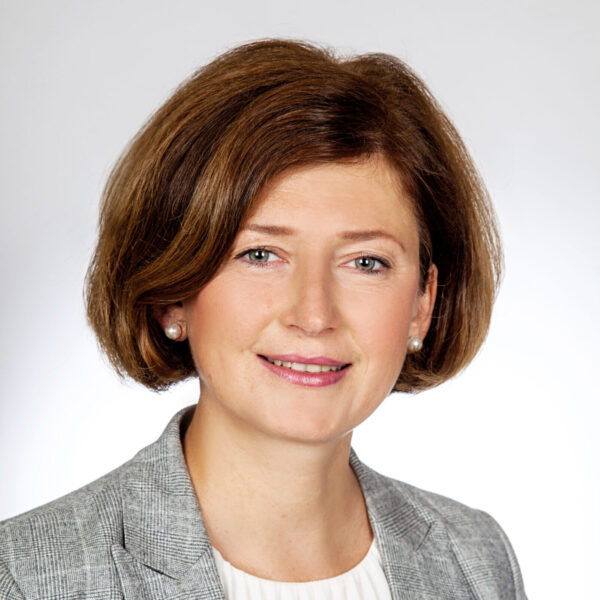
Ieva Bērziņa, Doctor of Political Science and Senior Researcher at the National Defense Academy of Latvia, stated this in an extensive interview with the Guildhall News Agency.
– Firstly, what Latvians are thinking about Russia, and does they perceive Russia as a danger to them and to the country?
– First of all, I must emphasize that Latvia is a very heterogeneous country, and around 37% of our population has Russian as their native language. They are not all Russians; there are different ethnicities, like also Ukrainians and Belarus and Lithuanians and so on, but due to Soviet Russification policies, the trend is that those who are not native Latvians, they tend to use Russian as their language. And one of the general trends in Latvian society is that there are differences of opinions between those who speak Russian language, and whose native language is Russian, or who speak Russian in family, and those who are the so-called Latvian speakers. Latvians, let’s put it this way. And this is because of many reasons, like media influence and historical memories are different. So, they have different opinions and different attitudes towards Russia. But also, before I delve deeper into what those differences are, I also must emphasize that all our so-called Russian speakers are not like a group with similar views. Within this group, you also have different opinions. Some are very loyal to Latvia, some are like really oriented towards Russia. There are also differences in opinions in terms of generation. But generally, I would say that in terms of threat perception, this is a question that our research center in National Defense Academy has studied since 2015, after Russia illegally annexed Crimea. And this is what we regularly monitor. And the overall trend was that before full-scale invasion in Ukraine, Russia as a threat was not the major threat in total in Latvian society, but generally only a small part of Russian speakers, around only 10%, would agree that Russia is a threat. That changed after full-scale attack on Ukraine. Generally, the understanding that Russia is a threat increased. It also increased among Russian speakers. So now, from our latest data, around half of those who speak Russian at home now believe that Russia is a threat. But still, there is a large share of this population that doesn’t think so. And this is largely because of the worldview promoted by Russia. And one of their narratives that they promote is that Russia is never aggressive. Russia always defends itself. And I have conducted several focus-group studies with Russian speakers, and I have heard myself how people with Russian language, how they reiterate this narrative that Russia is peaceful, Russia will never attack. So half of them think that Russia is a danger and half not. Of course, there are nuances, but generally you can say so.
– And what is about native Latvians?
– Native Latvians – the largest part of Latvians – consider Russia as a threat. And also I must say that, well, I haven’t studied this, but that’s what I think and also many experts in Latvia think. And this will be a true estimation that in Latvia, especially native Latvians, we take Russia’s aggression against Ukraine very personally, because it resonates with our historical memory, with the Soviet occupation, with the purges and deportations and all the harms they have done in Latvia. So largely, this is also not only current political understanding, but it largely is based on our attitude and our historical memory.
– After the full-scale invasion, according, for example, to RUSI, Russian hybrid operations only increased against the West, against Europe. And what can you say about such an escalation? Do you see it? And do you see it in Latvia?
– Of course, we see it. And I also have seen a detail in The Economist based on the Institute of the Study of War. They summarized all the hybrid-warfare attacks conducted by Russia in Europe. And you can see a drastic increase in 2022 in comparison with the previous years. And obviously we see the same dynamics in Latvia. And if we look at hybrid threats in the longer periods, then of course we can see how this has expanded. Because after Crimea annexation, when hybrid warfare came into our political and military discourse, then primarily we looked at Russia’s activities in the information environment. And then one thing that I had to stress when I’m lecturing on hybrid warfare that please do not put equality sign between information warfare and hybrid warfare. These are distinct concepts, albeit they overlap. But in hybrid, you use both military and non-military means. So initially we focused primarily, I would say, on propaganda, disinformation, different activities in the information environment. I would stress again that we have to look at all those Russia’s activities in information space in a complex manner. And we need to identify and see this worldview that Russia is constructing and promoting through various tools and techniques, including disinformation. We need to see this big picture. And also, like 10 years ago, also cyber attacks were one of those areas. But then as Russia and Belarus started to exploit those different means, our understanding expands too. And the next, I would say, significant step was 2021, when after presidential elections in Belarus they started this operation with illegal migration on the borders of Poland, Lithuania and Latvia. So that was the next development and expansion. And of course, after a full-scale aggression against Ukraine, you can see this increase of tools, including cable cuts in the Baltic Sea, different sabotage, cyber attacks.
– You talked about illegal immigration and cable cuts. Maybe you can name another action that Russia or Belarus caused against Latvia in the past years.
– I’d say those are the two main ones specifically targeting Latvia. About a year ago we also had a Russian drone fly into our territory – an airspace violation. We need to look at EU and NATO members – and Europe in general – in a complex, holistic way. After the illegal annexation of Crimea and the start of hybrid warfare in southeastern Ukraine, the question was “who is next?” People named Estonia and Latvia – former Soviet republics bordering Russia. What has changed now is the mindset: it’s not only about the Baltic states; it’s about the whole of Europe. The West is gradually recognizing this.
– I agree the former Soviet republics and the Baltics are main targets. What are the goals of these hybrid operations – preparation for a future military invasion?
– It’s hard to say, so my answer is twofold. In the short term, Russia attempts to disunite the West and reduce support for Ukraine by showing it can hit others too. We’ve seen drone attacks on Denmark and Norway, sabotage in Germany, and more. The aim is to push countries to focus on their own security and not support Ukraine. Yet the effects vary: importantly for the Baltics, Western countries increasingly feel equally threatened. Eurostat data show the sense of Russian threat is equally high (and sometimes higher) in Nordic countries than in the Baltics. In the long term, is this a prelude to military operations? We can’t exclude anything, and it’s better to treat it that way: strengthen borders and self-defense capabilities. The more prepared we are, the less likely it becomes. Russia itself frames hybrid warfare as a phase in escalation; the next step is military. Latvia is getting ready: we renewed conscription and are investing heavily in self-defense—unfortunately, but necessarily.
– The Baltics are vulnerable because of Kaliningrad and the Suwałki Corridor. Is Russia trying to divide NATO by highlighting that vulnerability?
– That’s one of their ideas for splitting NATO. A widely discussed scenario is that Russia wouldn’t occupy all of the Baltics but might seize part of the territory – say, Daugavpils. The BBC documentary In the War Room played out such a scenario with “little green men” capturing Daugavpils and a NATO debate on whether to escalate over one city. It’s plausible, but our defenses have changed. A senior NATO general also noted that, if Russia dared attack NATO, Kaliningrad could become Russia’s vulnerability rather than its strength. That changes a lot.
– Is Russia operating from inside European countries? Are there Russian proxies or pro-Russian organizations in Latvia?
– Nothing new here: the most active and visible are the so-called “Russian compatriot” organizations, directly connected to Russian state structures. It’s fairly overt. We have a coordination center of such organizations. They promote alternative histories of Latvia, defend the Russian language agenda, and pursue “compatriot policy” activities.
– On methods: Russia uses old Soviet KGB “active measures.” Have you or your country`s special services recorded any new methods, or is it still the old toolkit?
– I can’t go into detail. There are likely new elements, especially the exploitation of new information and communication technologies and very active use of social media – vast networks I don’t focus on personally, but they clearly leverage those trends. As for an identifiable “active-measures” campaign, I can’t name one. I see it as a long-term, consistent effort. Recently there was a report – covered in Latvian media – saying that in Lavrov’s rhetoric there is groundwork for aggression against Latvia similar to Ukraine. My reaction: they’ve been doing this for 30 years; sadly, that groundwork is already there.
– Russia uses far-right and far-left organizations, taps into existing sentiments, exploits migration; there were beatings of politicians and migrants. Do you share concerns about radicalization in Europe and in Latvia?
– It’s a sensitive topic, especially around “political warfare” as a branch of hybrid warfare. There are good studies about Russian activity on both extremes of Europe’s political spectrum; I’m not aware of such studies specifically for Latvia. We must be cautious – you can’t accuse without proof of a connection. But yes, this is what Russia seeks. Social media matters here: by design, many platforms polarize, which harms democracies. Russia exploits these divisions or benefits from them. Polarization brings populists to power, degrades political dialogue, and leads to democratic backsliding – an outcome authoritarian regimes would welcome.
– If the danger of invasion is real, how do we make it impossible? What should the state in Latvia do?
– Several things. First, maximize self-defense capabilities, even as a small country. Since 2019 we’ve implemented comprehensive national defense (also known as total defense): a whole-of-society and whole-of-government approach where every sector is viewed through the lens of state defense and every individual has responsibility. Those able should join and defend militarily; others contribute non-militarily. In hybrid warfare the adversary can use finance, information, economics, so defense must also be “everything.” Historically, total defense helps smaller states deter larger aggressors by raising the costs of attack. Second, explain and expose how Russia operates – raise public and international understanding of its goals and methods. This also requires diplomatic effort, since Russia advances narratives via diplomacy and international organizations.
– And the last. In Ukraine we see two ways to neutralize Russia: defeat its army on the battlefield so it can’t invade for years, and change the regime – not just Putin, but the system. What is your view here?
– I fully agree. How the war ends is crucial for Latvia as well – regime change would be the best scenario, though I’m skeptical it’s possible soon – but we cannot
exclude it. One more point: we must counter the narrative that this is “Putin’s war.” It’s Russia’s war. One man couldn’t do this alone. Russian propaganda has reshaped society’s mindset; that’s an important, if uncomfortable, reality.
– Thank you for your position, your work, and your country’s support for Ukraine.
– Thank you. It was great talking to you, and all my best wishes to your country.
Guildhall, exclusively.
Только главные новости в нашем Telegram, Facebook и GoogleNews!
Tweet