
Hybrid pressure on Europe – and Belgium in particular – is a long-running campaign that took shape well before the latest incidents. It is not a tank-and-aircraft war but a mix of drones, cyber operations, social-media manipulation, North Sea activity, and attempts to damage submarine cables. The weak response to Crimea in 2014 was read as weakness. Autocracies coordinate. Cyber strikes can paralyze power, water, and communications. The task is clear: respond fast, act together, and keep NATO’s resolve unmistakable.
For Belgium the danger is obvious. Night drone flights have disrupted airports. There have been attempts against electricity and internet cables at sea, plus coordinated online campaigns. Brussels – capital of Belgium and of NATO – is a natural target. The goal is to test reactions, unity, and fear. Polarization and unmanaged migration are exploited. The conventional risk persists: Russia’s plan does not end in Ukraine, and a win there would endanger the Baltics and trigger NATO. The answer is unity, refusal to accept aggression, preparation, and full support for Ukraine, while Europe builds defence capacity together.
This was stated by Darya Safai, a member of the Belgian Parliament, in a lengthy interview with the Guildhall News Agency.
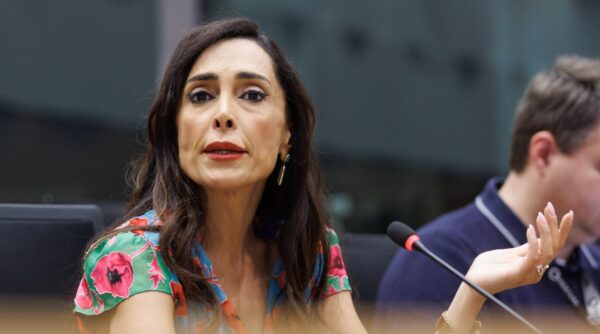
– About Russian warfare – hybrid warfare in Europe, and especially in Belgium – this has been going on for a long time. Today it shows up in different ways, and that is why it is called “hybrid.” It is not the traditional kind of war with tanks and airplanes (though even that is changing). We see many forms of pressure and intimidation. This did not begin with the latest wave of attacks; it started years ago – with the attempt to make Crimea part of Russia in 2014. Europe’s response back then was not firm enough; that was the moment to send a clear signal that we do not accept it. When you fail to do that, autocratic regimes – like the one in Russia – read it as weakness. Whether Europeans feel it or not, Russia keeps testing us: probing our mindset, measuring our reactions. I know this also from my own background – I am originally from Iran, a beautiful country held hostage by the ayatollahs who now help Russia against Europe. This is not only Russia’s war against Ukraine; it is a broader plan against Europe as a whole. Autocracies find each other; they support each other against Europe, the West, and NATO. What matters is to respond powerfully and without delay. Unfortunately, that did not happen in 2014. They kept buying time – and the West should never give them time. At the start of the full-scale invasion, Europe should also have answered much more forcefully. You can say perhaps we were not strong enough, but collectively – Europe and the wider West – we were. There was no common line on what the answer should be, and now it’s almost four years. Russia is no longer focused only on Ukraine: it is challenging Western and NATO countries, testing them. Drones have changed a lot: a simple drone can disrupt airports, threaten military sites, and enable spying. We are still working toward a clear, assertive response. Once this game begins, you must find your way through it – and I hope we will do so very soon. Prevention is better than scrambling for fixes after the fact. The West is strong when it acts together, and in history we have always found our way; we won’t be cowed by one or two incidents. They use drones, social-media operations, activity in the North Sea, attempts to sabotage submarine cables – many methods. Cyberattacks may be the most dangerous: with one operation you can paralyze a country’s critical services – power, water, communications. We must be ready with a strong response. As head of the Belgian delegation to the NATO Parliamentary Assembly, I can tell you: regardless of party, my colleagues speak with one voice – stand together in NATO and answer clearly and firmly to threats from authoritarian regimes like Russia, the Islamic Republic of Iran, and China, who help one another.
— Do Belgians now see Russia as a danger to them and to Belgium?
— The danger is obvious. Sometimes people choose not to see it: Europe has enjoyed a very high level of social security for a long time, and when you must choose between “soft” and “hard” security, many don’t immediately see the threat from Russia or from Iran – “far-away countries” fighting each other. But after the invasion, and especially in recent months, people saw this is also dangerous for Europe. Drones are no longer “just in Ukraine”; they appear over Nordic countries – and in Belgium too. That makes it clear: this is about defending ourselves. Social media is another front: many “comments” say, “Don’t provoke them and there will be no danger.” A big share looks like coordinated pro-regime accounts. I speak to a lot of people as a politician: more and more understand it’s not only about Ukraine – we are being tested. We need balance: defense and welfare. Budgets, industry, planning – our old posture wasn’t enough. People are increasingly ready to accept that defense is vital for our future.
— Can you name specific operations against Belgium beyond drones?
— Drones, many nights. Attribution isn’t fully proven, but the pattern is familiar: drones at night, flight cancellations for safety, then they reappear when flights resume. It looks like those threats, even if you cannot stamp a logo on them. In the North Sea there were attempts to damage electricity and internet cables – vital communications infrastructure. And there are social-media campaigns. The Iranian regime has a literal “cyber army”; they coordinate like a military unit online. Brussels is both Belgium’s capital and NATO’s capital – a natural target.
— Are attacks on Belgium also attacks on NATO?
— If proven as such, yes. Right now many incidents are tests. A confirmed state attack on a NATO member is an attack on all. NATO is designed to provide security without rushing into war – but it must be ready to act the moment it is attacked. Parliaments signal readiness: we must defend our countries and our children; that is the only way to survive. History shows we can and will do it if necessary.
— What are Russia’s main goals with drones, cyber, and so on?
— Testing: our reactions, our unity, our fear, our ability to defend ourselves. I said from the start this is not only about Ukraine; that is why we should have supported Ukraine even more, even earlier – not by entering the war but by giving everything we can. Nearly four years on, Russia is not ready to give up. Europe must be ready and strong.
— Do you worry about radicalization inside Europe – with Moscow funding far-left and far-right groups, attacks on politicians and migrants?
— Polarization is very real across Europe. The reactions to the Gaza war showed how differently people can respond to the same event. Whether or not it was Russia’s “plan,” they are happy to exploit it. The West also failed to anticipate where unmanaged migration would take us — this has been building for years. Not everyone who comes shares Western values; our openness has been abused by actors like the Muslim Brotherhood, using our democratic systems to pursue political goals. You find them in media, politics, civil society. Russia exploits that polarization. Our task is to be smarter and hold our own values: do not give them up. There is always hope – if we are clear-eyed, we can solve it.
— What about the conventional military threat – reports of plans against the Baltics, Finland?
— Of course the threat is real. Putin’s plan does not end in Ukraine. Ukrainians are brave patriots fighting nearly four years now; they fight Europe’s war at the front line with their lives. In NATO meetings Ukrainian MPs thank Europe for capabilities – I always answer: we should thank you. You have bought us time to prepare, because we could be next if Russia wins – they could strike Baltic countries. Many are NATO members: an attack on them is an attack on all. Russia knows the West would not accept that – Europe, Canada, the United States.
— How can Europe and NATO make this danger impossible now and in the future?
— By showing unity, refusing to accept aggression, and preparing – which we are doing. NATO and defense investments are rising. Awareness is already pushing us to build industrial capacity together. If we use this time, we will be strong together.
— In Ukraine we say two things are needed: a Ukrainian military victory and regime change in Russia.
— Putin is dangerous for Europe. Whether the regime changes is out of our hands; what is in our hands is helping Ukraine win. When autocracies lose wars, they lose confidence; victories give them confidence to go further. We must do everything we can for Ukraine to win.
— Thank you for your work and your position. See you soon.
— Thank you. Better days will come. Have a good day.
Exclusively, Guildhall.
Только главные новости в нашем Telegram, Facebook и GoogleNews!
Tweet