
Europe is facing an escalating hybrid campaign by Russia – drones over military facilities and airports, DDoS attacks on civilian and military structures, FIMI operations with disinformation; provocative aircraft incursions are being recorded at the EU’s external border, and spy ships are operating in the North Sea. The objectives are clear: to test response times, stay below the threshold of Article 5, and humiliate the West by demonstrating its vulnerabilities.
Because of this, Europe needs a change in thinking – from a “space of peace” to constant readiness. It is necessary to prepare for the worst-case scenario, increase vigilance, and demonstrate determination: if war breaks out, Europe will win. The strength of collective defense already exists – the task is to clearly demonstrate it and thereby eliminate the risk of attack. In addition, it is worth legally defining the regime of “hybrid warfare” and having a common response algorithm – support for Ukraine remains a key element of deterrence.
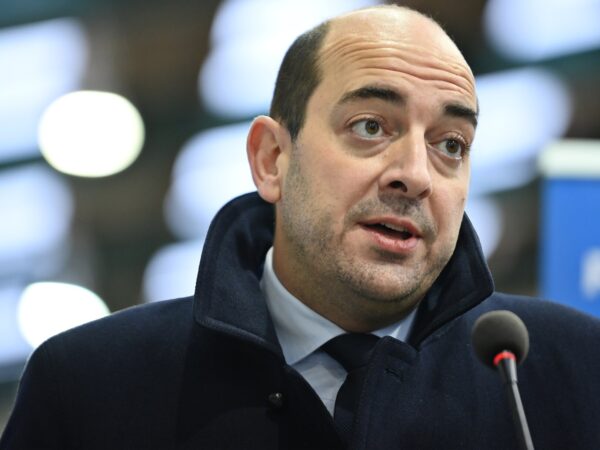
This was stated in a lengthy interview with the Guildhall news agency by Mathieu Michel, a member of the Belgian Parliament from the Mouvement réformateur.
— On the one hand, a politician is responsible for explaining to people the challenges the country faces. On the other hand, a politician is always awaiting elections and must take into account public sentiment. In your estimate, do people in Belgium see Russia as a danger to them and to the country?
— I think the past few weeks have changed how people in Belgium think, because we’ve been confronted with drones. We see a lot of drones coming into Belgium — it has become tangible, more realistic. In Europe, and right now especially in Belgium, we’re facing a reality where Russia’s war on Ukraine spills over — not into a conventional war, but into a hybrid one. That’s exactly what we’re dealing with. I’ve just introduced a bill in Parliament to define what hybrid war is. We aren’t simply at peace or at war — in Europe we’re somewhere in between. We need a definition, much like the Cold War once had. We’ve supported Ukraine and still do — that’s crucial. But for Europe this is a war that doesn’t say its name: hybrid militias, FIMI — Foreign Information Manipulation and Interference — cyber threats, drones. We’re seeing many attacks against Europe and, in particular, Belgium — digital, cyber, data attacks. It’s hard to officially attribute them to Russia — attribution of drones, cyberattacks, threats and fakes in social media is complex. But we’re not naive — we know where it comes from.
— RUSI says that after the full-scale invasion of Ukraine, Russia has significantly increased hybrid operations against the West. Do you see this escalation across Europe, and could you give examples beyond drones?
— Tension is rising everywhere — and carefully kept “not too far.” For instance, near the EU’s external border you had Russian aircraft coming close — unclear if they entered EU airspace, but certainly “testing our nerves.” In the North Sea there are spy ships; we think drones can be launched from such undeclared vessels that dip in and out of our waters — a blurred yet real threat. This comes from Russia — and it’s a stress test. Europe’s determination is high — we’re a powerful union, not easily impressed. But we truly aren’t used to such confrontation. Europe is built on humanist values — we’re “cool people,” not prone to fighting — so we were unprepared for this kind of drone menace. That’s why I’m working on defining what a state must do in a hybrid-war condition.
— What are the main goals of these Russian hybrid operations?
— Essentially two. First — to test us: our reaction time, readiness, procedures. Second — to make fools of us: to show they can reach Belgium’s heart and taunt us in front of an airport tower — “we’re here.” When five–seven drones fly over a military airbase right next to our aircraft, it signals we’re unprepared and naïve. That must stop. You in Ukraine know: naïveté is the worst mistake. We need to switch mindset — not to fear, but to prepare. Europe must make herself respected.
— Do you see operations aimed specifically at NATO?
— Not yet. Targets now are Belgian military bases, airports, energy infrastructure. Belgium hosts NATO structures — and we haven’t seen drones over those areas. So for now it’s “tickling” Belgium rather than NATO — but the distance between them is small.
— On methods. It’s known Russia uses Soviet-era KGB tradecraft. What new methods do you see?
— I can’t speak about everything, but there are three kinds of attacks. First — drones: the most visible, alarming the public by exposing vulnerability. Second — DDoS: cyberattacks against many institutions, civilian and military. Third — FIMI: Foreign Information Manipulation and Interference — bots and amplifier networks pushing disinformation and fakes. Check my latest LinkedIn and Facebook posts from last week — I unpack this there. Pressure across all three pillars is huge now. One current “theory”: “the drones are launched by Belgian services themselves.” It’s absurd — yet it sticks in public discourse.
— Russia backs both far-left and far-right in Europe; violence is rising — attacks on politicians, beatings of migrants. Do you fear radicalization of hybrid operations by Russia amid social tensions?
— It’s easy for them to pour a little fuel into an already lit room. Belgium struggles with its budget, high taxes, an expensive social model — people are tense even without Russia. Similar conditions exist across Europe: high global competition, social discontent — fertile ground. A favorite Kremlin-aligned narrative: “we make people work longer while buying F-35s for billions; we raise retirement age while investing tens of billions in defense.” That’s not directly manipulating far-right/left — it’s planting an idea, and it grows; even mainstream socialists pick it up. Distinguishing organic from orchestrated becomes harder. Russia just pushes what’s already there.
— What about conventional military danger — a regular war?
— We’re preparing for it. It’s hard to gauge how far Russia would go, but we must plan for the worst case. If Europe aligns its forces, it’s one of the largest armies on earth — we have the capacity to command respect. Yet too many leaders haven’t switched mindset. Europe was built as a peace project — we assumed that would last, that everyone wants peace and respects neighbors. History says otherwise: democracy and peace are flashes; the deeper human condition is struggle. We have many fighter aircraft — we can defend ourselves. We must raise vigilance and, in parallel, prepare for the worst.
— How do we make it truly impossible for Russia to attack — remove this danger?
— We don’t want war with Russia — just as you didn’t. But we must be clear: if we have to fight, we will win. Russia must understand that. Sadly, this is a “battle of egos”: Trump, Putin, Xi — their contests. Europe isn’t built that way — we don’t really have a single “ego.” But if we’re attacked, everyone will close ranks, and together we’ll win. Putin’s mistake is to confuse temporary disunity with weakness. Common sense in Moscow would have prevented the invasion — so we must assume anything is possible. They don’t think like us. Europe isn’t out to “fight others,” Europe wants to work with people — but if others fight Europe, we must remember we are a superpower.
— In Ukraine we believe two things must happen together to neutralize Russia’s danger: Ukraine’s victory in the war and regime change in Russia. Do you agree?
— I don’t know — it’s complicated. My thinking here is interfered with by three egos: Putin, Xi Jinping, Donald Trump. Ukraine, I am sorry to say that, became a pawn — not between Kyiv and Moscow, but within U.S.–China relations over who leads the world. Putin exploits this; Trump keeps his foot on the Ukraine issue. Counting on regime change in Russia is dangerous — it likely won’t happen. If not Putin, then someone else. We must play the cards we hold. The best way to protect Ukraine is for Europe to make herself respected. That’s hard to explain to our citizens: some have low pensions and high taxes while we increase defense outlays. But that’s the cost of common freedom — sad, yet it’s reality.
— Thank you for your position and for the conversation. Hope we will see you soon again.
— Thank you very much. Good luck!
Exclusively, Guildhall.
Только главные новости в нашем Telegram, Facebook и GoogleNews!
Tweet