
Russia is waging a hybrid war and deliberately testing NATO; the response should be tough — shoot down violators, sink enemy ships without delay, and consider interceptions over western Ukraine in coordination with Kyiv, strengthening the air-defense “wall” and changing the logic of deterrence.
The Kremlin must be cut off from money: hit oil and the “shadow fleet,” restrict passage and insurance, wind down imports of Russian LNG, put pressure on “Rosatom” and related sectors, diversify nuclear fuel and energy, and bring the frozen assets in the EU to practical use to support Ukraine. Otherwise, Moscow will continue to finance the war and undermine the unity of the West.
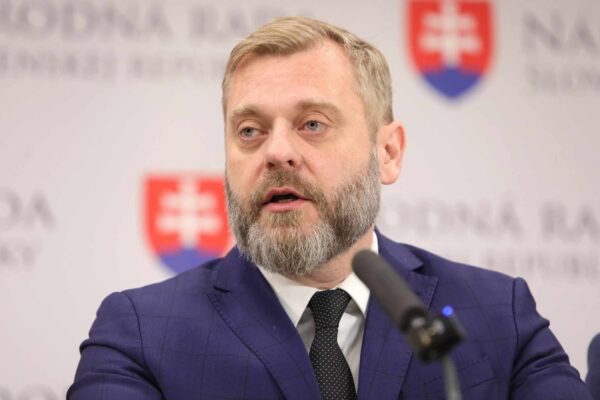
— First of all, I want to talk about the latest news. We heard about Russian war drones in Polish airspace, about drones over European countries, over Denmark, Norway, about Russian military aircrafts in Estonian airspace. NATO states that Russia bears full responsibility for this escalation. How do you assess these cases and what are they?
— In essence, nothing new. We are in a state of hybrid war with Russia. Russia is testing the resolve of NATO and the European Union. And, of course, it is provoking and testing how we are able to respond to such provocations. Will we respond, and with what force will we respond to these provocations? Well, it’s hard to assess what Russia is trying to achieve with these provocations. I mean, hardly. We know that it is testing unity and resolve. But when there is a reaction similar to the one we saw in Turkey in 2014, when it shot down a Russian fighter, how will Russia react? This is the main question, and no one knows the answer. In any case, I think this should not be up to NATO countries or the European Union. In principle, it is our decision when airspace is violated by Russia. And of course we must act. I fully support firm resolve and tough responses. Basically, shoot them down, sink their ships, and not lose a minute or a second—just fight them hard. They must finally understand that there is such a decision and such determination against Russia. If we do not start doing this, they will constantly test us. Because when we see this in cyberspace, we see that Russian influence is present here in Europe. We see how extremists are growing with Russia’s support—we see this in my country, we see it in Hungary, we see it in different countries—we see actions in the Baltic Sea, etc. So. Therefore, there must be determination to fight back and show that there is indeed a decision that we will resist. The only thing that worries me is when NATO countries will resist Russia. How will Russia respond to this? The only question I have is whether they will call for mobilization in Russia, that we are in a state of war with NATO, and therefore we must mobilize. Will this become the reason or pretext for them to announce the much-needed mobilization. Otherwise, of course, everyone knows that they are stuck.
— And can we consider these cases as an act of military aggression by Russia against NATO?
— Yes and no. It is a kind of military aggression. Of course it is. But it does not mean that you are under attack or a military strike or something like that. It is simply a test. Yes, this should be regarded as an attack on our airspace, because it is a crude and open provocation and an ignoring of the warnings we send them. I remember that Turkey in 2013, 14 was constantly warning Russia: do not do this, do not violate our airspace, or we will take measures. And then they acted. The Russians were shocked, but then they began to show respect, you know, and the Turks did nothing. Well, of course they did nothing. Of course. We know that the Russians are trying to save their young generation of soldiers, and their war economy is creating equipment and everything necessary to be ready, let’s say, for some adventures, but this should not prevent us from showing that we are ready to defend NATO and EU airspace. I am glad that the EU has started a drone-war initiative. I consider this very good. NATO, of course, is engaged in something else—protecting the airspace and everything connected with it. This is interesting, and of course it will be financed, there will be a common budget, about 100 billion to create a “wall” of drones, etc. And I, of course, see a great opportunity in this, and we must learn from the example of Ukraine, so this is an excellent opportunity for the joint birth of a star, military cooperation between Ukraine and the European Union. But we must also think about the fact that you can have a wall of drones, but I mean, of course you cannot shoot them at the wall. Of course, something will penetrate. So perhaps we should finally think about the fact that maybe we should move further forward, defending our airspace, for example, in Ukraine. That we should cover, for example, western Ukraine, shooting down drones there when they penetrate, and declare: look, they can penetrate into our airspace, because you already did this several times in Romania, in the Baltics, in Poland. Thus we are defending our airspace with the approval of the Ukrainian government. So everything is absolutely fine from the point of view of international law and everything else. We must do this, and this could even help Ukraine move further east to defend its airspace. I think this should also be taken into account. Why not? Besides, it would help us learn to fight and shoot down drones. Of course.
— That is, you support moving NATO air-defense systems into western Ukraine to protect it?
— No, I would not send them to western Ukraine. I would send them to the border. And I understand that when an attack happens, an air attack and drones enter, it is not only about air defense, but also, you know, about airspace. I mean, there is also a wide range of capabilities that you could use. And, of course, there is a need for this. Polish fighters will enter western Ukraine, shoot them down, etc. Of course, from a legal point of view, from the point of view of military planning, etc., this is not so simple. I don’t know; it is difficult. But why not? Why not think about it? And why not think: let’s, let’s move in there. I mean, we are not attacking Russia. We are already defending our airspace in Ukraine. I fully agree with you that we need to work on this. And I also agree with you that the West must respond toughly to all these Russian actions.
— And here in Ukraine, we also believe that the only signal Russia understands is military signals, powerful signals. Do you support a significant increase in military aid to Ukraine after these events?
— I fully support military aid to Ukraine and an increase in military aid to Ukraine. I think that the West—oh yes, at the beginning of the full-scale invasion in ’22—was in some shock. This is precisely the mindset we had to change gradually. I would say, not in the East, but rather in the West. I remember the discussions when I worked as a defense adviser at NATO in 2014, when the West kind of did not want to act tougher toward Russia, while the eastern countries, the eastern NATO member states, were warning NATO that for the western partners this was only the beginning. We would face a stronger and tougher Russia, and it would be really very, very difficult. Therefore we must confront them. And we saw this also in ’22. So this — this change of thinking takes a lot of time. How much time did it take to provide air-defense systems? How much time did it take to provide aviation assets, that is, F-16s, etc.? I mean, if the F-16s had been there a year earlier, a year earlier, it would have had a greater effect than now. Therefore we are providing the necessary military support that is so important for Ukraine so that it can defend itself. We could do more. And I think we could do more even today. Yes, I mean, there are countries that are stepping up, that are providing support, that are indeed helping a great deal. This is Denmark, Sweden, and others. But I think that overall we could do more. I mean, at the beginning Slovakia, as a small country with a small army, provided quite significant assistance and support to the Ukrainian army. If we talk about S-300s, MiGs, helicopters, and so on. So there were many things that we could provide, and we provided them. So even today, despite the pro-Russian government, we have provided Ukraine with significant support in the form of ammunition. We are one of the largest suppliers. And tanks, of course. Yes, indirectly, when we talk about ammunition. So yes, there is an opportunity to do more.
— It is a pleasure to hear you, sir. I am truly grateful to you for your position on this issue.
— I think this is a matter of security — not only your security, but ours as well — because we all know. It is the Russians, Russian imperialism has returned. You know, they not only want to conquer Ukraine. They want to return to the Soviet era and rule us. They have influence here as well. And we know this, we have experienced this, we don’t want it anymore. So essentially this is defending ourselves. I understand this. And there is not only military aid, but also sanctions and economic pressure on Russia, and are there additional levers of pressure that have not yet been used? Yes, mainly, first of all, the countries or companies that threaten and evade the sanctions, and provide—I mean—the necessary equipment that the Russians are trying to import. Oh, China is another chapter. We should not be discussing China with the United States and how to deal with it, since, in my view, China is more interested in an open global market and business than in providing such support to Russia, because without China there would be no Shaheds and this wave of attacks. And, of course, the shadow flotillas, the shadow flotilla that they have. We must act more decisively against the shadow flotillas, and I would even not block the Baltic Sea. I would not block it for them, because we know what they are doing, and basically they are attacking infrastructure there, the infrastructure of Europe and the Allies. Therefore I would block them. They can sail from Murmansk anywhere. That is what I would do, and we would really confront them hard. The problem is that in Europe there is this unity. This unity has some splits. And you see splits on the part of Slovakia—which really upsets me very much—but also on the part of Hungary and some other countries that have some doubts. Of course, on the one hand there are countries that support Russia, or countries that are losing the hybrid war, like Slovakia. And on the other hand, in some countries there is a certain fatigue. Three and a half years have passed. Of course there is a certain fatigue, but I think everyone understands what the main and most important goal is.
— That is true. And you mentioned a full blockade in the Baltic Sea. Do you consider that realistic?
— I think we have the capabilities for this. It only remains to make the political decision. This is very interesting. And… I mean, why not? After all, we are imposing sanctions against the shadow fleet. We are imposing sanctions. When we speak of port calls not only in Europe but also in other countries, etc. This is what should be included in the EU’s 19th sanctions package. But when I see photos where we are escorting the vessels of the Russian shadow fleet in the Baltic Sea, I consider this ridiculous. It is ridiculous. I am ashamed. I mean, we must stop worrying about this. We must show Russia that we have resolve, that we have strength.
— And another very important topic is the supply of Russian gas to Europe. I have information that in July exports came to as much as 1 billion euros. How do you assess this?
— Well, this issue is being discussed in the European Union. I mean, Repower Europe is a new initiative that should put an end to imports of Russian gas and oil into Europe. Of course, there are countries that still import LNG into their ports. But these countries are demonstrating readiness and determination to end the imports. And, of course, we were… This shows that Europe was strategically absolutely not prepared for such a conflict. We were so dependent on Russian energy because we considered it cheap and so on, and that it would be with us forever, because Russia is an oil tanker. So let us use it. And, of course, there was also this strategy—mainly a German strategy—of bringing Russia closer to Europe, to the West, so that it would become closer to us, which might have a positive effect on Russia. It turned out the opposite. Of course, diversification takes time. But I think that the latest decisions were made not only to re-equip Europe, but also in connection with Trump’s calls to stop imports. There is the decision by the Bulgarian prime minister to stop laying TurkStream through Bulgaria, I think at the end of 2026. So this completely changes the rules of the game. And I think Europe is trying to end its dependence on Russian energy resources as soon as possible. But, of course, there are two countries that are doing everything to remain dependent on Russian energy resources—Slovakia and Hungary. And I am sure it is not only that it is not free, and not only that we consider Russian gas the best. There is something else behind this, and everyone understands what exactly.
— There is also “Rosatom,” the Russian nuclear company, which is also not under sanctions. There is the Hungarian NPP Paks, built by Rosatom. What measures should be taken to get rid of this dependence?
— Well, you know, when you talk about Rosatom, I think it is not only about Paks and nuclear fuel. It is also about steel products. In Hungary there is “Bakshuan.” We will also import steel—that is, steel products—from Russia, steel. Therefore I think we should begin by canceling projects in the EU. And, of course, for example, we should, of course, diversify and look for nuclear energy for our power plants from other sources. And of course there is Westinghouse, there are other companies that could supply fuel for these Russian nuclear generators and power plants, and we must act as quickly as possible to get rid of them, because of course Rosatom has dual-use. And they can go and build nuclear power plants in Iran—fine, let them build—but, you know, that is not our problem. Basically, we must get rid of them. I mean, my science may seem radical, but I am a big supporter of the biggest wall on the Russian border, bigger than the Chinese one, just to from time to time look over the wall to see whether they are still living there, fighting or killing each other, and then leave us alone. Of course, I would really get rid of everything that depends on Russia. And Rosatom is one of such things. But of course this must be done gradually. I mean, you must take care of energy security in your countries. Nuclear energy is very important. Electricity will also be very important if, after Russian attacks, there are disruptions to supply—the EU also supplies electricity to Ukraine. So these are things that must be balanced somehow. So this must be done. We must take important steps to get rid of this. And, of course, sanctions on the leadership of Rosatom, sanctions on certain Rosatom facilities, withdrawal from EU projects or their termination. Of course these are things that should have been done, but there are countries that relate to this with reluctance or caution, because you never know. You never know. You are still dependent on them.
— You are absolutely right about this. In the context of Russian assets under sanctions, we are talking about Russian assets in Europe that are frozen but not used. And what do you think about their confiscation and transfer to Ukraine or using them as reparations?
— No, I think it was done correctly. I remember the first discussions that were held about two years ago, that we should use frozen assets to support Ukraine. I think it took longer than I would have liked. I know that from a legal point of view this is a very delicate and complex issue. But I think we are in the final stage. And I very much hope that the EU Council will very soon come to an agreement on the use of these assets. I hope so. Yes, the decision that we will use these assets to provide support to Ukraine. And then, if Russia pays reparations. In principle, of course, then we can talk about returning certain assets to it. We all know there will be no reparations. There will be no… How shall I put it? Russia is not ready to acknowledge anything it has done. Unfortunately, everything is as I said.
— And after all these military-economic topics I want to talk about the humanitarian sphere, about the millions of Ukrainians who live under Russian occupation. The Parliamentary Assembly of the Council of Europe recently called Russia’s actions ethnic cleansing tantamount to genocide. I consider this a very important resolution. Would you support a similar resolution in Slovakia?
— Yes, I would support it. The question is… Well, you must understand one thing. Of course, this, I would say, is very close to genocide. Essentially, it is genocide, because it has all the necessary—how shall I put it?—yes, characteristics, I understand. Yes, it meets all the necessary characteristics. It is difficult, but I would say yes. We are very close to all the characteristics of genocide. Even Putin has openly and before the whole world stated that he does not recognize Ukraine as a state, does not recognize Ukraine as a nation and so on and so on, they have no language and so on and so on. So he has these ideas; he has written them down. For him this is basically like a war against those who separate the Russian nation from Russia. So he wants to take it back. This is, of course, so; all the signs of this are present. So of course it is good to have resolutions. It is good to have all these resolutions, but what are you going to do with this? I mean, there is the Hague tribunal, where Putin is considered a war criminal because of all the abductions of Ukrainian children. And we all know what is happening in the occupied territories. So the question is—yes, this is genocide. Let us adhere to this. It will be genocide. And until Russia is punished, it will in fact stand outside international scenarios and international relations as we have them, until it recognizes that it committed genocide—like the Germans. They must truly understand their mistakes. They must go deeply into them, as the Germans managed to do after the Second World War. The Russians must go through the same process. Until they do this, they must be excluded from everything. And you said that we need not only to adopt a resolution, but also to do something.
— And I agree with you. And perhaps there should be an appeal for a United Nations mission to monitor human rights in the occupied territory?
— Of course, of course. I fully agree with a UN mission. The question is whether this is plausible and possible. Russia is on the Security Council. So yes, that is how it is. Russia is on the Security Council. I cannot imagine that Russia will agree to any mission or observers—OSCE observers or anyone else—to the occupied territory to see what is happening there. There are only images in Google that show the world what it looks like there, how desperate it looks and how desperate the situation there must be. So we know this. And of course they do not want the world to see this. Therefore I do not expect anything. It will take decades. From the point of view of international law, I consider that the occupation of Ukrainian territories will never be recognized at the international level. They will always be considered part of Ukraine, only occupied. I think that although this is a matter of time, one day we will find out what is happening there. This is not the end of the story. This is not the end of the story. We saw the division of Germany into West and East. So in the future we can also see the unification of Ukraine. You never know. This is because Russia is an empire that from time to time collapses. So in the future we can also see its collapse. Thus, Fukuyama was wrong. I would say that in the 1990s Fukuyama was not an idealist. Yes, we all thought this was the end of history, but it is not.
— And maybe the most important thing: Is the West now united regarding Ukraine’s victory and countering Russia?
— Yes, as I have already mentioned, there is unity—there is unity—but with some differences. I mean, of course, a certain fatigue, but everyone, everyone understands that Russia is a threat. Russia is indeed a threat, and we must realize that if we concede on some issue, at some point, this will be our loss. It is not that only Ukraine will suffer, but those who will be next. We realize this, and Russia knows this too. Of course everyone expects that if you are interested in peace, the first step will be a ceasefire. But, of course, they did not take the first step, therefore they use and will use guns to undermine the unity of the West. And I expected that they will agree to start peace negotiations that can drag on for years. And all these years they will try to, essentially, undermine the unity of the West. And you see how they are trying to negotiate with Trump to conclude agreements and so on. So there will always be a normalization of relations between the United States and Russia—business and all that. So such attempts will be constantly undertaken, and on the other hand all hybrid tools will be used to undermine unity, so to speak, to intensify the split, especially in Europe. So yes, there are players who are pro-Russian, there are players—there are countries that are pro-Russian. Unfortunately, this is my country, my government, and the Hungarian government, but fortunately there is the European Union. We are still dependent on the EU’s financial support here in my country. So we will be somewhere half Russian, half European, pro-European. So we always create problems, but somehow, yes, we wait for someone to join us, someone bigger. So I think that Russia is sowing chaos, fear. You see what is happening in Great Britain—the Reform UK party. It is leading in all the polls, etc. So you have this; you have AfD in Germany, etc. So they are waiting for these parties or forces to gain influence and power in these countries, which, of course, will completely destroy unity. So let us hope that this is our struggle. I would say that we must fight back in this hybrid war. I hope for this.
— That was our last question. In these restless, difficult times it was a pleasure to talk with you, to hear your point of view. Thank you for this.
— Of course, you’re welcome.
— This is important for us. We want to have good relations with your country, with Hungary, with all countries, because we all have a common enemy. This is Russia, therefore we need to keep in touch, to be friends. Thank you very much.
— Thank you. I believe that your president is doing a very good job. And when it comes to attempts to establish relations with Hungary or with my country, he basically just follows the national interests of Ukraine. He does not delve into the details of what my prime minister says, etc. He just tries to do his best. And I think this is the best way. And I think this is also very good for future cooperation. I hope and am sure that this government will not be in power forever. Earlier we had another government that related to the support and understanding of the Ukrainian cause in a completely different way. And I hope that this government will return here, to the neighbors. So I hope that we will have very good—I would say, excellent—relations in the future. So I hope for the best for you and for all of us in the fight against the Russians.
— Thank you. Thank you for this. All the best to you. You will always be a welcome guest in Ukraine and Kyiv.
— Yes, I will be glad to see you. When I next go to Kyiv, I will let you know.
— Of course. Thank you and goodbye.
— Thank you. All the best.
Guildhall News Agency, exclusive.
Только главные новости в нашем Telegram, Facebook и GoogleNews!
Tweet