
Russian provocations in Europe — drone flights over Poland and incidents with aircraft near Estonia — are increasingly being regarded as a test of NATO’s readiness for decisive action. The need arises for a forceful response: the deployment of air defense systems so that their radius covers western Ukraine and excludes new violations of airspace.
At the same time, Europe is discussing the acceleration of arms supplies, the removal of bureaucratic barriers for volunteers of the International Legion of the Armed Forces of Ukraine, as well as the strengthening of sanctions pressure: confiscation of Russian assets, a strike against “Rosatom” and the “shadow fleet,” and a complete refusal of imports of Russian gas.
This was stated in an interview to the Guildhall news agency by Member of the European Parliament from Netherlands, Reinier van Lanschot.
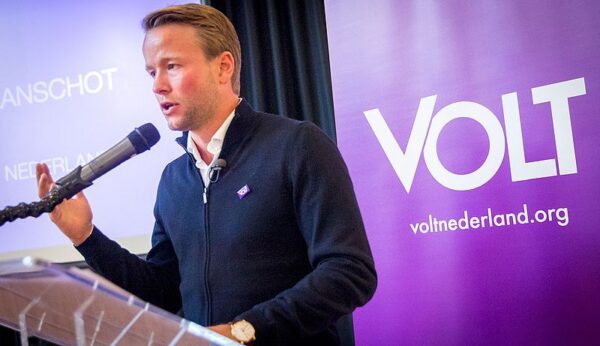
– We will start with the first question. You may know that in the last week Russian war drones Shahed attacked Poland’s airspace. And before that Mrs. Ursula Wanderlain’s plane made emergency landing in Bulgaria. A few days earlier we heard news about Russian spy drones over Polish administrative buildings. So my question to you, can we consider these cases as an act of military aggression towards Poland?
– I think it’s deliberately always in the gray zone. So it depends how you qualify military aggression. All these individual things do not per se mean military aggressions, but the accumulation of all those things does show that Russia is testing NATO, is testing the EU, and depending on what our response is, those tests and those provocations will continue and increase, or they could stop. So I think we should take a strong stance together as NATO. And I think it should be met with new measures from our sides, meaning that I’ve been calling for a no-fly zone in Western Ukraine upheld by NATO for a long time. And I think these type of provocations from Russia actually are extra reasons to instate it.
– We believe that the only sign Russia will understand here in Ukraine actually is military aid to Ukraine. It’s our way to survive this war. And do you support a significant increase in military aid to Ukraine?
– What exactly do you mean with military aid?
– I think it’s about weapon like PATRIOT to defend our airspace from missiles
– Yes, so when it comes to supplying arms or creating that no-fly zone, I think we should do a lot more. I think we should expand on the Danish model, so even more direct financing of Ukrainian production, defense equipment production. I think we should have stronger sanctions and be even quicker with the halt of Hungary and Slovakia to actually take gas from Russia. That should end way more quickly. We should enforce the sanctions better and fight for the shadow fleet and to support the military campaign of the military defense of Ukraine. I think we should also seize the 300 billion euros in frozen Russian assets and give them entirely to Ukraine. And so some would consider these things military support, others less because they are also quite a lot financial support. But these are the primary things I think the EU should currently do to make sure that Ukraine can fight off the Russians. Because so far it has always been from our side too little too late. So I’m happy that the EU and the Netherlands are doing things, but it’s not enough.
– Okay, so as we know Russia has a lot of assets in Europe, billions of dollars and the confiscation of such assets could be a massive factor for Moscow to start real peace process. And what do you think about it? And do you support the transfer of all or the bigger part of Russian assets to Ukraine, maybe as the reparations for the damage?
– Yes. I also named that in the list of things that I just named that I think we should do. So the short answer to your question is yes.
– Okay, thank you just to verify. And Reuters says Russia is expanding its shadow fleet despite sanctions fueling its four-budget. So what more should be done to curb it? And is a full blockade in the Baltic actually realistic scenario?
– From what I’ve heard from the specialist, a complete halt of the transportation in the Baltic Sea is not the right way to go for practical and legal complications. But I think we can still do a lot more. And so I would not say a full blockade, but we could monitor more actively with all the countries that border the Baltic Sea and I think Estonia and Finland gave some good examples of how we can move much faster when we coordinate our monitoring and the enforcement of the prevention of the shadow fleet. So not a total blockade but more than we are doing now.
– So we know that Rosatom, which supports Russia’s nuclear and some conventional programs, isn’t under comprehensive EU sanctions and it still keeps working. So what steps should be taken to Rosatom?
– We need to sanction them like we are doing with many other companies. And I’m surprised that they, when I heard about it first, I was surprised that they are not on it yet. And I don’t think this is only for Rosatom, but also for the metal and mineral sector in Russia. There are still companies in those sectors that have not been sanctioned. So I would add those to the list that Rosatom should be on as well. On top of that, we need to properly enforce the sanctions we have already put in place because we are now at our 19th sanction package and I think it’s good that we try to keep upping economic pressure. But if we don’t enforce the sanctions we impose well enough, then it’s a paper tiger.
– So I think that’s the same position you are speaking of concerning Rosatom also applies to Rosneft and their assets, their assisting companies.
– I don’t know that from the top of my head, actually, because I don’t know all the names of the Russian companies well enough. So If you want me to answer that question, would need to double check later.
– As we know, the rights of millions under Russian occupation on the Ukrainian territory get little attention. As I know personally, the Parliament Assembly of Council of Europe called Russia’s actions ethnic cleansing amounting to the act of genocide. Would you back a similar resolution at home in your country?
– And then would I back a resolution that calls it genocide or a resolution that asks for more attention on what’s going on in Russian occupied territory?
– I think it’s more about calling it a genocide because it’s very important to our people and our country for their protection and monitoring of these territories.
– I’m very happy that there is now a little bit more attention for what’s happening in these territories than in the past years. A good example of that was that during the State of the Union last week, this young man, Sasha, was brought into the Parliament by Ursula von der Leyen when she gave her speech and she also asked attention for it because he was one of the abducted children of which there are still tens of thousands who were forcibly taken by Russia. So I think especially it’s good that there’s more attention for that. I also think there should be more attention for what’s going on in occupied territories and the stories that I’ve heard are horrible, filled with torture, murder, suppression. It is really horrible. But I think in most cases, I as a politician should not be the one labeling things as genocide. I think this is a legal term that should firstly be determined by, for example, international criminal courts, the International Court of Justice. And the reason why I do sometimes refer to a genocide when I talk about Israel and Gaza is because the International Criminal Court already said that the actions of the government there could be genocide if nothing was done to prevent that from happening. And that was a statement by the International Criminal Court from two years ago, almost. So since then, it has only worsened. And for that reason, I started to use the word genocide in the context of what Israel is doing in Gaza. But I have not seen legal scholars and international courts call what Russia is doing in the occupied territories a genocide, yes. And I think I should as a politician be mindful of when I use that term. So I use the power and the platform that I have to massively create support for Ukraine, but for me calling it a genocide is a bit premature.
– So, for calling it a genocide, probably countries in Europe should have something like a call for a United Nations mission to monitor independently human rights in such occupied territories.
– Yeah, and that I am in favor of. We know that Russia will not accept this, but… I think this is a good idea. Because the way to get to calling it a genocide is if legal scholars have enough proof to call it that. And this is the way to get that proof.
– Is the West still united behind Ukraine’s victory?
– The question is, let’s define the West first. Have we really been that united when the United States is betraying Zelensky in the White House half a year ago, when Trump is rolling out the red carpet for Vladimir Putin in Alaska the day that the biggest strikes until then happen in Kiev? I mean, that’s not united, if you ask me. Also, if you see that Slovakia and Hungary are trying to are still buying gas from Russia and are trying to prevent Ukraine from striking these refining facilities where Russian gas is refined so that they can use it. If you see those actions and how Orban is blocking sanction packages, then we are not that united. So we have not been that united. We have been reasonably united, but these are big disuniting factors that I just mentioned. Besides that, I think if you look at public opinion polls, the support for Ukraine remains high. In Europe, especially the support for Ukraine remains high. And if I look around me in the European Parliament, I also think that definitely a broad majority still supports Ukraine and that hasn’t really shifted. So with the side marks that I started this answer with, I think we are still pretty united or as united as we have been in the past years. What I noticed is that since the conversations about peace treaties, the there wasn’t as long as it takes, we will support Ukraine approach. And now I think it’s more towards how we can we create the conditions for a ceasefire and peace sooner instead of just saying we support Ukraine as long as it takes. Also, let’s see what we can do to enhance the probability of a ceasefire and peace. Yeah, I think If you ask me, the biggest thing it shows, the reason why we are too late, is because we are not really united, but also because we are, as the EU, not really united in how we make decisions. So we need one foreign policy, we need one defense union, and then we could act way more quickly and could have supported Ukraine also a lot earlier. I’m also in favor of the creation of a European army, for example, because I think it will be cheaper, stronger and more effective in deterring Putin. Yeah, so a long answer to your question with a lot of different elements, but overall, I will say still relatively united to support Ukraine. That’s really great. And thank you for your honest opinion on these questions.
– That’s all for today and it was a nice conversation with you. Thank you very much.
– Thank you very much too.
Guildhall news agency, exclusive.
Только главные новости в нашем Telegram, Facebook и GoogleNews!
Tweet