
Europe is facing serious challenges in the context of the war in Ukraine, where the key issues remain strengthening support for Ukraine and ending dependence on Russian energy resources. Special attention is given to the need for large-scale sanctions against Russia, countering the shadow fleet, and the confiscation of Russian assets.
At the same time, steps that could be taken to recognize Russia’s actions as genocide in the occupied territories, as well as the creation of a UN mission to monitor human rights in these regions, are discussed.
This was stated in a detailed interview for Guildhall by Staf Aerts, a member of the Belgian parliament, a member of the defense, financial, and budget commissions, and military procurement.
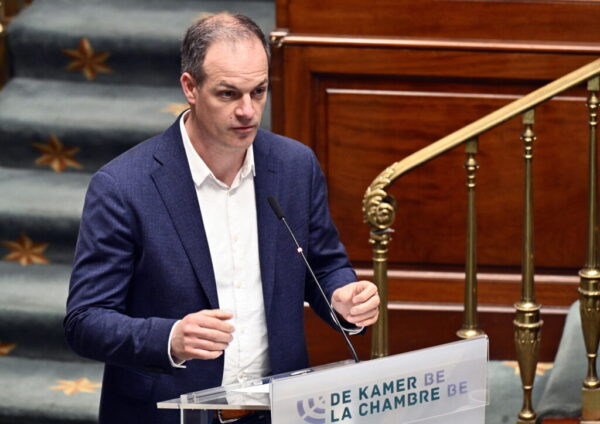
— First, I would like to talk about the latest news. We have heard about Russian Shahed strike drones in Poland, Russian aircraft in Estonia, as well as incidents in Denmark and Norway. There have been many such episodes. Can these be considered a military aggression by Russia against these countries, NATO, and the EU?
— Yes, this is a form of military aggression, although it remains hybrid for now. Putin knows very well where the line is, which he cannot cross in order not to activate NATO forces. But this is certainly another «red line» he crosses, and we should pay serious attention to it. It is extremely important to stick together now and draw a clear line: no further. This is alarming, undoubtedly.
— How do you think NATO and the West should react, aside from diplomacy?
— The question is always when NATO acts as a defensive alliance. Right now the situation is tense. If NATO says, «We are already at war with Russia,» the consequences for the entire world will be colossal. That’s true. But at the same time, we cannot allow drones to fly over Copenhagen or Estonia—of course, no. And we must stand by Ukraine. It’s difficult, but the signal that, for example, Poland is sending—»Any drone that crosses our airspace will be shot down»—is key and right now. I understand how hard it is to find the right course in a situation where the gap between escalation and war is very narrow.
— In Ukraine, we believe that the only clear signal to Russia is force: military pressure and military aid to Ukraine. Do you support a significant increase in military aid to Ukraine after these incidents to show the position?
— Yes. And not just military, but also development aid. There has been a shift in Belgium: last year, military aid increased, but the funds were taken from development budget lines. I don’t consider this the right approach: support is needed in both areas. Right now, the focus of world politics is «defense, defense, defense,» while development is receiving less attention. We must stay with you—it is important.
— What else can be done to force Russia to peace? What can Europe and the West do?
— 19 sanctions packages have already been adopted—and that’s good. Sometimes people forget how difficult it is to agree on them. Look at the situation with Gaza and Israel: even downgrading relations is not easy. But 19 packages is just the beginning; it’s not enough. Many European leaders still find it difficult to make really necessary steps—primarily, to abandon Russian energy resources. We need to reduce dependence on Russia more quickly: right now, we are still partially financing the war against Ukraine. The solution is an accelerated transition to renewable energy. Until new nuclear capacities are launched, we are still dependent on Russia in several components—at a different level, but still dependent. Meanwhile, we are effectively, painfully—financially—feeding Russia’s war machine. We need to insulate homes, move away from Russian gas—absolutely.
— Russia has many assets in Europe, and they are not confiscated. This could be a powerful factor pushing Moscow to a real peace process. Do you support transferring Russian assets to Ukraine as reparations?
— Yes. And a significant portion of them is in Belgium because Eurocontrol and other structures are based here in Brussels. That doesn’t mean that we can dispose of them unilaterally—the decision is up to Europe. But literally today, the Chancellor of Germany stated that these funds should be confiscated and used. For now, we are only using taxes from these assets. We need to find a legally sound way to confiscate and direct them to help Ukraine. Six months ago, our «green» party chairman talked about this—back then, many responded, «This undermines the financial system.» Now, the same words are being repeated by the German Prime Minister—this means we’re moving forward. Yes, it’s late, but steps are being taken.
— In the context of reducing dependence on Russia, it’s important to talk about the «shadow fleet»: it is expanding and fueling the Russian war budget. What else can be done? Is a full blockade of the «shadow fleet» in the Baltic realistic?
— This is a «gap» in our policy: we lack the tools to effectively hit the «shadow fleet.» Meanwhile, this is their financial «lifeline»—and at the same time, they are harming our infrastructure in Europe, engaging in espionage. We need to try to stop this, but it’s not easy. This is not my direct specialization, but I’m sure that if NATO could «neutralize» this fleet, it would do so. However, doing this legally and practically is complicated—precisely because of gaps in our policy.
— Rosatom is not really under comprehensive EU sanctions, although it supports both nuclear and conventional programs, thus funding the war budget. What can be done to stop or limit it?
— Perhaps it’s time for the 20th sanctions package. Any step that complicates Russia’s access to finances, we must take, even if it affects us. Before being elected to the federal parliament, I was a member of the Flemish parliament, and I argued with the Prime Minister of Flanders: we need to act more firmly on the diamond industry. In Flanders, there’s a huge economy around diamonds, and the usual argument is: «This will hurt us.» Of course, sanctions hurt both sides. But in Ukraine, we are talking about lives, while for us, it’s «only» money. This is incomparable. Yes, it will also hurt us financially, but it’s the least we can do, and it means a lot on the battlefield.
— You are right about diamonds: this topic is underexposed. Tell us more.
— The main argument of the Flemish government at that time was: «If we stop exporting/trading, it will just move to New Delhi, they’ll replace us.» Possibly. India is a major center for diamond cutting and exports. But this argument is universal for any sanctions: «If not us, then others.» It’s not a reason to do nothing. If we don’t buy Russian gas, someone else might buy it. But at least we won’t, and the freed-up money will be redirected to other purposes. Another reason why Russia has strong ties with other countries: European and Western states are cutting development aid, but Russia and China are not. They are building strong partnerships, and these countries are saying: «Why go with Europe? It doesn’t help us, Russia does.» The same thing I see in the Belgian parliament’s defense commission: the entire budget is going to the army, and development aid is being cut. This is the wrong path. A «3D model» is needed: defense, diplomacy, and development. We can’t defend Europe with «knives and forks,» but without diplomacy and development, we lose partners, and then we face their support for Russia precisely because we cut back our presence.
— I want to touch on the humanitarian sphere. Millions of Ukrainians are living in the occupied territories, and life there is very hard. The Parliamentary Assembly of the Council of Europe has characterized Russia’s actions as «ethnic cleansing» amounting to genocide. Would you support a similar resolution in Belgium?
— I didn’t know about the adoption of this resolution—I need to look at the text. But ignoring what’s happening is impossible—both in Gaza and in Ukraine. In my opinion, we don’t need to wait for a criminal court decision to politically recognize what’s happening. If we see that the events resemble genocide, we need to have the courage to call it that. And when there is enough evidence, say that it is genocide. If we wait until international courts declare «this is genocide,» it will be too late: we’ll let it happen. Many countries, including Belgium, signed the Convention on the Prevention of Genocide—and the title directly says «prevention.» We have a legal obligation to prevent, not to wait for a legal label. Unfortunately, not all countries follow this obligation, and that’s wrong. I am ready to study the issue—please send the link.
— Of course. So, can we count on your support?
— Yes, let’s work on this.
— Should we seek a UN mission to monitor human rights in the occupied territories?
— I don’t know if that’s possible, but calling for such a mission is right. In Ukraine, this will always be difficult because of the veto power of the five permanent members of the Security Council. Everyone would like to change this system—except for these five. If the veto power cannot be reformed, I’m concerned about the future of the UN. When one of the «five» says «no» for its own interests, it undermines international law: why should others follow it? Changing the system is extremely difficult—they have the veto—but otherwise, the UN risks failure.
— And the last, possibly the main question: Is the «West» united now in supporting Ukraine’s victory and opposing Russia?
— First of all: what is «the West»? I’m sure that in most European capitals, they stand with Ukraine. The support is huge—both political and public. Both are needed. But is the entire EU on board? We know what Orban is doing—a «puppet of Putin.» That’s not the entire West. The US: today they are «for Ukraine,» last week—no, and next week—who knows. This is painful for the future of international stability. We can’t rely on the US as an invariably reliable partner now. Russia is more predictable than the US—even though its actions are insane. This is also a danger. Nevertheless, in many European capitals and among Europeans, the support is great. Poland is a prime example: it used to criticize the EU often, sometimes balancing, and now—at the forefront of helping Ukraine. Changes are happening, unfortunately, not everywhere.
— Thank you for your position, it was very interesting to talk.
— Understood. Thank you, see you soon.
— Good luck to you.
— And to you, goodbye.
Guildhall News Agency, exclusively.
Только главные новости в нашем Telegram, Facebook и GoogleNews!
Tweet