
Against the backdrop of a growing number of Russian provocations, the necessity of a comprehensive response is emphasized: tightening sanctions against Moscow and a large-scale strengthening of military assistance to Ukraine. Economic levers of pressure and support for Kyiv are considered as two key dimensions of a strategy capable of stopping the Kremlin’s aggression.
The experience of soviet occupation and Russia’s current attacks show: Europe cannot limit itself to symbolic decisions. Only a refusal to trade with the Russian Federation, an acceleration of Ukraine’s integration, and the provision of political and military support to it are capable of protecting the continent and preserving the democratic world order.
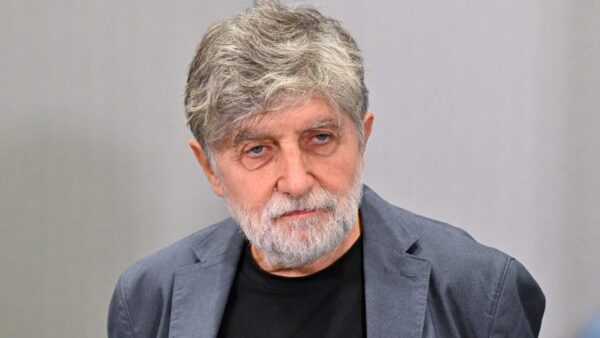
Czech Senator Břetislav Rychlík stated this in a big interview for Guildhall.
— Against the backdrop of escalation by the Russian Federation, do you consider it expedient to promptly shoot down Russian UAVs over the territories of European states? How ready is the European Union for this?
— Despite Russia’s statements that it wants peace, we see only an escalation of Russian aggression and an increase in the number of attacks on NATO and European Union countries. I am convinced, and it seems to me, that Russia is testing, checking our readiness for a forceful confrontation. Personally, I see great danger in this. For our part, we can stop hesitating and start shooting down these Russian drones over the territory of our allied countries. And in general, it is worth strengthening the protection of all allied countries. I would also like to add that I believe Europe should help Ukraine in the sense that it should strengthen the protection of the Ukrainian sky. I am also convinced that Europe should help Ukraine in the sense that it should strengthen the protection of the Ukrainian sky. Over the past few months the Russian Federation has been juggling its statements about a desire for peace. The U.S. administration tried to play this game.
— Have we heard and seen enough today from the U.S. President to speak of a change in the position of the United States on the Russian-Ukrainian war? Or is it too early to draw such conclusions? In particular, Donald Trump also stated that Europe should shoot down these planes. That is, can we say that the position of the United States has changed? Or is it too early? Over the past few months the Russian Federation has been juggling its statements about a desire for peace. It seemed that the U.S. State Department was playing the Russian game.
— You know, for me the words “peace” and “Russia,” or “peace” and “the Soviet Union,” are always associated with the songs of the famous Czechoslovak underground music group Plastic People of the Universe. These young people in the mid-1970s actually began the process of creating Charter 77, because the regime tried to arrest these informal musicians, and they were supported by a huge wave of solidarity, which then grew into the creation of Charter 77. So, Plastic People of the Universe sang, and maybe these words sound a bit vulgar, but I hope the readers of your outlet will understand me. “Peace, peace, peace — it looks like toilet paper.” And, of course, the second topic is that we personally experienced the occupation, the occupation by allied armies in August 1968, and I have, or I acknowledge, Václav Havel’s thesis that Russia does not know where its borders are. And secondly, we are witnesses to the fact that it is therefore desirable to do a lot, including, in essence, drawing our own country into this conflict.
As for the United States, if I am not mistaken, President Trump immediately after his election as president promised that he would stop the Russian-Ukrainian war within the next 24 hours. Therefore, we have repeatedly witnessed various statements of his that concerned both Russia and Ukraine. Personally, with a heavy heart, I endured the humiliation of the Ukrainian President Volodymyr Zelensky in the round office. And then, as a protest against this, we, together with two other senators, came to a Senate meeting in a hoodie exactly like the one Volodymyr Zelensky wears. Despite the fact that we, as senators, of course must also adhere to a certain code of conduct. As for Donald Trump, it is quite difficult to say what stakes we can count on. Despite the fact that we saw his pleasant conversation with Putin in Greenland, which was very different from the conversation between Reagan and Gorbachev, because in this respect Reagan was a much tougher man, we still observe a significant change in Trump’s rhetoric in favor of Volodymyr Zelensky and Ukraine, more against Putin and Russia. The fact that Trump now recognizes that Ukraine has the right to return its illegally occupied territories, in my opinion, is already a big step forward, but the question remains how long Trump will adhere to this idea, whether it will change.
— It is obvious that in the context of political instability in the United States, Europe bears a special responsibility for ensuring the preservation of the world order that was built after the Second World War. Many critics say that this reaction to the violation of airspace by Russia shows the weakness of Europe, that Europe is not only unprepared but also unable to take responsibility for supporting Ukraine and preserving this democratic world order. What would you say to such critics? What is your opinion?
— In the context of political instability in the United States, Europe still bears greater responsibility for peace and the preservation of the world order. I mean the world order that was established after the end of the Second World War. Many critics say that this reaction to the violation of airspace by Russia shows the weakness of Europe, that Europe is not only unprepared but also unable to take responsibility for supporting Ukraine and preserving this democratic world order. What would you say to such critics? It is not so obvious. The EU project is a Czech project. It was Richard Coudenhove-Kalergi who, after the First World War, began to build a vision of a united Europe that would no longer experience such a terrible war and at the same time could strengthen itself economically. The advent of fascism and the Second World War blocked this, and the fact that a large part of Europe then ended up in the hands of the Soviet Union, which supposedly liberated us, but at the same time took us into its orbit as one of its satellites, delayed it for many years. My brother František, who, unfortunately, passed away, was the founder of the European Union and also a president. At the end of the 1980s, the idea of the European Union began to return again. And I have to say that it did not last long.
I perceive Europe’s role very sensitively. I am convinced that thanks, in particular, to Ukraine, Europe is now undergoing a very complex process of testing. This test has many levels. At some levels, Europe has passed this test successfully, and at some levels it has not been able to agree. This is the greatest pain of Europe. All decisions have to be made jointly, and it is very difficult to agree on everything. I am personally convinced that there should be a rule in Europe whereby certain countries that are in the minority can be overruled by the majority. What are we talking about? For example, if we look at Slovakia and Hungary, they resolutely refuse to stop buying Russian oil and Russian gas. They resolutely boycott various decisions of the European Union in relation to Russia. Therefore, I am convinced that this should not be the case. The majority of European countries that are against this should have the ability to overrule the votes of these small countries so that Slovakia and Hungary do not interfere with making important European decisions. Now Europe has finally begun to realize that its reaction to Russian provocations was too weak, and that the Russian-Ukrainian war is far more significant for Europe than it seemed at the beginning. Because Putin is trying to achieve that with which he began the war against Ukraine.
I remember that together with the late Karel Schwarzenberg we were in Ukraine in 2015 and met with Mustafa Dzhemilev in an Uzbek restaurant. And already then Mustafa Dzhemilev, as well as Karel Schwarzenberg, who was a politician at the time, and I was not a senator then, I was just a Ukrainian citizen, — Mustafa Dzhemilev warned and cautioned Europe against Russia. Mustafa said that if in 2014 Europe did not apply and did not impose sanctions against Russia for its occupation of Crimea and part of the Ukrainian territories, then it would pay a much higher price. Mustafa then said that he was expecting a major Russian attack on Ukraine. And then Europe would finally understand that it would be necessary to impose sanctions against Russia, but, unfortunately, it would already be too late. Mustafa Dzhemilev then also warned against the hybrid war that Russia is waging against Europe. And he warned about these hybrid threats from its side. For example, the Czech website Page Not Found, one of the founders of which is my daughter, studied how much money Russia spends on supporting various movements in support of peace and peace talks. And this money finances anti-system political parties in the Czech Republic. Political parties such as SPD or Stačo.
It is interesting that even before the drones flew into Poland, Russian agents already represented a quite real threat there. There was an explosion in Vrbětice, which is a region from which my wife comes, and part of the place where the explosion occurred, arranged by Russian agents, is under the care of my wife’s parents. There was a paid Russian agent who organized the arson of buses, garages, Prague transport companies, and so on. We are experiencing this. So I understand that within Europe the Czech Republic belongs to the most principled. Our prime minister was the first to go to Kyiv together with the Polish prime minister. We have a huge initiative here, for example from citizens — to send and arm the Ukrainian army. Citizens are doing a great deal. Almost every day I realize that this is not enough. I organized the “Light and Heat for Ukraine” action, where we sent fuel boilers to Ukraine, because I knew that people have a problem at night, that they cannot sleep at night, that they have a problem with heating hot food. I still have the impression that everything we are doing — I did this as a citizen with friends — that everything we are doing is only a face of suffering for Ukrainians. Not enough. My son has been in Ukraine since 2014. He regularly goes there with a group of people. He went to Donbas, he goes to the front. He tries to help civilians, the elderly, children, and so on. He says that since then, since 2014, he has been paying Putin every month by sending money. But it seems to me that the greatest example in Europe was the citizens themselves, not the politicians. And now it is about the future of Europe, whether it will show its face. And I believe that Europe could succeed if — and we will, of course, continue to talk about this — the European countries stop their trade with Russia, really stop receiving the heaviest supplies, such as France, the Mediterranean, and so on, which receive the gift of Russian oil and gas.
— So, the logical question arises: what to do with Russia? Today, after three and a half years of sanctions, the Russian state has not only not stopped the war against Ukraine, but also threatens Europe. But now we have a question before us. What can we do with Russia? Given all the sanctions, Russia continues to kill people. The concept that they propose to apply to Russia is called “peace through strength.” Do you share it? And if so, how do you understand what this strength should be? What is this strength? This is Trump’s strategy. Do you know what this strategy is?
Given the instability of his thoughts, how quickly he can change his views, the strategy is to act cautiously. If you look at it a little differently, then I see this strength in two large dimensions. The first dimension is military, the second is economic. At the moment these economic sanctions against Russia look rather toothless. I just looked at the Oil Price website, which, according to them, reflects bilateral trade with Russia in 2024. In 2024, bilateral trade with Russia reached 80 billion dollars. Since then, exports from Russia amounted to 40 billion. These are huge sums, if you look at it that way. Therefore, if Europe is not able to limit or stop all trade relations with Russia, it will never achieve the so-called creation of an artificial system of arms hunger in Russia. And then, in essence, the war between Russia and Ukraine can last for a very long time. And the military forces will still have a hand in the political process. And this means that we should accept Ukraine into the European Union as soon as possible. At the same time, Europe should not be afraid to send its allied armies or some military units to help Ukraine. And on the other hand, if Donald Trump really decides to threaten Russia very seriously, he could greatly speed up the situation. But it seems to me that, despite all the proclamations, he still will not do it. He really has a large part of his proclamation in his hands. And so far, it seems to me, none of the proclamations have worked. He shifts this onto Europe’s shoulders. And this depends greatly on him; otherwise, of course, it will be on Europe, which must change, as we talked about a minute ago. In fact, military aid must go hand in hand with political aid.
— Can these plans of Europe collapse in connection with the fact that political forces associated with Russia will come to power in key countries of Europe? There is even such a threat in the Czech Republic. Or, as the gentleman said, Russian proxies. There is even such a threat in the Czech Republic. How do you actually perceive this? How serious is it for Europe that Russian forces can come to power in key countries?
— As for the states to the west of our borders, these are countries that have cooperated so much, especially France, historically with communism, socialism, but have not experienced it. We, as the Czech Republic, the successor state of Czechoslovakia, were tempted by the nature of Soviet totality. Here, in 1945, together with the liberation of the country, we had Russian agents who took our citizens to the GULAG and so on, liquidated any possible democratic opposition here and there. But, of course, all this ended in the occupation in 1968. As a result, in our days I organize an action against the chairman of the Stačilo party, which is a kind of mask only for the Communist Party. These are public readings of the names of people killed here in the first decades after 1968. I will stop here, because this person, I will not even say his name, because it would be an insult to say that Rinnepark is the only place in 1968.
Information agency Guildhall, exclusive.
Только главные новости в нашем Telegram, Facebook и GoogleNews!
Tweet