
The European Union is facing a number of complex challenges amid the ongoing war in Ukraine. One of the key aspects is the need to strengthen military support for Ukraine, as well as making decisive political and economic decisions, despite potential unpopularity among the populations of the EU member states.
Furthermore, Russia continues to play on global political tensions, and Western actions, including sanctions and military aid to Ukraine, must be coordinated and effective. It is important to recognize the extent of the threat facing Europe and the necessity of comprehensive support for Ukraine in its struggle for sovereignty and security.
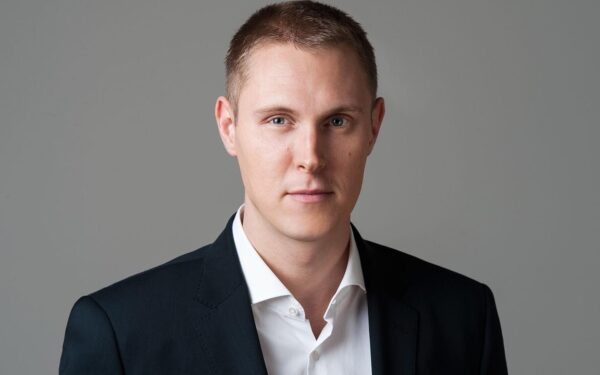
In a lengthy interview for Guildhall, Raimond Kaljulaid, a member of the Estonian Riigikogu from the Social Democratic Party, stated this.
– Before the full-scale invasion of Ukraine, it was popular to say that Ukraine is not a self-sufficient state, but an object of world politics. And now, analyzing the behavior of the United States and the European Union, don’t you think that the EU is gradually turning into such a new object against the backdrop of the USA and China? What do you think about that?
– Well, no, I don’t subscribe to that view. I adhere to the opinion that there are sovereign states in the world, which are recognized by other states and are members of the United Nations. And my view is that these states can make their own decisions. Of course, I mean, no state is in outer space. We all have to consider our partnerships and alliances, and also, you know, our adversaries. But in the end, I firmly believe that states have sovereignty. So, this applies to Europe as well. I don’t share the view that Europe is not important in world politics. If Europe didn’t matter at all, the President of the United States wouldn’t host meetings with European leaders in the Oval Office to discuss world affairs.
– It’s true, sir. And you know, in May, there was an attempt to make Europe self-sufficient. A meeting of European leaders took place in London. What do you think about that? Are you satisfied with the results of this meeting? Was it a success or not?
– So, the main problem that European countries are currently facing is that most Europeans understand that this is a pivotal moment, and we still have the opportunity to build a much stronger army and a much stronger defense industry, which is necessary to maintain European security. The problem is that in order to do so, the political decisions that need to be made are extremely unpopular. Even if voters in different European countries would support the idea of ensuring security and sovereignty, it requires spending colossal amounts of money due to years of under-investment. And the decisions that governments would have to make for these investments are extremely unpopular. If you look at Estonia, over the past few years, we’ve raised practically all the taxes we had on the books. We’ve introduced new taxes that previously didn’t exist. And all these decisions are really, really unpopular. The current government’s ratings are, you know, below a sufficient level. So, if you ask me what I’m worried about, I understand that the leaders want to make these decisions and understand the need for them, but will they be able to do it politically? That is the key question when we talk about the future of Europe.
– I understand, sir. And I also want to talk about Ukraine and Russia. There was a meeting between Putin and Trump, Zelensky and Trump. And what do you think? Are there signs that Russia is really ready to end the war now?
– We haven’t seen any of those signs yet. What we have is the American side publicly saying that in closed-door meetings, the Russians have expressed readiness to move towards serious negotiations, and that the Russians, according to the Americans, have indicated that they’re willing to make some concessions. But it’s really difficult to assess if that is true or not. And even if you look at the days that have followed the latest meetings in Anchorage and then in Washington, we already see signals from Moscow of some attempt to avoid commitments that the American side said they made, which have already provoked a reaction from the United States. So, it’s hard to say. It depends on how the Russians actually assess the military situation. In their propaganda, they’re trying to convince people in the West that they’re winning, they’re doing great, they have no incentive to stop right now. But internally, I’m sure the picture is much more nuanced than that. I mean, they see their situation, I’m sure the Russian leadership has a better picture of what’s actually going on in the economy. We know that they survey the population. There’s elite pressure going this way or that way. So, what the actual picture looks like from Putin’s office in the Kremlin, it’s hard for us to know. But I wouldn’t be surprised if they continued to drag this process out as long as they can.
– Of course. And in this context, maybe there are some levers of influence on the aggressor that the international community has, but has not used yet. What do you think these levers are? Maybe sanctions, maybe something else to pressure Russia into ending the war?
– So, regarding sanctions, the problem with sanctions is that, first of all, if the West imposes new sanctions, it will take time for them to start working. And the history of sanctions is not very promising. Of course, we have to do it. But I don’t think sanctions are actually the decisive factor. The decisive factor is military aid to Ukraine. And also, if we go back in time, the Europeans discussed and considered a more active role for European militaries in supporting the Ukrainian army and helping to alleviate the personnel shortage that the Ukrainians might have. So, this is the type of help I think, that if you, you know, Ukraine is at war, and sanctions and everything else might help shape the environment, but the decisive question is real military capabilities. And unfortunately, what we haven’t seen is serious ramping up of support for Ukraine, which I think Western partners have not been able to really deliver for Ukraine.
– And if we are talking about more European participation in this matter, what do you think about European soldiers in Ukraine after the war or during the war to establish peace?
– So, if you remember, there was a proposal even before the whole coalition of the willing, it was at some point actively supported by the French. It was before the last parliamentary elections in France when the French proposed that Europe should think, at least, you know, if Europe is not ready to enter the fight, think about how to alleviate pressure on the Ukrainians by, for instance, providing support in logistics, supporting the Ukrainian army in other ways to free up more resources for the actual front. And I understand that the Russians, you know, in their rhetoric, they’re threatening World War III over this. I think it’s a bluff. I don’t think they have the capability right now to actually start that and do that. And yes, I’ve always liked these ideas, and it’s very unfortunate that they haven’t been realized. But in the end, if other countries, you know, are standing on the sidelines, I don’t think they can really effectively influence the outcome.
– It’s true, sir. And I want to return to sanctions. There’s a question about the Russian shadow fleet, which continues to bring significant revenue to Russia’s budget, and there are proposals from some experts to close the Danish strait to this fleet. What do you think about that? Will it be effective?
– I mean, it’s not just a shadow fleet. If you look at, you know, trade data between some of our friends and allies in Europe and Russia, it’s still quite significant. So, there are allies of Ukraine who are providing financing for Russia’s war machine, and that needs to stop. There’s also the issue of Russia’s frozen assets. And I think, you know, Bill Browder has put it very clearly that with these assets, there are basically two or, in fact, three options. One is to just hold on to them. The second option is to give them to Ukraine, and the third is to return them to Russia. And it seems to me that it’s, you know, ridiculous to give those funds to Russia so that they can use them to fund the military buildup they’re planning against NATO. I mean, that would be, you know, financing the enemy. So, all these things matter. But yes, of course, the shadow fleet, I mean, it’s a very important issue for Estonia. We’ve been discussing this. It’s taken too long for any action to materialize. It’s financing the war. It’s also a huge environmental hazard in the Baltic Sea. These tankers, you know, the crews are incompetent, the tankers themselves are in terrible shape. It’s just a disaster waiting to happen in the Baltic Sea.
– Of course. And another big problem is Russian gas that Europe continues to buy. What do you think? Maybe Europe could completely stop buying it? What can be done about it?
– So, this comes back to what I said about European capabilities and sovereignty. These decisions are not being made because they would be, you know, economically very costly and they would be very unpopular, and that’s why they’re not being made. But in the end, you know, there’s a dissonance between saying that the war in Ukraine is an existential war and the outcome of this war is an existential question for Europe. If you’re in an existential fight, you have to do everything in your power. I mean, you know, you have to be like Jason Bourne. You have to kill your enemy with a teddy bear if that’s all you’ve got. And when you’re not doing everything in your power, like not using those assets to help Ukraine, then, well, stop talking about it as an existential war. Then, you know, it can’t intellectually exist at the same time. If you’re in an existential fight, you use all available means to ensure you win that fight.
– Thank you for that, sir. And for you, for Ukraine, it is very important what is happening in the occupied territories. And now we know about the genocide there, the genocide of Ukrainians, and recently the Parliamentary Assembly of the Council of Europe adopted a resolution recognizing Russia’s actions in the occupied territories as ethnic cleansing. And what do you think? Maybe the national parliaments of European countries should also adopt this resolution to put more pressure on Russia on the political level?
– Absolutely, but the problem is, of course, that many of these statements that are made, I mean, they don’t really influence Russian behavior. Of course, they have to be made, and the Estonian parliament has adopted many resolutions supporting Ukraine. I think it’s really important to do so, but in the end, I mean, it’s the real things that matter, but if we limit it to the question of making statements and forming the opinion of parliaments on this. Why it’s also important, I think, is that some people involved in the peace process in the US should understand that when they talk about, for instance, land swaps, it’s not just about territory that is discussed. I mean, there are people living on that territory who do not want to be part of Russia. There are people, millions of people in Ukraine, who have been forced to leave those areas where the fighting is going on right now, and I’m sure many of them would like to go back to their homes if that’s possible and if it’s rebuilt. And it’s also, you know, I think sometimes, maybe, politicians don’t always understand that for Estonians, it’s easier to understand, because many of us also live in such private homes. And every time I see footage from Ukraine, you know, I’m looking at these small houses with small gardens that people have probably maintained for decades, they grow their own food. This is a lot of work, and some of these homes have been in the same family for generations. And it’s actually, you know, devastating to see that gone. So, this is what we’re talking about. We’re talking about real people, their homes, their memories, you know, where they’re from, their roots. And it’s not just, you know, you can’t be indifferent about it. It’s not like swapping square miles for square miles, like who cares? You know, this has real meaning. And the second point, you know, Russia is a completely totalitarian state, so people in Russia have none of the liberties that people in the West enjoy. I mean, no freedom of speech, no freedom of assembly. You know, you get locked up for 10 to 15 years for protesting. So, if Ukraine has to cede land in the end, it also means ceding the people who remain in those areas due to such a harsh dictatorial regime. So, it’s not just, you know, it’s not just a land swap. When I hear this from some participants in these talks, when they just say, well, you know, it’s logical, you’ve got to give up some land, you’re not giving up land, you’re giving up, you know, you’re giving up the real history of your country and your people.
– It’s absolutely true, sir. And the last question for us, it is very important. It’s about your transatlantic unity now, how do you assess it? Is it strong enough to help Ukraine win this war?
– So, the first part of the question is, you know, what’s happening with transatlantic relations now. So, when Trump was re-elected, many in Europe predicted that the relationship would be really bad. And the first signs, you know, JD Vance in Munich, the first signs really confirmed this. But when I look at how Europeans and the White House are coordinating their actions on Ukraine and European security, and not only the war in Ukraine, but also we all know that, probably, the US will need to withdraw some of its forces from Europe and reposition them in the Pacific, and how that process is coordinated now. I think the cooperation is good at the moment. I see European leaders and President Trump actively exchanging ideas and opinions and having a dialogue. I see that the European Commission is involved in this process, and I also see that NATO chief Ruta is heavily involved in this. So, I would say that the relationship is not nearly in such bad shape as some thought. But when it comes to Ukraine, right now, I mean, publicly, it looks like everyone is on the same page. But if you listen really carefully, you see that the concept that the Europeans have is very different from the concept that, for example, Mr. Witkoff seems to have right now. So, how this develops is impossible to say.
Guildhall News Agency, exclusive.
#EU #frozen assets #military aid #sanctions #shadow fleet #UN #НАТО
Только главные новости в нашем Telegram, Facebook и GoogleNews!
TweetЧитайте также
-
Британия криминализовала любую поддержку подконтрольных ГРУ структур -
Разработка приложения Max проходила под контролем ФСБ — ЕС -
Британия ударила санкциями по ключевым координаторам кибератак из ГРУ -
Япония реформирует разведку из-за угроз РФ и Китая -
От ГРУ до частных фирм: ЕС ввел санкции за российский кибершпионаж -
ЕС готовит миссию для Армении против гибридных угроз РФ -
Франция вводит санкции против РФ и вызывает посла из-за киберкампании ФСБ -
Италия предложила новую архитектуру безопасности в Европе с участием Украины -
Китай наращивает операции влияния на Филиппинах -
У РФ нет сил для нападения на Польшу, но Кремль готовит провокации — Сикорский